u know what’s wrong with tumblr now?? too many kids who weren’t here for glee. y’all have no idea. none of u understand the suffering we went through. the hell. the endless war. u come in here and u try to start The Discourse but u dont get that we already made these mistakes. we already had the discourse and its done now. its over. its all over and u should let it stay dead but u wont and that’s why we all hate u
I was not here for the days of glee but please relay that fandom history
its not history, its blood. i still see it all over this website. the vague posts. the deactivated urls. where do u think the word problematic became popular. where do u think the representational anger started. glee was the hungry gaping void that consumed us all. it said watch us and find yourself. there is someone for everyone. santana is a lesbian and kurt is gay and brittany is bisexual and quinn, god knows what quinn is, she’s straight but we have her say things like “you were singing to finn and only finn, right?” and artie is disabled. mercedes is black and our outlet for body positivity. we are all oppressed by something and we are different and we are outcasts and we are you.
and we fell for it. we watched glee and we related to its characters and we fought its wars until it was too late. until it was nothing but a distorted picture of a parody of reality, a cracked mirror in which our souls were sucked and encased in glass. finn outed santana but it’s fine because he had good intentions. sam was supposed to be gay but we’re bringing blaine anderson in for that instead. the q in quinn is for queerbait. brittany was maybe raped but it was a one liner so who really knows. will schuester was a horrible fucking adult and should never have been allowed to care for children. finn, the white straight boy, did everything wrong but it was narratively presented as right. we turned on each other. klaine vs kum and finchel vs faberry. santana fought everyone so brittana stans fought everyone. character vs character, ship vs ship, blogger against blogger. we fucking hated each other. there was no glee fandom. there were character fandoms and ship fandoms and that is it and our mottos were all fuck glee.
we won every popularity contest, every online poll. we voted our fingers to the bone. we created art and wrote fanfic and made such excellent photo manips they were published in newspapers. we were prolific. we were consumers of the hell we created and we just kept producing more in a fucked up dystopian fandom chain of supply and demand. don’t get me started on the rpf. dianna wore a likes girls shirt on tour and made a statement an hour later revoking it. some people still say heya is real but it’s like a breath of the wind, a sound so bare i can’t quite make out the words.
u asked for history. theres no history, only rage and pain and regret, the image of anonymous with a grey face and sunglasses telling u to kill urself because u thought artie was a dick for calling brittany stupid that one time. this website is a reflection of the hole glee left when it finished taking all it could from us, when the void could not consume anything more, and the posts on it now, the social justice “discourse” that is just giant piles of steaming, unsifted, unrefined shit is from those who refused to learn from us. the history is here and it followed us and we can never ever escape it.
Is nobody going to talk about how the Vulcans adopted a policy of “shoot first” against the Klingons and that that was what helped keep them at a respectful distance for such a long time because I have a hard time wrapping my head around it.
It was only logical. The culture of war cherished by Klingons had helped them to win their place under the suns of the overcrowded Galaxy. As in a pack of wolves, the strongest is the lead. Vulcans had no choice but to prove they’re the force one cannot ignore. Also take into consideration the time when Klingon-Vulcan interraction took place. It’s the time of Earth pre-Warp-5, before Archer’s Vulcans – intolerable, arrogant, half-aggressive. The Kir’Shara was a myth most of Vulcans didn’t even believe to be true but a fairy tale (or a nightmare for Vulcan High Command). So, nothing surprising here.
I still haven’t watched ENT so I can’t say a lot about that time. It just baffles me.
A species that adopts complete non-violence shoots first. Like damn.
It reminds me of the debate of how to be peaceful and keep your peaceful culture when you’re being invaded? Aren’t you allowed to defend yourself? Where does the line of self-defense end?
It seems kinda like the fascism discourse around here right now (that a democratic society is uniquely vulnerable to democratically-structured bids for it to destroy itself)–Vulcan society couldn’t have withstood anything less than shooting first against the Klingons. The losses they’d have incurred attempting to argue logic with a wholly uninterested attacking empire would have just been too severe, and they probably couldn’t have figured out how to leave an impression on them anyway.
Georgiou’s thesis (and Starfleet’s) seems to be that they’re stronger than that–Starfleet personnel can die trying, can die in support of Federation ideals, because their society and the codes of behavior backing them are strong enough to withstand the Klingon threat WITHOUT compromise.
The Vulcans chose to compromise their principles locally in order to maintain them globally, because they decided (and I think) that they weren’t up to handling it any other way. They had to meet the Klingons halfway–Starfleet doesn’t.
I think Vulcans are more deeply resistant to violence than dedicated to non-violence no matter what. Spock doesn’t like to use violence, is even more resistant to killing, and is deeply disdainful of humanity’s “logical” justifications for violence, but is willing to both be violent and to kill if out of options. The Galileo Seven(where he concedes they might have to use violence but insists on exhausting the alternatives first) and The Devil in the Dark(where the creature’s hostility forces him to kill it) come to mind. Also there’s obvsl a range of opinions on violence within “orthodox” Vulcan society given the much greater ease Tuvok has with violent options compared to Spock, and how he doesn’t insist on exhausting other avenues first. Given Spock’s class position(his family seems to be Vulcan nobility from Amok Time, is involved not only in the Science Academy and setting Vulcan’s diplomatic policy but also with preserving and adjudicating Vulcan culture[or at least, I’m assuming that bit from the reboot movie was based on something in-canon; I never read the books or anything]), and the anxiety caused by his hybrid nature, I think it’d make sense for him to be a bit more “puritanical” about philo-cultural issues like pacifism than other, or even most, Vulcans.
So A Vulcan Hello didn’t strike me as far outside the realm of Vulcan behavior; I think they’d just be very careful about the justification for it and that there’d be disagreement and debate around the policy(this could have easily been one of the many things Spock and Sarek fought over, for instance). There are two threads within larger Vulcan logical axioms that I can think of right now that might have been used to justify such a policy.
“The Needs of the Many outweigh the Needs of the Few”: Mostly just a rehash of mbl up there. The idea behind this is basically that context matters: in RoK terms that, while it is illogical to throw away one’s life, it is logical when doing so is required to preserve a greater number of lives. Generalized, this idea could be restated as “It is better to allow for a minor, limited, specific abrogation of a generally correct principle that preserves the greater good, than to adhere to that principle without compromise, even when doing so both causes greater harm than violating it would, and contradicts the core concept of the principle itself”. Vulcans are pacifists because killing is illogical(that which is alive definitionally ought to be alive. There are other reasons obvsl but this is the relevant one). Approaching the Klingons non-violently consistently led to destructions of life which threatened to create a modus vivendi inimical to life’s preservation(a state of unlimited aggression between Vulcans and Klingons). Therefore, modifying their approach to allow for a limited amount of violence scaled to their understanding of the importance violence holds culturally for Klingons, only to the point and time when Klingons will engage in dialogue, preserves life, both Vulcan and Klingon, by both preventing immediate deaths, and eventually allowing peaceful coexistence and mutual autonomy to be established.
“Infinite Diversity in Infinite Combination”: Vulcans recognize that their culture is not other people’s culture. Recognizing that, they would recognize that other cultures don’t conceive of violence in the same way. Recognizing that, they would logically display a willingness to be violent, if conditions dictated its necessity for establishing dialogue, or the response of their interlocutor required it to prevent loss of life. So, once they understood the central place of violence in Klingon culture, it wouldn’t be surprising if some Vulcans would argue that displaying violence themselves only to the point where dialogue could be established is a logical choice. But again I think they’d be very cautious with this reasoning given how easily it can get away from you.
Proportionality is the main issue here. I don’t think Vulcans would be cruising around, just opening fire on every Klingon ship and colony they find; it makes more sense to me to think of them as raising shields and returning fire until Klingon ships either leave, open dialogue, or are disabled, only destroying them when given no other choice.
to your point about differing views on violence outside “orthodox” vulcans, in the TOS episode “the savage curtain”, spock is in the position to fight alongside surak, the seminal figure of vulcan. and while spock, as always, is resistant to violence but willing to use it when necessary, surak is completely personally devoted to nonviolence, refusing to fight at all.
Thanks for the addition! I totally forgot about this ep, but luckily in a big fandom there’s always other folks to remember what you can’t ^u^
I always advise people to take the love language test, and not so much as a means of learning how you need to be loved by a romantic partner but learning how you need to be loved by yourself.
For instance, if your love language is acts of service then doing nice things for yourself could be a form of self-care. Taking yourself out on dates, treating yourself to nice things when possible, and making accommodations for yourself. If your love language is physical touch, this could mean you lean more toward topical or aromatic self-care methods. You may want to buy body butters and lotions and the act of rubbing on your own body could be soothing; lighting candles, incense, or aroma therapy oils in your dwelling areas may also soothe you.
My love language is words of affirmation so of course, that is exactly what I do for myself. I write sticky notes tailored to my current emotional needs during that time and keep them up on my walls for as long as I see necessary. I recite my daily affirmations while I do my skincare routine, or when I’m in the shower.
Discovering your love language can be beneficial in romantic relationships but even more beneficial in your current relationship with yourself.
The point of going back to the Citadel, for Furiosa and Max anyway, was never about surviving or succeeding. Neither of them actually believed that they would make it.
The point, for them, was the run itself. Because it was the attempt to succeed that would redeem them.
There is no safe haven in which to seek refuge, no hidden Eden to which you can return. The utopia of your youth is gone, and it doesn’t matter whether it was destroyed or it never really existed beyond your idealizing memories. You cannot ride away into the sunset and find a magical land of escape, safely separated from your old, ruined land by an ocean (of salt).
You must turn around, face the reality of your broken world, and fix it. Or die trying. Only this can save you.
…I discovered – to my great surprise and delight – that Judaism not only permits questions, it sometimes even requires them. It happened during a study session with my rabbi, a pious and solemn soul. I was answering question after question that he posed me, as I had done each week for nearly a year. Suddenly he posed a problem to which I could not respond.
“Don’t you know the answer?” He asked.
“I know the answer,” I finally replied, “but I do not agree with it.”
This ever stern rabbi underwent a total transformation. Elated, he rose from his desk and, with his eyes shining and his voice booming, banged his fist upon the table. “Baruch Hashem!” He shouted. “Bless the Lord! You are finally thinking like a Jew!”
Your People, My People: How to Find Acceptance and Fullfiment as a Jew By Choice – Lena Romanoff with Lisa Hostein. Preface. (via keshetchai)
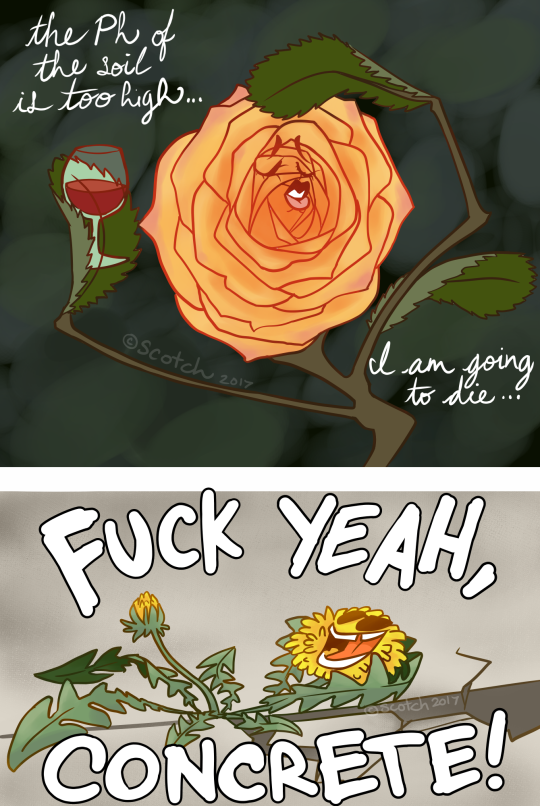
Forever ago, I ran across an article on privilege and the inability to “sit with fear” that has really stuck with me. I’ve been thinking a lot about it lately, trying to put something into words that has been bugging me and I think it’s starting to crystallize.
The idea is that we live in a society where privileged people rarely have to deal with being afraid or uncomfortable and so they learn to think they have a right to always feel that way and that right trumps other people’s needs. So we see “being around [x race/ethnicity/class] makes me feel unsafe; feeling this way harms me; I have a right to feel comfortable in my environment”
We see this expressed most strongly in the more privileged groups: white people unaccustomed to being a minority or being around minorities, straight men unaccustomed to feeling sexually or physically vulnerable or to receiving unwanted sexual attention from men, etc. These are people that primarily feel safe–people that have rarely hought twice about wearing what they want onto the streets, raising their voice in ways that might be perceived as threatening, or calling the cops for assistance and assuming the cops will be their allies.
This leads to the harmful conclusion that people have the right not just to BE safe, but to FEEL safe.
On the other hand, most members of less privileged groups have at least some, if not lots, of experience “sitting with fear.” We will be in environments where we do not feel comfortable or safe. We will experience vulnerability. Not all the time, not everywhere, but often enough. Some of these times we will actually be in danger, some we will just feel less than safe, but regardless, by the time we are adults we have extensive experience and a well developed toolkit for how to process fear.
Sometimes, when situations are genuinely and unnecessarily unsafe, we will work to change them. Other times, when our feelings of discomfort have to be balanced against the competing needs and feelings of other groups we will work to find compromises or build a variety of spaces. And when multiple needs really can’t be reconciled or when our feelings of vulnerability exist only as feelings not based in reality we know how to sit with our fear.
Here’s the interesting bit :
I see, increasingly, people buying into the privileged fallacy that a state where one never needs to know how to sit with fear is not only achievable but an entitlement.
I mean it’s not unidentifiable, to look at that sense of security and think “I want that. I deserve that.” I think it’s normal. Hell, I think people do deserve that. I just don’t think it’s achievable, not on some kind of black-and-white, universal scale. There will always be people who need different things, and even people who need things whose presence is potentially threatening to other people. (A neutral example: addictive painkillers.)
But I see a lot of people who are hurting, in spaces that are practically designed to hurt them, trying to fix it by turning the broken rules around backwards to make a society designed so they’ll never feel hurt or unsafe or uncomfortable.
And I think that’s harmful.
I think that’s drinking the privileged kool-aid.
This post is, by the way, NOT an argument against safe spaces. Safe spaces are necessary and important parts of any community. What this is is an argument against the idea of universal safe spaces in a world with diverse, competing, sometimes irreconcilable needs. This is a reminder that not every space can serve every person, and that when it comes down to the line we need to be very aware of this fact, and also aware of the difference between entitlement to BE safe and to FEEL safe.
The privileged approach to safe spaces is thinking that your needs are either universal or the priority and that your feelings outweigh someone else’s needs. The privileged approach to safe spaces is “this thing hurt me, so it’s bad.“ It’s thinking “my feelings are unbiased and objective and the most important feelings to have.” The privileged approach to safe spaces is “my internal reality is the one true reality.”
We know different. And when we have to, we know how to deal. Let’s not give that up.

 just moving along like everyone else