after dying god informs you that hell is a myth, and “everyone sins, its ok”. instead the dead are sorted into six “houses of heaven” based on the sins they chose.
We arrived first at the House of Lust. “House” is a misleading term. It was more of a camp, spread over acres and acres of lush forest. There was a white sandy beach (nude, of course) full of copulating couples. There were little cabins sprinkled all along the path, from which orgasmic moans regularly came belting out. Men with six pack abs and women with perky breasts strolled by without even noticing me and God. They only had eyes for each other, tickling and pinching each other with flirtatious giggles.
“What do you think?” God asked as we passed a nineteen-way taking place in a pool of champagne. Little cherubs flitted overhead armed with mops and cleaning supplies, thankfully. “Lust is our most popular sin.” I eyed the supermodel-like figures of a couple passing nearby, and could easily see why. “You can look however you want. Hell, you can be whatever gender you want. No fetish is too taboo, and no desire can be denied here.”
It was quite tempting, but I wasn’t ready to make a permanent decision here. “Let’s see the others,” I told God.
We carried on to Greed. We passed rows and rows of mansions, each more opulent than the next. Some of them were so large that they would have had enough bed rooms to fit my entire hometown. And so many different styles: one second, we were in a beautiful French vineyard in front of a gorgeous chateau with the Alps in the background. The next second, a warm tropical beach with a modern mansion atop breathtaking cliffs. After that, a ski chalet in Colorado with a roaring fire in a hearth large enough to fit an ox. Each one had various Italian sports cars and Rolls Royces parked in front, with the occasional smattering of boats, helicopters, etc.
“Any material desire you ever wanted,” God explained. “Your own world, where you can have everything. You want the Hope Diamond? You can fly to Washington DC in your own solid gold helicopter and buy it from the Smithsonian. Hell, you can just buy the Smithsonian.”
Also tempting, but I decided to keep looking.
Gluttony was next up. Tables and tables of the very finest foods: beautiful steaks cooked medium rare; butter-poached lobster tail; fresh oysters on a half shell; exotic wines in dusty bottles that had been hiding in the cellars of the world’s finest restaurants. Everyone had a glass of champagne in hand and simply lounged on couches and chairs near the tables, eating endlessly. As soon as the inhabitants took a bite, the food just instantly came back. My mouth watered even watching them.
“In every other House, the food is practically sawdust compared to Gluttony,” God explained. “You haven’t truly experienced heaven until you’ve been to Gluttony.”
I shook my head, and we kept moving.
Sloth was as you’d expect. An endless sea of the softest mattresses, stacked with cushions and pillows that made the story of the princess and the pea seem minimalist. Little angels visited each resident, giving them massages that made them all melt into their blankets.
Wrath was… well, a lot like what I’d expect Hell to be like. Fire, brimstone, whips, torture.. you know, the works. Except here, you weren’t the one being tortured. Every enemy you’d ever made in your real life was now under your thumb. “Lots of people choose their fathers,” God explained. “Lots of grudges against parents in general, you know. But you’re not limited to that. Someone beat you out for a big promotion back on Earth? Take your pound of flesh here.”
Then we arrived at Envy. It looked… well, a lot like home.
“Go on in,” God said, gesturing toward the door. I turned the knob and walked in… and found Emily waiting inside. She ran forward, wrapped her arms around my neck, and planted a kiss right on my lips. “Welcome home, honey.”
I looked back toward God. “Oh, don’t be coy,” he said. “You have no secrets from me. We all know that you were in love with your best friend’s wife.” She didn’t seem to hear him at all; she went back into the hall. “We all know that you just settled for your own wife while secretly pining after her. Well, this is your chance to live happily ever after.”
I peered into the kitchen. Emily was baking something, wearing nothing but an apron. Her curly black hair fell softly over her shoulder as she whisked ingredients. She turned back, noticed I was observing her, and an enthusiastic smile spread across her face.
“It’s what you’ve always wanted, isn’t it?” God whispered in my ear.
I wanted to take it. God damn did I want to take it. But I shook my head.
God seemed puzzled. “You need to make a decision,” he told me.
“I haven’t seen Pride yet.”
He scoffed. “No one ever wants Pride, trust me.”
“Well, I want to see it.”
_________________________
Pride was boring. Just a row of workbenches in a bare white room.
“I don’t get it,” I told God.
“Yeah, no one does,” he answered. “That’s why no one ever chooses it. Doesn’t cavorting in Lust sound better than sitting here building little trinkets for the rest of eternity? Wouldn’t you rather gorge yourself in Gluttony? Or spend time with Emily in Envy?”
I considered the options again. “I pick Pride,” I finally told him.
He narrowed his eyes. “What? Look at it!” He gestured around the room again. There wasn’t much to look at. “Why would you choose this for the rest of time?”
“Because you don’t want me to pick it,” I told him. If he was really God, he’d know what a contrarian I can be. And I knew he was hiding something, trying to pretend like Pride didn’t exist. There was something special about it.
God scowled back. “Fine.” He led me over to one of the workbenches. In the center, there was a black space. A blank, empty void that went on forever. “Here’s your universe,” he said. “You’ve got seven days to get started.” He took his seat at the bench next to me and went back to tinkering in his own world. After a long pause, he finally spoke again: “You know, it might be nice for me to actually have some company for once.”
A realization that strikes them each rather differently, as it transpires.
“You’re churning,” Makalaurë observed, as Maitimo did another length of the carpet. “If you keep it up like that you’re going to wear a spot in Grandmother’s rug and you know Father will get the pained line between his brows.”
“Grandmother’s carpets don’t wear,” said Maitimo, executing another pivot and striding back towards the hearth. “Valar, perhaps I should take a page from her book and just sleep until I am never seen again.”
“That’s a little overwrought,” said Makalaurë, a phrase which from his mouth would usually be enough to shake Maitimo from his turmoil to observe dramatic irony in action. “So you have been kissing Findekáno in the garden, so what?”
“Not just in the garden,” said Maitimo, running a hand through his hair and then stopping as it reminded him of Findekáno’s touch. And not just kissing, he didn’t add. “Also on the veranda, by the canal, under the bridge, next to the peach vendor…”
“So what? What of that is so bad that you need to banish yourself to Námo’s realm rather than continue? I know it’s embarrassing to have an infatuation, especially with someone so…buoyant, but it’s not like Findekáno’s hideous.”
That brought Maitimo to a halt. “He’s not hideous at all,” he said, frowning. “Why would one be embarrassed to be seen with him? He is handsome and well-built, noble and full of life, fun-loving and kind, and why say you ‘buoyant’ as if it is something shameful? He has energy, certainly, but it is of the sort that uplifts rather than wearies and a quality most befitting a prince. Stop laughing,” he said, annoyed, as Makalaurë chortled from the divan. “It is not the optics that concern me – well, not entirely – but it is precisely what you say!”
“What do I say,” said Makalaurë, composing himself.
“Infatuation,” said Maitimo wretchedly. “To him I am but an early crush realized, a light and happy affair to look back on fondly when we are old and wed to others. I thought I could bear it, could stand to suffer the kisses and – and other things, by the peaches and so on, but…”
“But?” prompted Makalaurë, his smile fading.
“I think I love him.” Maitimo sank down, missing the ottoman by a good foot, and landed on Míriel’s weaving with a clatter of long limbs. He folded forward and buried his head in his arms. “Help me, whatever shall I do? He cannot know, he mustn’t, I should not put such pressures on him but brother…” Maitimo lifted red-rimmed eyes. “I cannot take this torment much longer.”
“So,” said Irissë, running wax over her bowstring. “You and Maitimo, eh. How’s that going?”
“Excellent,” said Findekáno, wiping glue from his fletching. “I shall marry that man someday.”
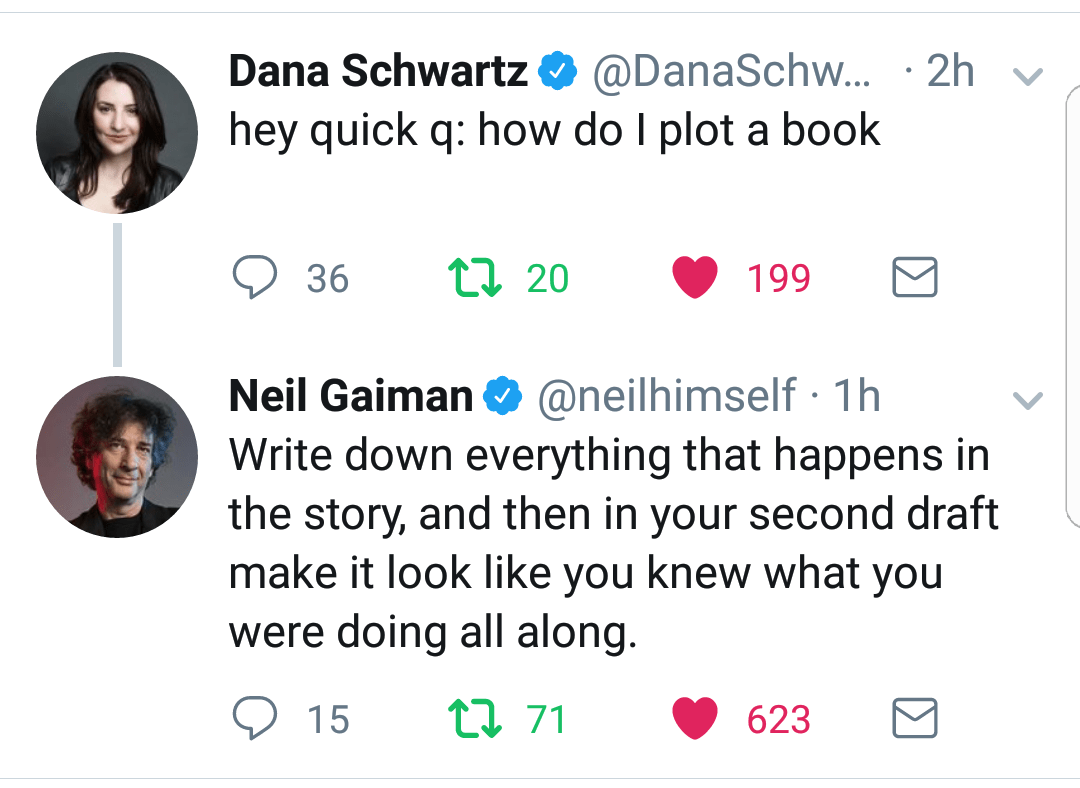
Yes. Writing a book is the easiest thing in the whole world. In fact, let me show you just how easy it is!
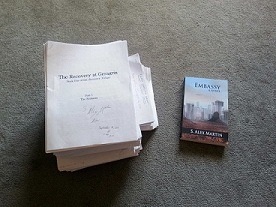
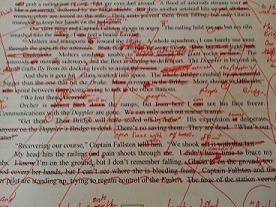
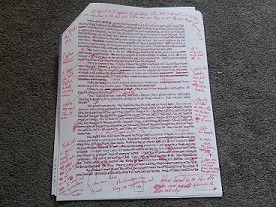
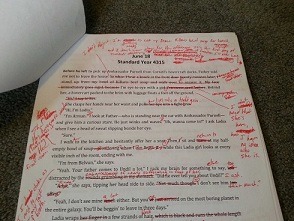
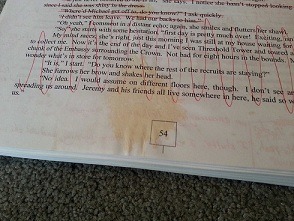
Goal: change all this paper into a book.
Eh, not that hard. I mean, you just have to read, right?
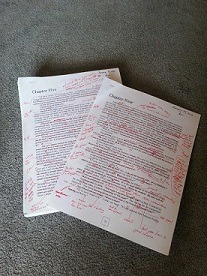
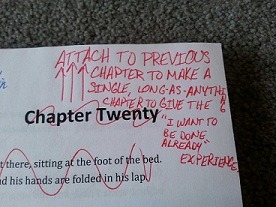
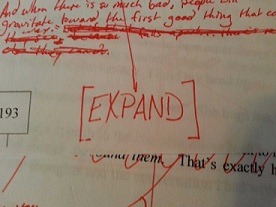
Maybe scratch a few notes in the margins as reminders.
Yeah, writing and editing isn’t time consuming or painstaking at all.
In fact, I find it quite relaxing. Good meditation. No stress whatsoever!
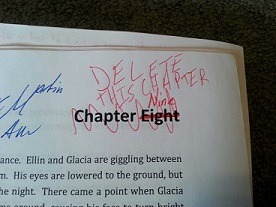
I mean, it’s not like writing a book involves any train of thought or decision making, like when to cut scenes, because whatever you write is perfect and there to stay!
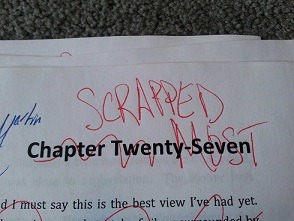
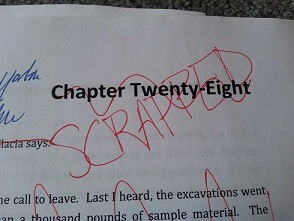
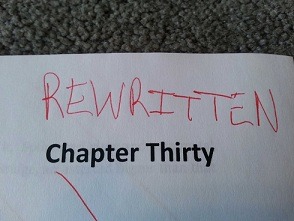
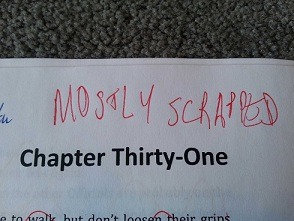
I mean, come on, it’s not like I’m going to rewrite the first chapter 51 TIMES to make sure it’s how I want it, right? That’d be crazy.
And no, it’s not like I spent over 3,000 HOURS READING AND REVISING 14 DRAFTS OF THE BOOK to make this book readable.
No sweat, no tears, no blood, and DEFINITELY no coffee stains.
Nope, writing is the easiest job in the world. I don’t see why anyone thinks otherwise. I mean, all we do is scribble words and take a few out, right?
We feel no satisfaction AT ALL when we receive a shipment of the final product for a book signing. *yawn* BOR–ING.
Nope, we don’t get excited at all. It’s just another day in the life.
And the sequels? Bitch, please. That’s child’s play.
You’re right. Writing a book is so easy. It’s not stressful, not exciting, and it’s definitely not worth the reward of holding something that USED TO BE EXCLUSIVELY IN YOUR HEAD AND NOW YOU GET TO SHARE IT WITH THE WHOLE WORLD.
Im not sure this scares me or inspires me…
so much more respect for writers now
I’m going to Reblog this until the end of time. Capital R. Thanks for this post. Ugh.
@anghraine tagged me in the “post-a-bit-of-something-you’re-working-on” meme, so for your previewing pleasure, here’s the opening scene of the Devil Went Down to Georgia (And Then Went Down On Johnny) fic:
He does try the play the goddamn thing once or twice.
But a fiddle of gold is heavy as shit, and the sound’s all wrong—loveless, and cold as Hell, with vicious strings that split Johnny’s fingers when he plays. (There’s never any blood when he looks, and Johnny wonders if it’s drinking him up, dry; leaving scars at his fingertips and an ache in his hand that won’t quite ease. Then again, it’s the Devil’s instrument; it can probably do any evil thing it likes.)
In the end, he loosens the bow-hair and puts the thing away in a battered, borrowed case, goes back to playing his box maple. Wood is living, it breathes and breaks; swells like your best girl’s clit under your tongue, shivers like a warm wind through leaves. Wood remembers the sun, wants to sing about it.
There’s nothing gold wants to sing about, except being dead.
Johnny’s playing the maple that night at the Bellows Club—well, used to be ‘Club’ until the owner’s second wife decided they were destined for better things, had it rechristened ‘Café’. The Tuesday-night regulars are the same, though, and they whistle or lazily applaud when he finishes his set, greet him by name after he’s put the fiddle away and come down off that high-as-Heaven stage. Johnny wades out among them to make a little small talk, then wanders his way to the bar.
The Devil is waiting for him there.
“Do you not like my gift, Johnny?” the Devil asks, smiling. He’s handsomer than Johnny remembers, but then Johnny supposes every man is better-looking on his own turf. (His grandmother always said that since Babel, the Devil claimed every spit of land taller than two stories. And here, among the old cigarette butts and sin, it’s likely to be true.)
The Devil smells of mint gum, something rotten underneath.
“Your gift?” Johnny laughs. “The way I remember, you lost it to me.”
“Fair and square,” the Devil says, still smiling.
tagging…………..everyone who’s working on shit they wish they could just finish already. I feel u guys.
Just read an excerpt from a productivity/goal setting book that concerned Tolkien.
His publisher mentioned that people wanted more about the hobbits after Tolkien published The Hobbit.
So Tolkien started another novel.
And apparently bounced between the depths of despair and the height of confidence for the entire process (he said that: “his ‘labour of delight’ had been ‘transformed into a nightmare.’”)
He gave up multiple times.
That book? Fellowship of the Ring.
You know what kept him going? C.S. Lewis’ support.
First lesson: if you’re stressing over your book, remember that Tolkien did too.
Second lesson: Writers have to support each other. Seriously. It might be the difference between a book that becomes beloved by hundreds of thousands (maybe even millions) even existing or not.
This is fair! This is so nice! I love this!
You know what else kept him going while he wrote Lord of the Rings? Well,
having an income while he wrote, that he didn’t really have to work for. In fact, he held his dream job (Professor of Literature) with a full-time income,
that came with a pleasant private office. He sat at work, for which he was being paid to do something else, and actively avoided doing his actual job while he pursued his own unrelated novel.
having a stay-at-home wife to run his entire home and family for him.
having servants…. that helps….
having a large, pretty house within a pleasant 25-minute walk of work.
never having to do:
household maintenance
laundry
cooking
cleaning
Life Admin
the not-fun gardening
the not-fun childcare
The work day
of Men of His Time ended when they came home. Women of His Time, and
Staff, existed to run the rest of his life. And that’s what they did. Jonald Ronald Rolkien Tolkien was the center of his household universe, which existed to support him in every possible way.
Let’s be real: he was not the person who was up in the night with a teething baby. That was what the nanny was for, followed by the wife. It would have been unthinkable for a man of his time/class to do his own childcare.
Actually, it’s worth noting that he had in particular a Very Intelligent Icelandic nanny, who lived in his
house and looked after his four children all day, and was never given a holiday, and told the children lovely bedtime
stories about trolls and the Icelandic Edda, and who provided a useful
resource for the language and myth he used in LoTR, until his wife became too jealous.
I mean, what could YOU do if you had that much support? Write an epic! probably!!
Because nobody was forcing him to do anything, ever, he slept late and woke up late. sounds nice
Tolkien did not do laundry. He did not cook meals. He did not
clean the house. He did not wrestle rice pudding down the necks of
his screaming babies, while calmly and lovingly answering his schoolchild’s questions. He wasn’t
making a cake while talking to his boss on the phone and wiping up the
dog’s sick. He did not spend hours every day in the process of keeping
his home together, or sorting the affairs of his four children, or sorting out the wifi. The Care and Keeping of Tolkien was outsourced to
wife, servants, scouts, assistants, waitstaff.
He would have received free meals at work, although he usually walked home for lunch, where he was served food and alcohol that he took into his private study. but if he didn’t
want to do that, Oxford profs of His Time could just get free lunch. He could ring a bell to be brought tea and snacks at work. And then he would go home and be served dinner.
Going to the pub with his friends, who supported and admired him! Sure!
not
having to go home in the evening to his four toddlers and children, because he was a Man of His Times! and he could totally
just spend evenings holed up in a pub with his admirers, because he was not required at home to help, or parent, or do anything in the home, except be served a glass of beer and go into his study.
god, imagine spending hours in the pub on a work night with a bunch of highly qualified literature professors telling you how smart and lovely and amazing you are. heck YES you’d be encouraged.
The Hobbit was already popular so it was probably quite helpful to know that while writing the next work.
Working and writing in a place that is generally considered to be an
inspiring setting for academia and literature. Want to write Elrond’s
Council? Sit down at a beautiful old stone table and start writing about the table. Want to write about a tree? Go write under
your favorite ancient tree in the Botanical Gardens. Want a snack? Ring a
bell and a scout will bring you toast and a cup of tea.
I mean, he wasn’t exactly spending his 40 hours a week under a manager’s baleful eye while he manned the self-checkouts at the Tesco in Coventry, or pumped gas for minimum wage in Montauk, scribbling notes into his phone. He floated around The City of Dreaming Spires, dreamily making art, while several people labored very hard so that he would be untroubled by Real Life while he floated.
Let’s be real. Tolkien’s literary accomplishments are very impressive, but he L I T E R A L L Y
was doing them on his work clock with the full support of a pit crew.
To be fair, I love the man. And I love the huffy apologism in the Tolkien Gateway: “Writing [The Fellowship of the Ring] was slow due to Tolkien’s perfectionism, and was frequently
interrupted by his obligations as an examiner, and other academic
duties.”
I’m ??? sorry that writing a novel on the company dime was frequently interrupted by occasionally having to do his job???? oh my god I love and hate this so much,
Dianna Wynne Jones, of Tolkien’s students at Oxford, commenting “of Tolkien, they said he was wasting his time on hobbits when he should have been writing learned articles…”
maybe because that’s what academics are SUPPOSED TO DO, it is their job,,,
He would also deliberately mumble incomprehensibly, ignoring his students, deliberately delivering terrible lectures, so that they would all go away; but Dianna actually wanted to receive some of the education she’d been promised:
“I imagine I caused Tolkien much grief by turning up to hear him lecture week after week, while he was trying to wrap his lectures up after a fortnight and get on with The Lord of the Rings (you could do that in those days, if you lacked an audience, and still get paid).”
God love the man! Deliberately teaching so badly because he planned to alienate his students and collect a paycheck! He would be flayed on social media for less, today. There would be news articles about the Lazy Professor. He would be fired, and buried, and dug up, and fired again.
In conclusion: yeah, CS Lewis was very encouraging and that helped immensely! But probably so did a secure income, freedom from chores and labor, and a crew of support staff. Who knows what we might do, if we all had that kind of encouragement. We’d probably be very productive.
So “dreamtime” was originally (1899) a mistranslation by a white ethnographer of an ATSI (Indigenous Australian) term “Alcheringa”. It was promptly criticized in the community of ethnographers for being a mistranslation/misunderstanding and usage in the academic community dropped out until the term was revived in the 1970s for a more broaaaaad definition, the mythological phenomenon described in the thread above.
What I was not aware of is that the mistranslation persisted in English-speaking communities to refer to those ATSl cultural belief sets! (When I was taking mythology classes in college, we used ATSI terms for ATSI concepts). Some very kind people on twitter gave me some sources and gently corrected me.
So let’s just all agree in the future to use the alternate term “strongtime” instead of “dreamtime” when we’re talking about the stuff that my thread concerned, y/y? It’s just less fraught with shitty colonialism and it costs zero dollars to not be an asshole, u get me?
SO NOW WE KNOW THAT
ok this is a REALLY GREAT THREAD but no, i’m not giving up ‘dreamtime’ as a term of art for narrative space. @ariaste you just underwent the process described in the thread – with regards to the word ‘dreamtime’. it was a lovely, evocative word, and then you found out it was politically tainted, and now you want to avoid it.
plus, it just makes more sense. if ‘strongtime’ is the correct term for australian mythology, then of course we should use it for that. but it doesn’t describe narrative space in general nearly as well as ‘dreamtime’.
aboriginal australians have reclaimed ‘dreamtime’ to mean that specific thing in their culture, in the town I lived in in central queensland there was a wonderful building that sadly closed before I could ever visit called the ‘dreamtime cultural center’ which had the history of the aboriginee peoples that live in the area. Reading about the dreamtime is really interesting and educational!
Using the same word to describe the narrative thing seems fine from what I know through my prior interactions with aborginee cultural practices. The thing that’s a Please Don’t from what I researched and asked about is using the actual dreamtime as a spice for fantasy/sci-fi stories and such if you aren’t yourself aboriginal australian, because it’s part of a living culture that holds stories and history as sacred.
also after rambling in the tags i just want to share a really lovely thing i learned at the retreat:
this is migaloo! migaloo is a white humpback whale that migrates past the island regularly and is sacred to the woppaburra people who live on what is now known as north keppel island, but the traditional name is konomie. His name means “white fella”. The woppaburra are part of a wider whale dreaming indigenous community around australia, and the spiritual salt water totem for them is mugga mugga, (the humpback whale).
i’ve blathered on a bit mainly because aboriginal mythology is really cool and there are so many distinct cultural groups and i just wanted to share what i know about the people who were kind enough to welcome me to their home and tell me their stories. I checked to be sure I wasn’t mangling anything c: https://australianmuseum.net.au/woppaburra-people-of-the-keppel-islands (in case anyone wants to read more about the history! cw for some very sad stuff though)
thank you for adding this, knowing about this sacred whale friend added to my life’s happiness ❤
I see a lot of writing advice, particularly about giving characters flaws. The main advice is “everyone has flaws! make sure to give your character flaws or else it’s not realistic!” And after thinking about it… I would like to challenge this.
It essentially posits a view of human nature that there are good and bad traits, and that these traits can be neatly diagrammed into separate columns, one set of which can and should be eliminated. It tends to go along with a view that posits character development should be about scrubbing away of “flawed” traits until the character achieves more a higher level of goodness, or else the character doesn’t and falls into tragedy. This is not untrue, necessarily. There are definitely some “flaws” that are 100% bad and sometimes a good arc is about slowly losing them. However, I could call this advice incomplete.
Consider thinking about it this way. Characters have traits and often whether or not that trait is a flaw is purely circumstantial.
For instance, fairy tales I read as a child. In some, when an old beggar asked for money on the road, it was a secret test of character. The prince who gave the old man money or food would be rewarded. But in other folktales I read, the old beggar would be malevolent, and any prince who stooped to help him would be beaten, punished for letting his guard down. Now, in a story as well as in real life, either of these scenarios can occur–a stranger who asks for help can be benevolent or malevolent. So which is the flaw? Is it a “flaw” to be compassionate? or is it a “flaw” to be guarded?
Trick question–it’s purely conditional. Both traits are simultaneously a strength and a weakness. Either has an advantage, but either comes with a price as well. And whether the price is greater than the advantage depends on circumstance. The same can be said for most character traits, in fact!
An agreeable character who gets along with everyone will be pressured into agreeing with something atrocious because it’s a commonly held viewpoint. A character who’s principled and holds firm even under great pressure will take much, much longer to change their mind when they are actually in the wrong. A character who loves animals and loves to shower them with affection will get bitten if they try the same on every animal. As the circumstances change, flaws become strengths, and strengths become weaknesses. And even a trait that’s wholly virtuous, such as compassion, comes with a price and can be turned for the worst.
You don’t have to think about inserting flaws into your character. Your character, even the most perfect “Mary Sue,” is already flawed the moment you give her any traits at all. The problem with Mary Sue isn’t a lack of flaws, it’s a lack of circumstances to challenge her properly, to show her paying the natural price. Your job as an author is to create circumstances in the narrative that 1) justify why these traits exist in your character 2) show what your character gains from these traits and then 3) change the circumstances to challenge her.
Make your character pay the price for their traits, for their choices. And then, when challenged, you can make a hell of a story by showing us how they adapt, or why they stick to their guns anyway.
this is well said. there is no such thing as a mary sue character, really, only a mary sue story. when every other character and circumstance revolves completely around the protagonist, that protagonist becomes a mary sue, no matter how ‘flawed’ they are. when the story is true to its own momentum and consequences, and the other characters are complex and have their own motivation, even the most perfect character can’t be a mary sue.
a mary sue isn’t a ‘perfect’ character, it’s a black hole that eats the story.
Years ago, you promised your firstborn to a witch. Since then, despite your best efforts, you can’t seem to get laid. The witch is starting to get pretty pissed.
Y’all get together to discuss your options and she starts coaching you on how to get men because she doesn’t want to waste more magic on you without promise of payment. The more time you guys spend together the more you realize you have a bit of a crush on her. Soon you’re sabotaging your dates on purpose to see her again.
Long story short you fall in love and get married and do the sperm donor thing AND YOUR FIRSTBORN IS HERS BY DEFAULT and you live happily ever after. The end.







 just moving along like everyone else