I’ve seen a lot of people on my dash who are justifiably upset with some of Tumblr’s recent changes (argh, reply function gone, argh argh) and talking about moving to another site. This is a good thing (and also more or less inevitable at some point; fandom activity never stays in one place forever, or else we’d all still be on like, Usenet*).
But one thing I will say, for those of you who have not lived through a fannish migration or six, is that fandoms don’t jump in an organized or coherent way. It tends to be a trickle, not a dam burst. So for instance, almost ten years ago now (yikes, can it really have been that long?) there was Strikethrough on Livejournal, which is a long story that doesn’t bear getting into right now but the short form is that LJ made enemies of a lot of fans. And there were various attempts to jump to InsaneJournal and GreatestJournal and a bunch of other LJ clones, but they mostly didn’t ‘take.’ Dreamwidth, when it came along a couple of years later, did better at attracting people (and does have a comparatively small but active user base–and specific communities, like certain RP comms, did make an organized jump, but they were actual communities and not an amorphous blob the way ‘Dragon Age fandom,’ say, is an amorphous blob), but the thing that actually finally dragged a ton of fannish activity away from LJ seems to have been Tumblr–not any of the “like LJ but different/better” alternatives that people were floating and promoting, but something entirely different.
The main thing is that communities or groups of friends may coordinate a move together, but fandoms in a larger sense are about as coordinate-able as a bunch of cats. And also, the place they end up going generally isn’t “like X but better” but a whole new Y (mailing lists to bboards to LJ to Tumblr, just to name a few–and each of those changed the “shape” of the fandoms within it quite a bit).
The reason I am saying this is not to discourage people from seeking out alternatives, but to say: fandom is going to move, if not now then at some point, but it ain’t going to happen in a way that necessarily makes a lot of sense from the outside. Like a bunch of cats, we’re going to wander around for a bit and then land somewhere and pretend we did it on purpose. And it’s easy to lose track of people when that happens. So my advice is: let people who you care about not losing track of know where to find you and how to keep up with you, whether it’s a new site or even just “hey, here’s my email, let’s stay in touch.” I have friends from old, old fannish days, who never ended up on Tumblr, but we still occasionally send each other a silly link or something… and who knows, maybe when fandom saunters catlike over to something new, we’ll reconnect there.
* – Inevitably when I say something like this someone feels obliged to note that they are still on, e.g., Usenet. And it’s true that Usenet still sees activity. But I think it’s safe to say that fannish activity is not there in the way that it was in, for instance, the early 90s.
This post was from 3 years ago, but it’s still holds true. I’ve managed to find many muturals after my old account was deleted, but not everyone, like smaller blogs in fandoms I don’t frequent often or ones with long, hard to pronounce names.
Get emails. Signal boost posts with people’s contact info so if the original blog goes dark that others can find them. There’s a good account called @find-me-at-x that’s doing the Good Fandom Lord’s work of boosting announcement posts and asks for missing blogs. I’d recommend following them if there’s someone you’re trying to find.
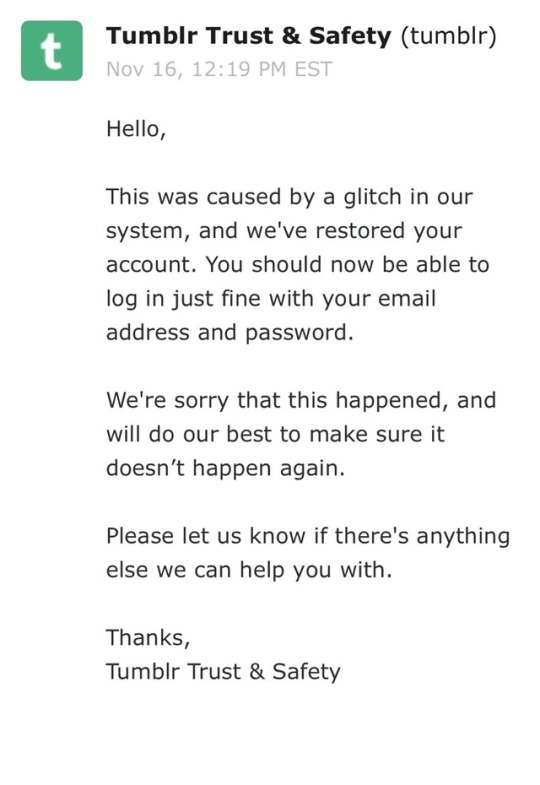
So apparently tumblr is going through some nsfw blog purges or some shit (to maybe handle all those porn blogs? idk this is such a hellsite) and accounts are getting deleted without notice even if you’re not posting nsfw content yourself.
Apparently the tumblr app got deleted from the Apple store due to the insane amounts of porn on here (the bots… we all know its the bots they haven’t given a shit about) so in order to get back into the app store, they’re on a deleting frenzy apparently (most likely a code that’s deleting without prejudice, and hopefully in wrong, properly-marked instances, folks can appeal the delete… idk right now). LOTS of artists have lost their work.
If you reblog NSFW material- not necessarily post it yourself- you’re at risk too, so mark your blog ‘explicit’ to save from being deleted. If you’ve ever reblogged anything from your safe-for-work blog which is explicit, mark it explicit anyways (better safe than sorry i guess).
On desktop:
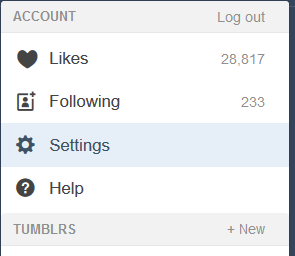
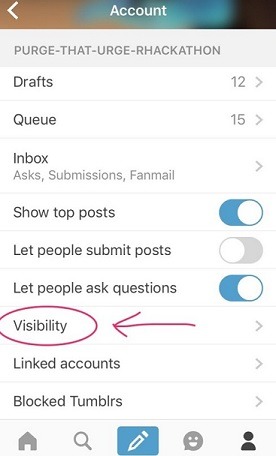
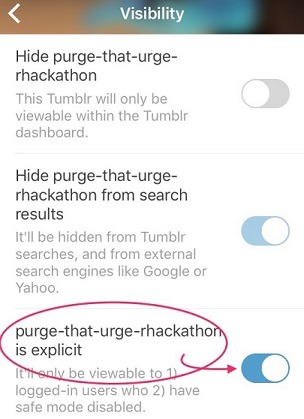
You need to go to your settings (click the little man icon to get to the gear icon for settings)>click each individual blog (if you have side blogs)>scroll down to Visibility> and then mark that your blog/sideblog is explicit.
On mobile iOS:
Same thing. Click the little man to be taken to whatever blog you have selected atm> select the gear icon in the upper righthand corner for Settings>Scroll down to Visibility > mark explicit.
What mine looks like:
What happens when you do this is 1) it’ll hide your blog from anyone that has safesearch on (i.e. minors/folks who don’t like explicit stuff i guess?) and 2)any outside links you have to your blog (for example, I link my tumblr page on ao3 accounts) will no longer show up if the user isn’t logged in (you’ll get that “nothing new here” static page tumblr has when you’re logged out).
—>If you link your blogs from outside platforms like I do, you might want to make a note on those platforms that users will need to be logged in to see your blog (otherwise they might think the blog is deleted/deactivated/the person moved on to elsewhere etc. and that IS going to impact the hits you get and the amount of followers)
BACK UP YOUR BLOG:
It’ll save the data as such:
A Posts folder, with an HTML file for each post.
A Media folder, with the media from your posts, plus any media you’ve uploaded (like in messaging). These files will be in the format you uploaded them in (JPG, GIF, PNG, MP4, and so on).
A representation of your blog’s messaging conversations, in XML format.
A representation of your blog’s posts, also in XML format.thats all the stuff it has
It’s really easy to do (you have to do it from desktop; can’t export to your phone or something, though I might not be correct on that) following the same steps as above. Just when you click each individual blog, scroll all the way down, and under Blocked Tumblrs you will see Export Username (the username will match whichever blog you’re exporting). You will see a “Backup Processing…” note there instead of the export thing. It’s slow, especially if you’ve been here for years, but it does its thing.
Right now it seems like super-popular artists are getting hit first (laziness of code going after the biggest hits) but please protect yourself and back up your work. Also take steps to ensure your audiences on other platforms know wtf goes on on this hellsite and that they need an account or whatever. bleh
There are posts from 2016 that are being shared again about NSFW. I shouldn’t have to explain that those are no longer relevant.
There is a post from 3 days ago that the current sweep is being caused by a bug. This is not known if it is still relevant.
There are rumors that this is an attempt to purge pornbots, and legit blogs are getting caught in the crossfire. This has not been confirmed.
There are assumptions, again based on statements from 3 days ago, that this is in response to a legal matter regarding the IRA. Again, this has not been confirmed.
Until staff comes forward about the current events, nothing is confirmed as of yet. If you get purged, send staff a ticket, but until we get answers no one knows what is happening. Please stop spreading posts that do not have current sources.
this is a bit of an emergency
BAD NEWS AHEAD
If you use Tumblr, backup your stuff right now and make a post redirecting your followers to another account, Twitter or something like that
Apple removed Tumblr from the App Store because their porn bot problem got too big, and they don’t allow explicit NSFW apps
Tumblr, like the galaxy-brained geniuses they are, are going on a spree and deleting lots of NSFW blogs
Even famous artists like cutesexyrobots and eigaka got their blogs purged, so ACT QUICK
I’ve been getting some questions about transformative justice lately, so here’s an attempt at a quick 101 of what that means. It’s a first draft, a work in progress.
Transformative justice is build on the belief that we all generally want to be liked by the people around us and want
those people to be okay. The stronger our sense of connection, the more likely we are to want to help and not harm people. So we generally do not do harmful actions unless there are root causes, like:
Some examples of root causes:
We do not understand that our actions are harmful
Our basic needs are not being met (could be physical needs, mental health needs, etc)
We are hurting in a way that isnt acknowledged and are lashing out as a result
We reproduce a harmful oppressive system (sexist
violence, racist violence, transphobic violence, etc)
… other root causes that I’ve forgotten right now
Punishment
does not solve any of these causes. Punishment can make us too afraid
to act for a while, but in the end, if these reasons are not adressed,
our harmful behavior is going to keep coming back.
But just
as importantly: because punishment is forced upon the punished, it can
only happen when the punisher has more power than the punished. Punishment is a matter of who has the power to punish, not of who
is right or who is deserving of punishment. Generally, punishment doesn’t happen to the bad people, just to
those without the power to avoid being punished. Punishment maintains existing power imbalances and creates new
power-imbalances, new harm, new wounds, and as a result new harmful
behaviors. Punishment perpetuates harm.
So, what is the alternative?
Well, transformative justice relies on 3 things:
Protecting the victim and giving them space to heal (sidenote: there isn’t always a simple victim-actor binary)
Protecting the community and giving it space to heal
Working with the harmful actor to see what is needed
Focussing on the last two parts here, transformative justice means having genuine honest conversations with the harmful actor to achieve for example:
The realisation in the actor that the behavior is harmful and needs to change
The
realisation in the community that someone’s basic needs were not being met
and that needs to change
The realisation
in the community
that someone’s hurt was
not acknowledged and
that needs to change
The unlearning in the actor of the oppressive behaviors that prompted the harmful behavior
The realisation
in the community
that there was no real harm and that the behavior that broke the ‘rules’ was never harmful to begin with and the ‘rules’ need to change
A combination of these things
In short, if there is harmful behavior, it means something about the way
we have organized our society probably needs changing. Often other things that can not directly be identified as ‘root causes of harmful behavior’ come up, like ‘a person that was lashing out was able to recruit a group of friends in their harmful behavior’ and those things then need to be adressed. Transformative justice isn’t just about the actor, it is about the whole community.
Where there is harm, there is also disconnection. Pain, anger, broken trust. So identification of the root causes is followed by transformation. Meaning the root causes of the harmful behavior are removed and the connection between actor and community is restored.
The goal of transformative justice is NOT that the harmful actor puts on
a show of the right apologies and demonstrations of change. It’s not a
performance of accountability. Transformative justice is about creating actual, messy,
slow, imperfect change. Remorse is not a required component. The goal isn’t a specific emotion or act, it’s reaching a situation where no new harm will occur and connections are restored.
It’s hard work, for the harmful actor and for
the community. It is generally not fun. When it is done by a group of people who have grown up in a culture of revenge and punishment, it’s very very difficult work. Since we we’re already making lists, here are some..
Common pitfalls:
We don’t always have the resources to address the needs that are not being met, whether they are physical needs or mental health needs.
We don’t always have the skills needed to really listen to each other, to find root causes behind harm, to work on genuine healing, etc. We’re quick to fall into familiar patterns of punishment & revenge or demanding ingenuine performed apologies so that we can have simplicity and closure.
Transformations are often slow and unclear, creating a long period
of uncertainty.
There is no clear sense of when it’s over or whether a harmful actor is putting enough effort into ‘dealing with their shit’. If someone is lashing out as a
result of a lifetime of abuse or a deeply engrained oppressive dogma,
they’re not likely to become perfect in a short time. Protecting victims
and the community during that long period is difficult. Transformative
justice can be emotionally draining on everyone involved over a long
period of time. It is difficult to maintain. It doesn’t have big
spectacular success stories and very little recognition.
Working with the harmful actor to achieve transformation means listening to
someone who has done harm and genuinely trying to understand their point of view. This can bring a lot of discomfort and is something a lot of us who say we want transformative justice are ultimately unwilling to do. Transformation of an actor also results in a real reconnection of bonds between the actor and the community once the transformation has taken place. Are we willing to do that?
Participation of the victim should always be voluntary. A person healing from a very harmful thing definitely shouldn’t be pushed to participate. At the same time, some victims might really want to participate in the transformative justice process but may be unwilling or unable to deal with the messy process of genuine conversations with an actor and the flawed process of transformation it involves. Giving victims agency but also allowing the actors transformative process to take place is difficult.
We’re not very good at recognizing the difference between mutual harm
and victim-actor binaries. We often end up dealing badly with
cases where that is unclear. When the actor has a marginalized identity that the victim does not have, we’re often very bad at recognizing actor and victim.
We’re often unwilling to admit the role favoritism, personal bonds and popularity plays in how we respond to the need for a transformative justice process. A person who is well liked may get a lot more support in their transformation that a person who is not. The amount of energy we’re willing to spend on someone varies.
The community may be unwilling to change parts of its culture that are consistently creating new harmful actors. For example: an community that glorifies physical strength, fighting skills and a warrior attitude is going to have to problems with that again and again. A community that focusses on performative call-outs as a way of demonstrating your ideological purity is going to be very bad at genuine transformation.
And there are more pitfalls.. so yeah, it’s complicated. It’s a lot more complicated that kicking people out or building prisons.
But while punishment is ineffective and thus required again and again and again, transformative justice creates lasting change. And because it doesn’t just change the actor, every transformative justice process also creates a better community that is better capable of preventing harm in the first place.
To round up
Transformative justice is as old as human community itself and there are many different transformative justice techniques out there. Some
rely on an outside ‘impartial’ negotiator, others are victim-led, some
require that the actor in some way repairs the damage done while other
methods reject this notion. But in general transformative justice is about:
Safety, healing, and agency for victims
Transformation for people who did harm, resulting in meaningful reconnection to the community
Community transformation and healing
Transformation of the social conditions that perpetuate harm



 just moving along like everyone else