A conversation on the fluidity of terms, and how to understand and have a productive conversation with a shifting generational gap in trans terminology.
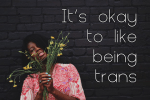
You’re more than just dysphoria and a target of transphobia (img source)
this is why I’m against the narrative of “being LGBT is defined by suffering, if you don’t suffer you don’t belong to LGBT or Pride”. it’s incredibly damaging to queer people, especially queer kids who are just figuring out how their sexuality or gender identity figures into their overall identity. this narrative shoves them back into the closet if they don’t suffer “enough”, and how much one must suffer is completely arbitrary
also hey most young folks dont have super diverse experiences under their belt yet due to being, like, young. there are only a few narratives of queer suffering out there, and thus the definition of queer suffering and what that looks/feels like is very narrow and doesn’t always apply to a lot of queer youth.
so, like, promoting the concept of “LGBTQ = suffering” means queer kids may not recognize when something they’re going through is because of their queerness, and disregard that and themselves even if it is.
also pressures queer kids to come out for the sake of suffering and feeling ‘valid’ even if they aren’t safe or ready to.
There’s this thing that happens with minority groups. We come together because of the discrimination but we stay together for the culture. But people seem to forget that – LGBTQIA+ people aren’t just together because we suffer, we’re together because we have something to celebrate in the uniqueness we share. There’s something fundamentally wrong about working towards a better world with less discrimination and then gatekeeping newer members of the community because we don’t feel they’re suffered enough. THAT WAS THE GOAL.
Every queer person you feel hasn’t suffered enough to qualify as queer is proof of a better world. A better world is what we said we wanted, but it’s not going to be what we get if we let our identities be defined by suffering.
Worth noting that when a group too strongly roots their identity in the idea of persecution you eventually get stuff like American Christians being convinced they are a persecuted minority
This also paints an incredibly bleak future where we will never not be suffering. Idk about you, but that’s not the future I’m trying to achieve.
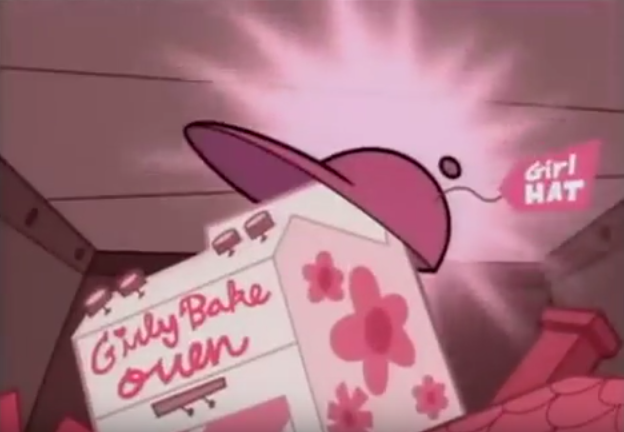
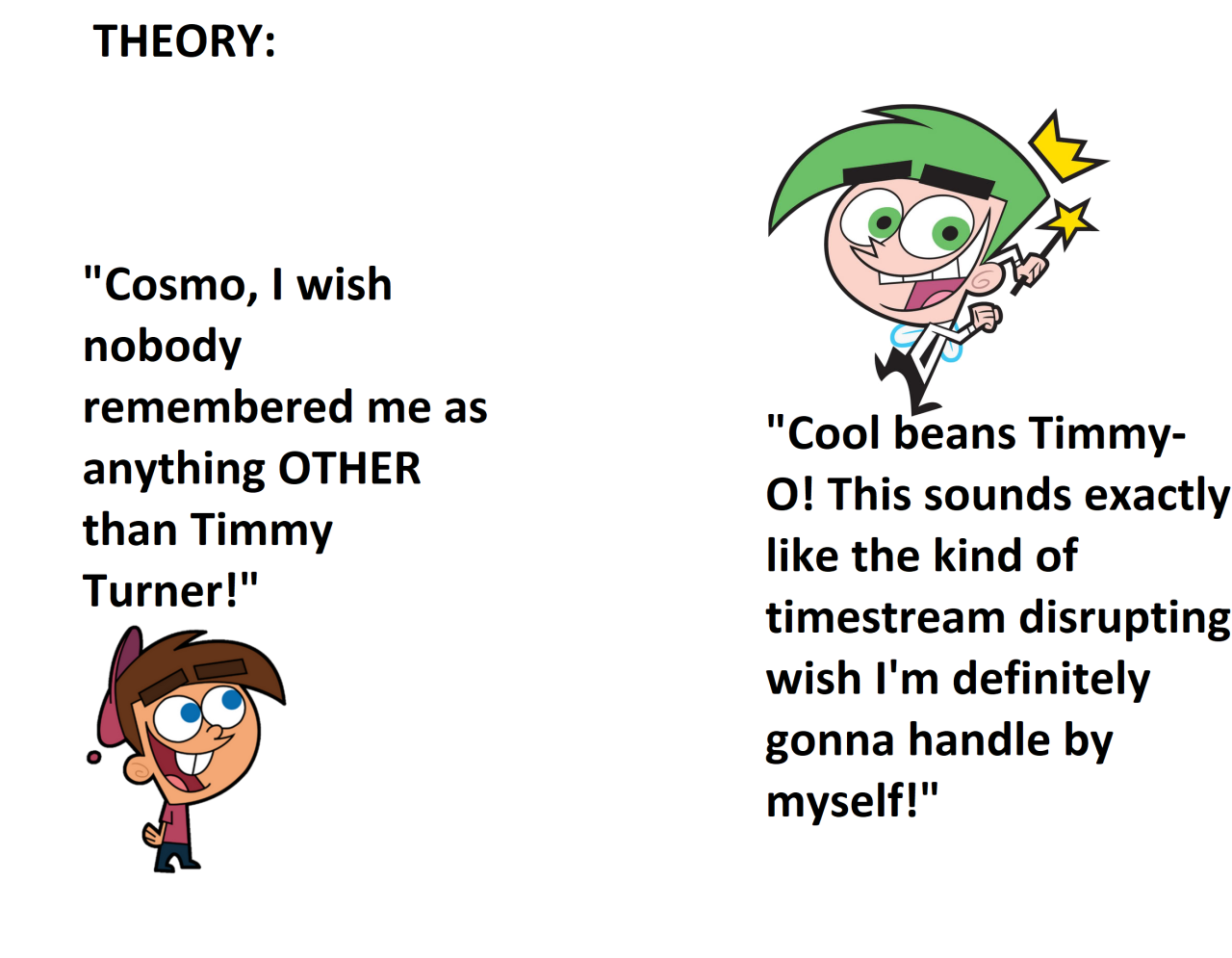
I know everyone’s talking about how the cast of Danny Phantom is full of gay and trans characters exclusively to piss of Butch Hartman but let us not forget, Butch’s bread and butter, Fairly Odd Parents…
Timmy’s parents were 100% sure that Timmy was going to be a girl before he was born, as seen in the episode Secret Origin of Denzel Crocker.
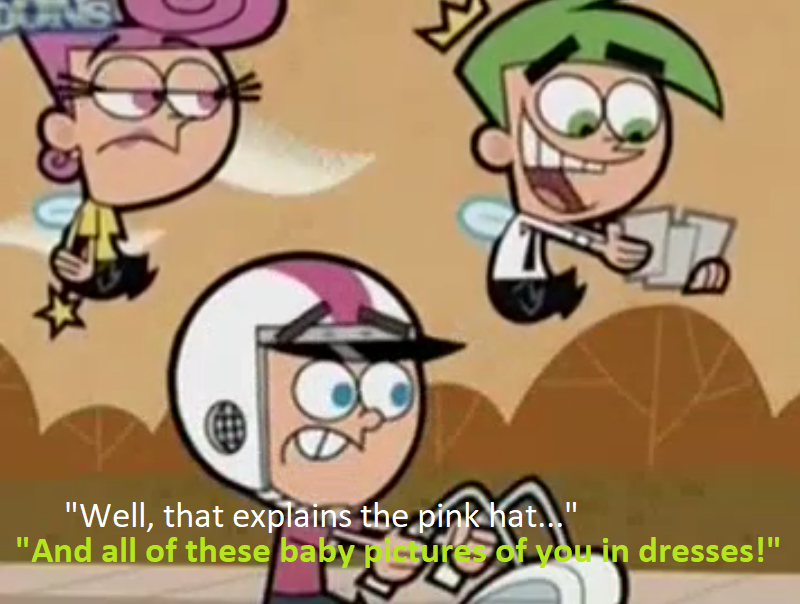
Cosmo seems to be the only other one in the know about this, and has baby pictures of Timmy in a dress on hand
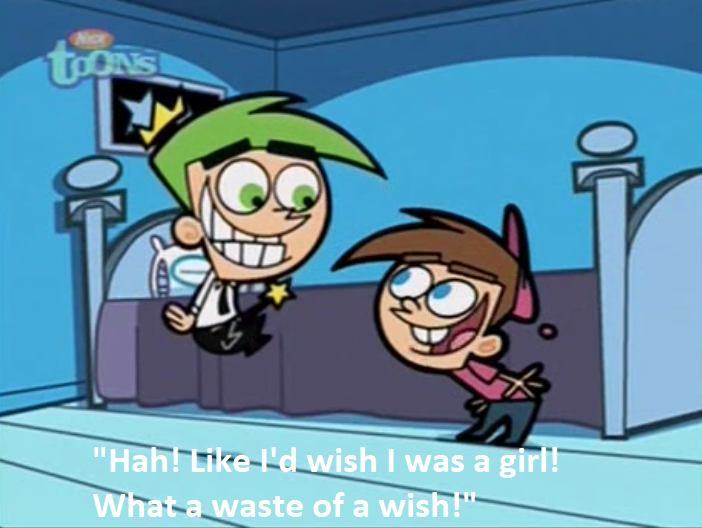
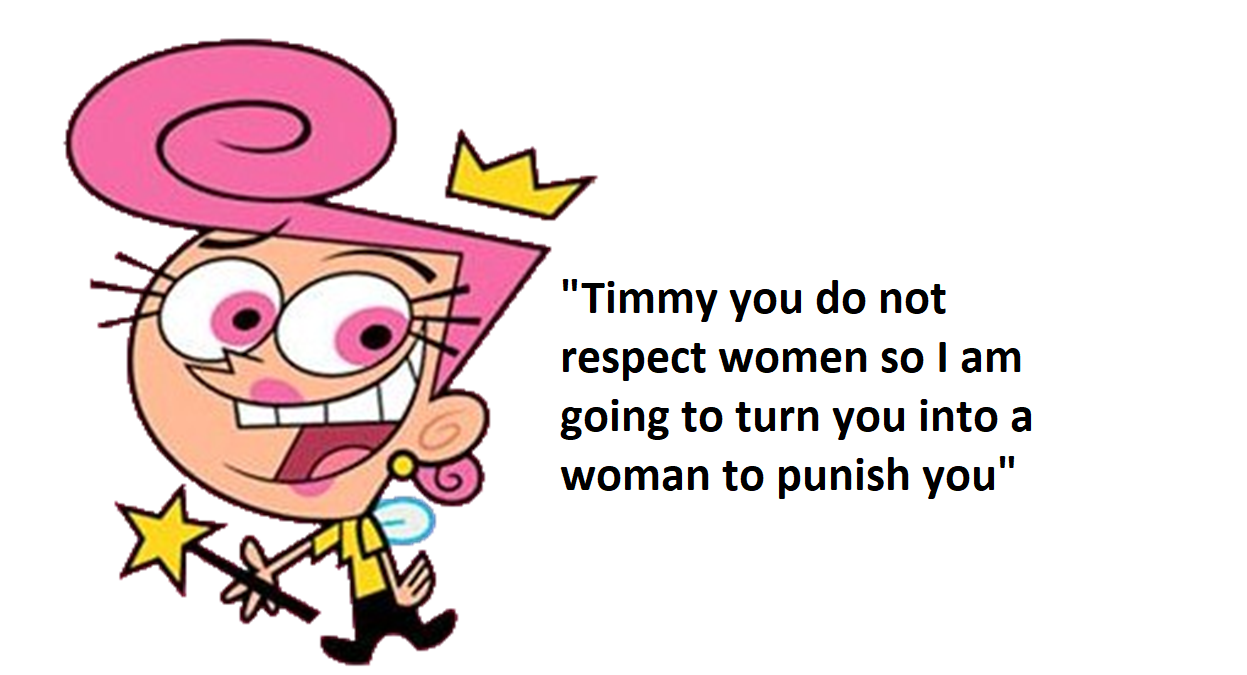
Then, in the episode The Boy Who Would Be Queen…
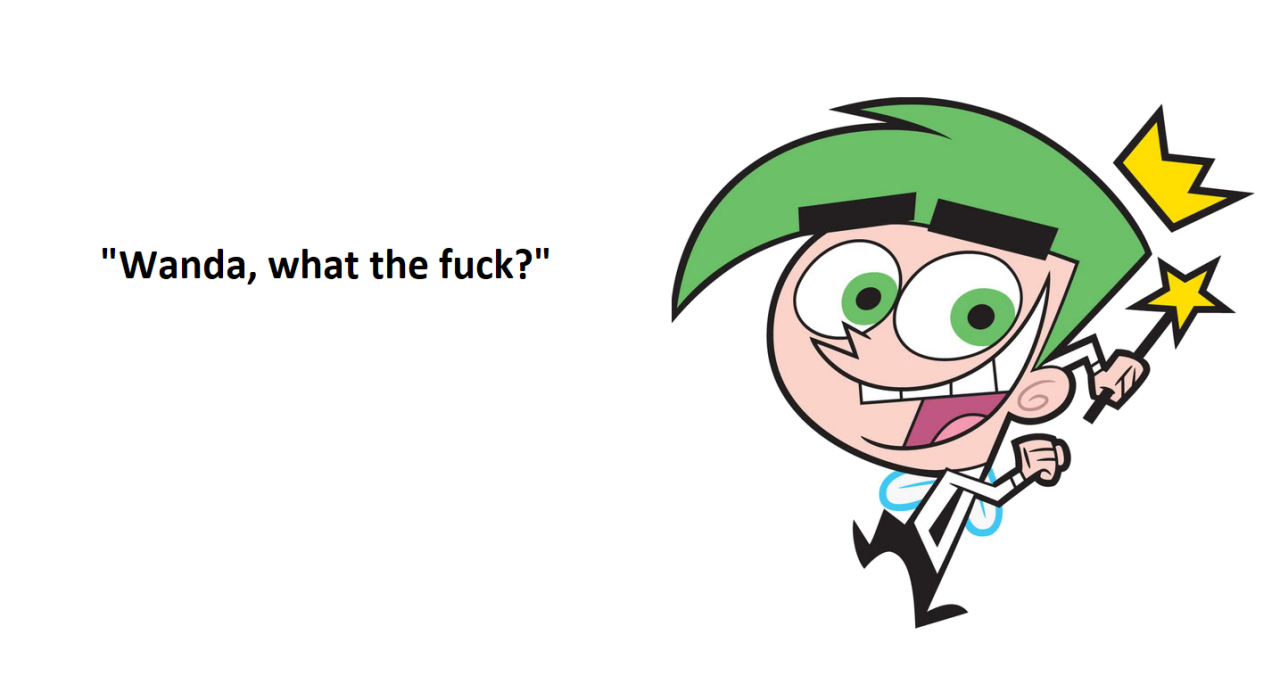
When Wanda does, inevitably, transform Timmy into a girl to teach him a lesson…
Cosmo immediately panics.
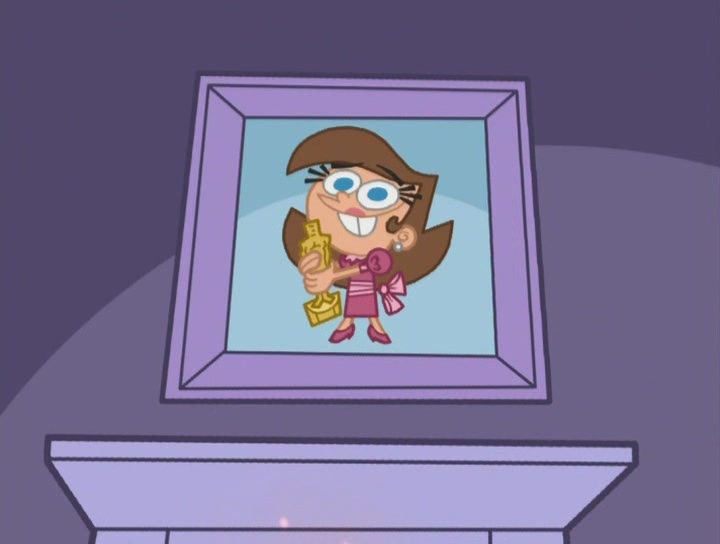
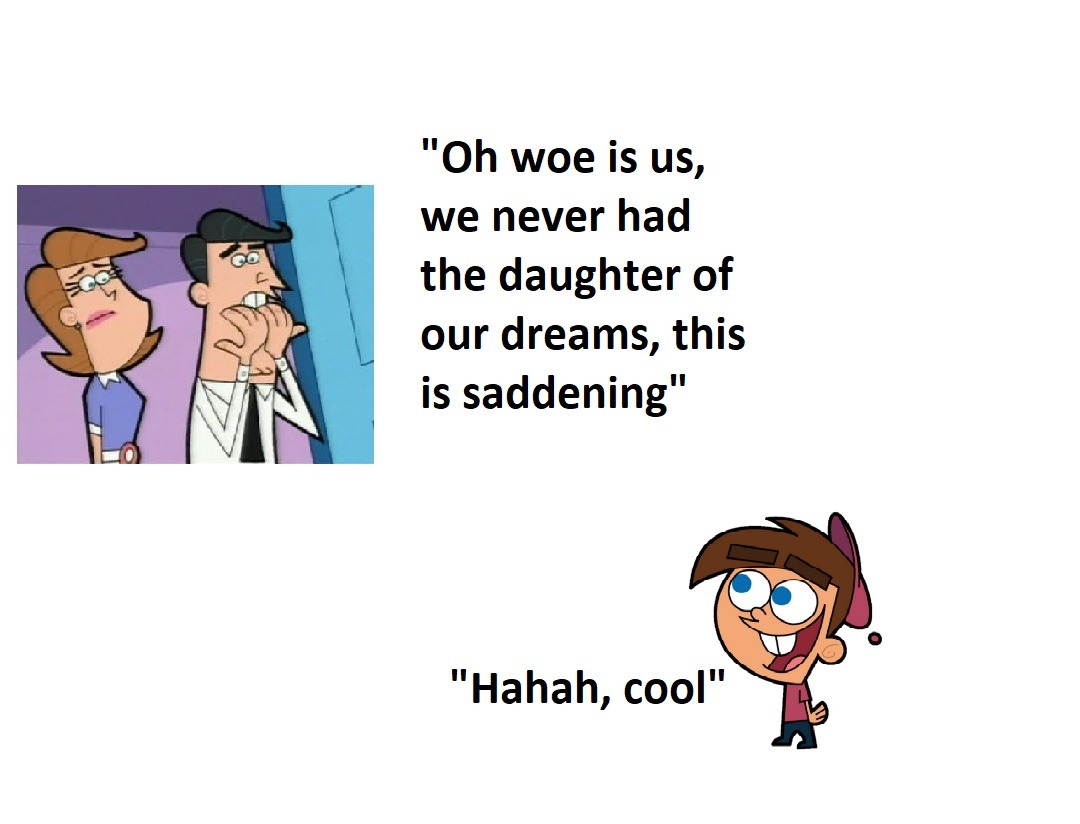
AND in the episode “It’s a Wishful LIfe” when Timmy wishes he never existed…
The Turners have a daughter instead.
In conclusion:
Timmy Turner is trans and used the power of one of his fairy godparents to wish that everyone in his life completely forget that he was born and raised female for a portion of his life, including his parents and his other fairy godparent.
Share to make butch hartman mad he accidentally keeps making characters trans
So much of the Euro-American understanding of being trans (or anything other than 100% constantly identified with your assigned gender) focuses on discomfort.
Some people take this idea to an extreme and claim you can’t be trans unless you hate your body and want every surgery available to you. As many other writers have said before, that’s not true. It’s perfectly possible to be trans with only mild dysphoria or none at all. It’s perfectly possible to be trans and have a mental map of your body that looks just like the one you already have.
But I’d like to push even harder against the idea that trans=discomfort. I’d like to offer this: sometimes the exploration of one’s gender can be motivated by pleasure rather than discomfort.
Let me give an example. Let’s say there’s a person named Cal. Most people think of Cal as a boy, and Cal’s all right with that. So far as Cal’s concerned, a boy isn’t a bad thing to be. But sometimes, Cal likes to imagine being a girl and being treated as a girl. Those fantasies are always accompanied by feelings of pleasure, satisfaction, anticipation, and warmth. Eventually, having had these thoughts for years, Cal asks people to use ‘she’ pronouns in private and to refer to her as a girl. Cal does this for another year before claiming the label “trans”.
Some people would say a person like Cal can’t be trans because there’s no dysphoria, self-hatred, distress, or even discomfort. There’s just a pleasure-based preference. But why is distress necessary? Why are trans people supposed to be defined solely by our pain and self-hatred?
It’s my opinion that defining trans people solely by discomfort is an aspect of transphobia. The idea behind trans=discomfort is that being anything other than 100% cis is so awful that no one would do it unless the alternative were unlivable. Think about that: defining trans people solely by their experiences of discomfort means believing that being trans is so awful that only misery could drive us to it. And to me, that sounds like the thinking of someone who really hates trans people.
So I’ll come out and say it: sometimes transition or self-exploration of gender is not just about lessening discomfort, but is about improving and deepening the pleasure we take in our lives.
“Think about that: defining trans people solely by their experiences of discomfort means believing that being trans is so awful that only misery could drive us to it.”
One thing that a lot of transmasc people struggle with before they fully realize they’re trans is the question of “do I hate being treated like a woman because women are treated like shit, or do I hate being treated like a woman because I’m not a woman?”
and one method (though not entirely foolproof) to figuring that out is asking “would I be upset if another girl was treated like this?”
like, I’d be just as mad if some dude said “you can’t do math because you’re a girl” to a female classmate as I would if he said it to me
however, I never got uncomfortable at waiters calling my female friends “m’am”, I was only uncomfortable when they called *me* that
and obviously everyone’s feelings are different and there’s tons of variables at play, but if you find that there’s a lot of the second scenario going on with you, there’s a good chance you’re not entirely cis
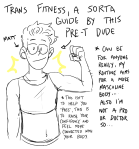
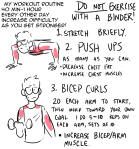
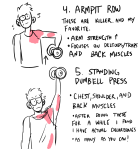
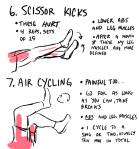
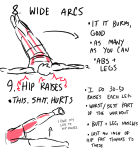
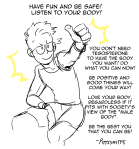
some people on insta said i should post my workout routine since i mentioned how im so happy with the results, so here’s my little workout guide for my fellow trans folk! I focused on getting a more masculine body because obviously that’s what I want. I’m so happy with the results, this workout is saving my fucking life!!!! I can’t get on T soon so this has really been keeping my dysphoria in check. I barely get body dysphoria, i love how my clothes looks on me, i love feeling confident for once in my life!!! HOWEVER Don’t go overboard with working out my friends. Do not work out in a binder, you MUST take days off to let your muscles heal, and you CAN’T starve yourself! Fitness is all about health and diet! Take care of yourself. This is also MY workout routine, you may not get the same results as I have! Every body is different.
yeah the general quality and attributes of straight boys is why it took me to my late twenties to be able to actually conceptualize myself as a man without feeling INTENSE DISMAY. i mean, if a class of people abuses you all your life, you’re gonna feel pretty damn weird about joining their ranks!
i’ve found that even though i identify AS a man, i’m still way more likely to identify WITH female characters— especially ones like mulan and furiosa, who negotiate with their own femininity in order to survive and thrive in male roles. the male characters i identify with right off the bat are invariably damaged, frustrated, weak men, like steve rogers or miles vorkosigan: men born into the stifling cages of broken bodies, who work themselves raw to achieve what their peers take without thinking.
when i started transitioning, i felt a lot of rage and a lot of regret. i didn’t WANT to be trans. i didn’t want to be a half-thing, a not-quite man. i wanted a cis man’s body, a cis man’s life, and in abandoning being a cis woman, i felt like i was acknowledging that i was never going to be a whole, harmonious creature ever again. the entire rest of my life would be spent in transit, straining towards something i could not, by definition, actually reach.
but the thing is, growing into a trans identity has been cool. not being cis is alright, being something fluid and transitory, something contextual, is satisfying in and of itself. snakes shed their skin and come out beautiful. hermit crabs swap their shells. flowers turn into fruit which turns into seeds and every step of that process nourishes the world. being something that is eternally and intentionally shaping themself is really cool actually.
so, yeah, you’re a straight guy. you’re under no obligation to be a straight guy the way anyone else is doing it: as a point of fact, you kind of can’t. but the courage and compassion you learned as a lesbian will carry onwards into your new identity, and you will make it for yourself, out of things that you like, and ways that feel right. being trans is scary and uncomfortable in a lot of ways, but in that way, specifically, you are free, and it is wonderful.
“genitalia associated with cis women are harshly stigmatized and policed as part of misogyny, which can lead to violence” and “not all women have vaginas and not everyone with a vagina is a woman” and “trans peoples’ bodies are harshly stigmatized and policed as part of transphobia, which can lead to violence” are not mutually exclusive factsx and in fact all of these things are very much interlinked, and should not be used as gotchas! against each other
This is a really large project and not one which I’m remotely qualified to figure out by myself, but here are a few disconnected thoughts:
For a lot of people especially in the early stages of coming out, it can be easier to say, e.g. “I want to be a man,” than “I am a man.” The prevailing narrative right now is that a trans man was always a man and doesn’t leave much room for desire or becoming. This narrative is convenient for people who can confidently assert a transgender identity, but it makes it hard for people to recognize the qualitative experience of dysphoria, which very frequently manifests as wanting to be rather than feeling like you already are. I don’t think it would be a good idea to replace one totalizing narrative with another one, but if there had been a little more pluralism in how we talk about these things I wouldn’t have had to worry if it was offensive to trans people for me to think about wanting to be a woman without being one.
Due to both community dynamics and the narratives we’ve settled on, it can be really difficult for someone to recognize commonalities between their experiences and trans people’s while thinking of themself as cis. Cis people (and “cis” people) are told that they can’t understand what it’s like to be trans, that transitioning would make them incredibly dysphoric and if they don’t realize that it’s because of a failure of introspection, that it’s offensive to even make the comparison. This results in closeted trans people assuming that their experiences can’t possibly be the same as trans people’s and therefore don’t constitute any evidence that they might be trans.
People keep throwing around the phrase “gender identity” like it refers to a specific qualitative experience, of course without describing what that experience feels like. (Giving such a description would be impossible because that’s not what gender identity is.) How the fuck is anyone supposed to know what their gender identity is when you put it that way?
There were some things that the trans student organization at my undergraduate university did that seemed really helpful in ways that I don’t see very often. It was explicitly for trans people “and allies”. I don’t think anyone showed up there because they were a cis person who just really wanted to support trans people, but it meant people could show up without being sure they were trans, or without being comfortable asserting a trans identity. People could make friends and work through questions, and if they eventually decided they were cis they could keep showing up and maintain their relationships and place in the community. A significant fraction of the organization body didn’t identify during the time of my involvement as anything other than the gender they’d been assigned at birth, and they weren’t considered lesser members of the community for it. This made it a place where people could figure things out in a low-stakes environment without worrying that their place in the community was predicated on eventually coming to the right answer. I don’t think that every trans community should be like this –it is understandable and legitimate for trans people to want a community where they don’t have to deal with cis people– but if there were more communities like that one I think it would be really helpful.
In the sphere of Yelling About Things On The Internet, I think it would be beneficial for trans people to engage more seriously with things cis people write about their experiences with gender. Existing engagement tends to involve grouping experiences into either “you’re cis so your experience has nothing to do with mine as a trans person” or “you’re actually trans, you just don’t know it yet”. Actually listening and examining points of similarity and difference without trying to fit everything into a particular narrative doesn’t happen very much. This would make those conversations more accessible to questioning people, and would also aid in the development of language to help clarify the qualitative differences in question. Obviously no one’s obligated to do this kind of outreach, but I think it could do a lot more good than some of the other things people devote their energy to, like arguing with TERFs.
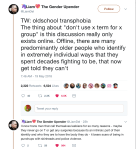
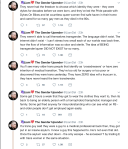
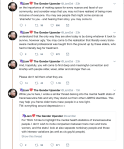
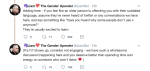
A position I’ve been turning over in my head lately is that a lot of the problems this approach is designed to fix come from the intersection of trans advocacy and SJ culture generally. The basic framework of modern SJ is that there are a handful of binary “axes of privilege” that define the social dynamic and one’s position within it – usually three to six, but never enough – and someone on the “privileged” side of an axis isn’t permitted to contradict or criticize someone on the “unprivileged” side on anything pertaining to that axis. On the whole, people on the “privileged” side are expected to function as silent Pythagorean initiates sitting outside the curtain in any serious discussion of those issues.
I think this approach causes problems across the board, but I can recognize that in many situations it’s trying to solve an actual problem by giving the control of small, personalized spaces (those where this philosophy holds sway) to people who are disenfranchised in the broader social sphere. The problem with applying this logic to the trans/cis binary is that in terms of social perception and usually self-perception, everybody is presorted as cis. That’s what “cisgender” means. When you apply this sort of logic to a category like trans/cis, the effect is that it pushes most people toward the “privileged” category that isn’t allowed to talk about the subject and locks them there, except the ones who are so eager to be allowed to have an opinion on the subject that they’re prepared to adopt whatever affiliation gives them the right – who can be very nice people in their own way but aren’t really the group you want to select for.
I think it’s good to include allies in general for the reasons mentioned in the OP, but I think the word “allies” should never be used under any circumstances as it’s unsalvageable by this point. It’s functionally an idpol category of its own just for people who want to help out with other idpol categories. Setting aside the fact that “allies” have a justifiably bad reputation as making other people’s problems about themselves and being in it mainly for their own woke self-image, the term imports the entire narrative where you’re a pair of hands with no right to an opinion. I can’t imagine any context where I would ever be willing to identify as an “ally” of anything in the SJ sense on account of all the freight yoked to it, so a group that’s for “trans people and allies” is still a group where I’d feel unwelcome. If you want to know what would work to be genuinely inclusive: make it a community of shared interest or goals, rather than centering it around an identity group and assuming that the shared interest and goals will follow naturally.
I am unwilling to give up “allies” just yet, since many of the queer adults I know used to think they were “allies”; I just reject the “no right to an opinion” narrative. Everyone’s entitled to an opinion, they may not be entitled to a ton of deference to it.
But also, yes, I have known so many trans people who were severely harmed by the “cis people can’t have these thoughts or opinions” notion. Understanding that gender dysphoria is a thing most cis people can also experience is incredibly useful.
Most cis women, if they thought about “being a man”, would experience revulsion and horror. It would feel awful. Same for most cis men thinking about “being a woman”. That’s gender dysphoria. If you think you’re a cis woman, and you think about being a man, and it sounds awesome and comfortable? You’re probably not actually what we normally mean by “a cis woman”.






 just moving along like everyone else