It’s sad how much of what is taught in school is useless to over 99% of the population.
There are literally math concepts taught in high school and middle school that are only used in extremely specialized fields or that are even so outdated they aren’t used anymore!
I took calculus my senior year of high school, and I really liked the way our teacher framed this on the first day of class.
He asked somebody to raise their hand and ask him when we would use calculus in our everyday life. So one student rose their hand and asked, “When are we going to use this in our everyday life?”
“NEVER!!” the teacher exclaimed. “You will never use calculus in your normal, everyday life. In fact, very few of you will use it in your professional careers either.” Then he paused. “So would you like to know why should care?”
Several us nodded.
He picked out one of the varsity football players in the class. “You practice football a lot during the week, right Tim?” asked the teacher.
“Yeah,” replied Tim. “Almost every day.”
“Do you and your teammates ever lift weights during practice?”
“Yeah. Tuesdays and Thursdays we spend a lot of practice in the weight room.”
“But why?” asked the teacher. “Is there ever going to be a play your coach tells you use during a game that requires you to bench press the other team?”
“No, of course not.”
“Then why lift weights?”
“Because it makes us stronger,” said Tim.
“Bingo!!” said the teacher. “It’s the same thing with calculus. You’re not here because you’re going to use calculus in your everyday life. You’re here because calculus is weightlifting for your brain.”
not to be a downer but your twenties are super hard and super lonely and tv lied and it’s not glamorous at all and if you are having a hard time it’s ok and it’s normal and you’ll be ok
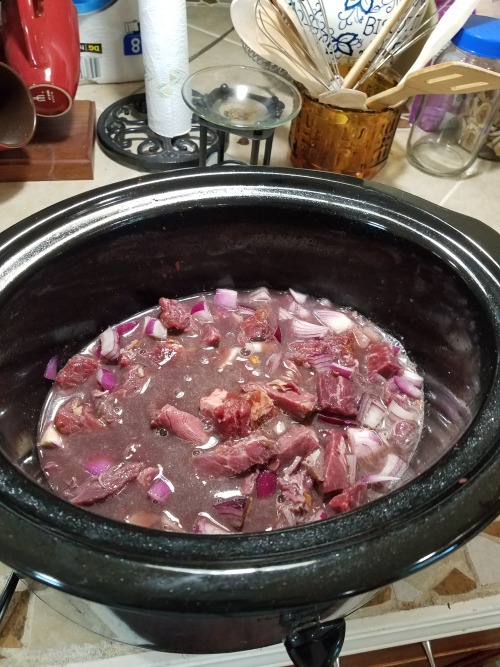
If any of y’all want to know how to make some super dope beef stew super easily LISTEN UP
Take a couple pounds of beef and cube it. Put that shit in a crock pot.
Add 1 ½ cups water.
Add an onion soup packet.
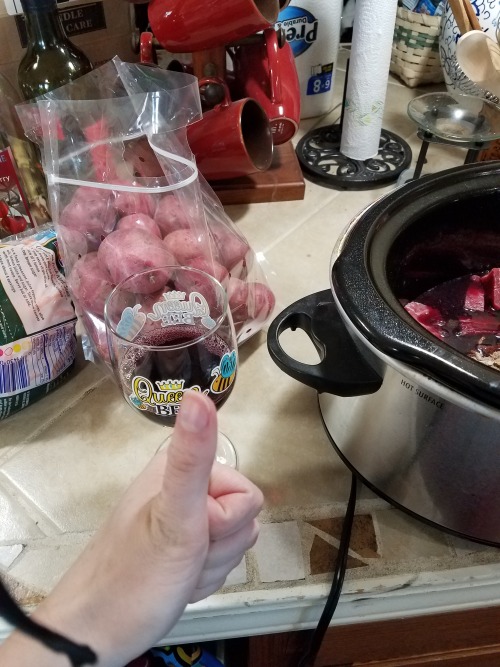
And a glass of red wine.
Hell yeah
Pour yourself some wine too you deserve it.
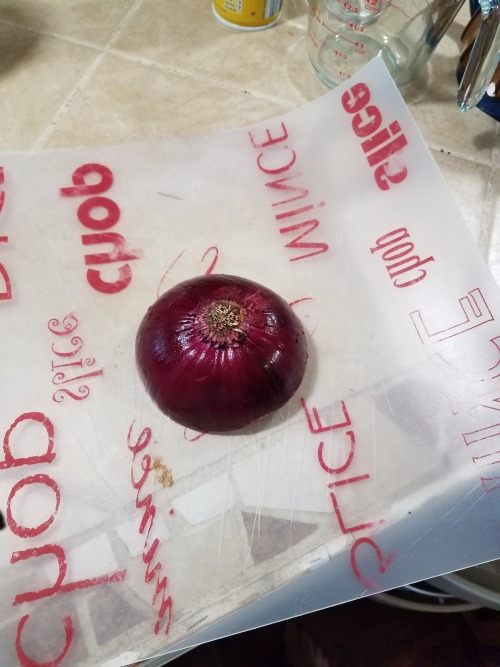
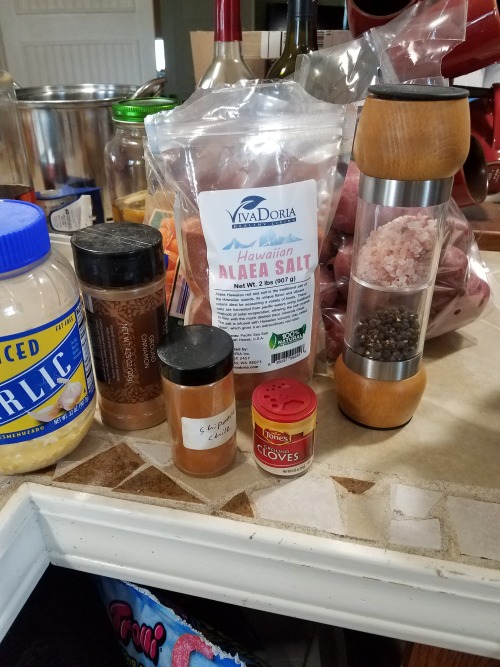
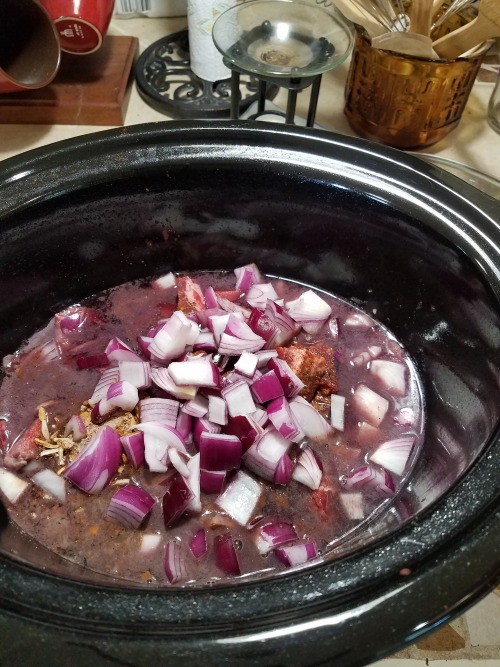
Add like half an onion and season with pepper, salt, chipotle pepper, garlic, cinnamon, and cloves. I don’t measure I just dash some in and adjust to taste when I add the root vegetables.
Nice.
Mix that shit up.
Now put on high and ignore for 3 hours.
In 3 hours, add veggies. Potatoes, carrots, parsnips, turnips, whatever ya got. Mushrooms are good too. I’ll add some dried morels, crumbled up. Will post again when we get to that point.
Can recommend the above recipe, but with a dark brown ale instead of wine and with pickled walnuts added with the veggies
……man that sounds good too will have to try that sometime.
Ok meat is done through now dump in some baby carrots or chop up some regular carrots and throw in some taters. I use red because I hate peeling them fuck that. Also crumbled up a half dozen dried morel mushrooms and threw in some flour to thicken things up. Added some fresh thyme because why the hell not.
nice.
Now ignore for another hour.
As for the cut of meat; doesn’t matter get what’s cheap. Anything gets tender if you stew it in a crock pot for six hours. Spices can be tinkered with as you see fit. Add other veggies as you see fit. Nothing is set in stone do what you want, man. Sub beer for the wine, throw in pork, ‘s all good. Pour yourself some more wine or beer and play Skyrim for awhile.
Note that the finished stew can be frozen in single portions and thawed in the microwave later, and will feed either a family for a night or you for a week if you live alone.
By the way, would dumplings be addable to this?
I’m addicted to having dumplings in my stews/soups…
DO IT
Hey @systlin is there anything you’d recommend as a substitute for wine/beer to someone who can’t legally buy alcohol?
Beef stock.
Some writing doesn’t brush up against sentimentality as often as other writing. But whatever ‘bad’ edge your writing brushes up against, I think it’s important to touch it. You can always pull back from it, but at least you know where it is. It’s like when I was a dancer, we were always encouraged to fall in rehearsal, so that you could know what the tipping point of any given movement was. That way, when you did it on the stage, you could be sure you were taking it to the edge without falling on your face. It sounds like a cliché, but really it’s just physics — if you don’t touch the fulcrum, you’ll never gain a felt sense of it, and your movement will be impoverished for it.
Maggie Nelson, in response to ‘Is it important to risk sentimentality?’ in an interview with Genevieve Hudson for Bookslut (via bostonpoetryslam)
Sometimes I get SO EMBARRASSED writing about feelings!
But I love it. I mean, just look at that last sentence: I love it. That’s why I do it. I love to write about people (who are not real, but I love them, and they love each other, or hate each other, or both). Writing about feelings is a confession in itself, shameful and sincere.
I’m upset because I want to change the world but the world is too big and people are too mean
“Do not be daunted by the enormity of the world’s grief. Do justly, now. Love mercy, now. Walk humbly now. You are not obligated to complete the work, but neither are you free to abandon it.” – Rabbi Tarfon
Would you like to read a book in which this happens?
It’s one of my all-time favorite books. It’s called Ella Minnow Pea by Mark Dunn. He describes it as an “progressively lipogrammatic epistolary fable.”
It is written in the form of letters between the citizens of the fictional island of Nollop, an independent nation off the coast of South Carolina and home of Nevin Nollop, who invented the phrase “the quick brown fox jumped over the lazy dog.” That phrase is written in tiles over a statue of Nollop in their town square, and when one night a storm causes one of the tiles to fall, the council decides that it’s a sign from Nollop that they are no longer allowed to use that letter, in speech or writing, on pain of progressive punishments including public beating and up to banishment.
Then another tile falls. Then another.
The citizens, who are all very attached to their words and writing, mount a campaign to come up with a phrase that uses all 26 letters but is shorter than Nollop’s, thus proving that he was not divine and negating all the edicts.
Because the novel is told in the form of letters the citizens write, and this is the genius part…the author must also stop using the letters as they fall. So the book gradually stops using letters until at one point I think they’re down to just five.
The resolution literally made me get up and dance around the room.
It’s clever, creative, and a not-really-veiled-at-all parable about monotheistic oligarchy. It’s not a long book, you can read it in an afternoon.
GO READ IT RIGHT NOW.
WOW I want to read that book
Very rarely is there a book that I must read at any cost This is now one of them
Note: locate book
I actually bought this book because of this post and let me tell you, it was a fucking great decision. Besides having a brilliant concept, it’s also so well written that in the beginning you don’t even notice when another letter is removed. There was one part I had to re-read because I couldn’t believe that there wasn’t a single ‘d’ in the last five pages. Seriously, this book is fantastic
I had to read this for high school and I loved it. I have no idea where my copy went though 😦
I’ve owned 5 copies of Ella Minnow Pea because the people I’ve loaned it out to have refused to part with it, ha. Ended up investing in a copy for the Kindle where it’ll always be safe. But yes, it is a very cleverly written book!
[The older generation of writers who had established the rules for modern fiction under the assumption that their experience was “universal”] gained the ability to write stories where they could “show” and not “tell" … They had this ability not because they were masterful stylists of language or because they dripped with innate talent. The power to “show, not tell” stemmed from the writing for an audience that shared so many assumptions with them that the audience would feel that those settings and stories were “universal.” (It’s the same hubris that led the white Western establishment to assume its medicine, science, and values superior to all other cultures …)
Look at the literary fiction techniques that are supposedly the hallmarks of good writing: nearly all of them rely not on what was said, but on what is left unsaid. Always come at things sideways; don’t be too direct, too pat, or too slick. Lead the reader in a direction but allow them to come to the conclusion. Ask the question but don’t state the answer too baldly. Leave things open to interpretation… but not too open, of course, or you have chaos. Make allusions and references to the works of the literary canon, the Bible, and familiar events of history to add a layer of evocation—but don’t make it too obvious or you’re copycatting. These are the do’s and don’ts of MFA programs everywhere. They rely on a shared pool of knowledge and cultural assumptions so that the words left unsaid are powerfully communicated. I am not saying this is not a worthwhile experience as reader or writer, but I am saying anointing it the pinnacle of “craft” leaves out any voice, genre, or experience that falls outside the status quo. The inverse is also true, then: writing about any experience that is “foreign” to that body of shared knowledge is too often deemed less worthy because to make it understandable to the mainstream takes a lot of explanation. Which we’ve been taught is bad writing!
stop believing that you ran out of time to shape yourself into who you want to be! stop believing that its ruined! stop believing you don’t have potential! you are not a fixed being! you have endless opportunities to grow.
And even if you can’t see a way to it now, preserving yourself and listening for the unknown day when you can is still a good deed.
becoming a better person isn’t a sudden and dramatic change. it’s something you do with small actions every day. you ARE a better person than you used to be. it’s like watching a tree grow: you don’t notice it when you’re close.
also like, you know those trees that are on a hill and have crooked, bent trunks? sometimes trees lose their footing and they tilt over as the ground shifts around underneath them. but they just keep growing upwards towards the light, making new branches and figuring things out a year at a time. there are trees that fall over entirely and just start again with goofy horizontal trunks. no matter how old you are or where you’ve fallen, you can still change yourself a year at a time.
“i’m sad i wasn’t born in the era of -” bitch do it! if you like love letters, write them! if you like poodle skirts, wear them! society is imploding as we watch on in abject horror! do whatever you want!
So I was thinking about this and I suddenly realized I have an answer and I should post it before I forget it:
Social rules are complicated because they are based on instincts, which are formed by evolution, and evolution takes neither prisoners nor design notes.
Here’s the best general guideline I’ve learned for this:
People generally want to feel like you’re matching them – that you care about them about as much as they care about you.
One of the most effective ways to make a regular person feel like you care uncomfortably too much about them is if you respond to their texts immediately, and then send a few follow ups whenever you don’t get a reply.
One of the most effective ways to make a regular person feel like you don’t care at all is if you always take way more time to reply to them than they take to reply to you.
So if you want to optimize to their comfort with the interaction as the primary priority, try to match their behavior – which for your example of texts, basically means: try to match the amount and length of their texts to you, and the delays between your replies.
And to answer the op’s original question of _why_ is this complicated, and _why_ do people expect you to figure this stuff out without asking: I have a theory…
Carrying on an interpersonal relationship requires you to understand and respect people’s wants, needs and boundaries. It requires that you be able to learn what they want without them always telling you; most people simply don’t have the spoons to set out clear behavioral guidelines in words every second of every day (that would be a shitload of mental effort!), and instead have to offload that effort to body language and subtle cues and other people’s intuition.
If you don’t live in someone’s head, then the reasons for their wants and needs and boundaries will often be completely incomprehensible. They’ll seem totally arbitrary, but to be a decent human companion, you have to respect them.
By following pointless social conventions in your interactions with strangers and acquaintances, and following arcane or unnecessary standards of acceptable behavior, you prove that you are *capable* of learning and abiding by arbitrary standards: the exact same kind of arbitrary standards that individual people’s preferences will be if you get to know them better.
Social convention is just an audition for respecting people’s boundaries. Proving that you can learn “how things are done” or “how not to be creepy [to the general public]” is just proving that you’ll also be capable of learning how not to be terrible to *specific* people if given the chance.




 just moving along like everyone else