After Harry Potter came out, many videos surfaced online of people running into brick walls at train stations as a joke. While at one of these such train stations a friend dares you to run into a wall. They pull out their phone and start recording as you reluctantly run towards the wall. Expecting to hit it, you brace for impact but none comes— when you open your eyes again, the platform is empty and the train you see is most definitely not the Hogwarts Express.
Your church-going, God-worshipping sister adopted a small child and you’re excited to see them. But when you do, the child is a menace. They’re throwing things everywhere, setting furniture on fire with seemingly nothing, chanting in Latin to summon demons, but the weirdest thing is that your sister doesn’t seem to mind.
“You literally adopted the antichrist, Anne. What the fuck.”
“Yeah, I knew when I saw him at the orphanage. I figured if the kid had some decent fucking parenting that we could avoid the whole ‘Revelations’ shite. Nasty business, that.”
George, who’s name has been kindly changed from Damien, approaches his new mother with a huge spider in his hands. It promptly bursts into flames.
“Good job, love. Now go find the rest.” George’s face makes no expression, but his eyes shine when he recieves a pat on the head for his efforts.
As the months go by, George seems to settle down. He adjusts to school, friends, and the positive reinforcement Anne gives him. She encourages the good he does, even though the powers he uses aren’t “good”. When she gets calls from the school, it’s about a rambunctious boy that won’t sit still. Not a destroyer of the world and innocence.
It’s at Christmas dinner, that you let slip your amazement to your mother. How good Anne is for him and how he’s improved a lot. Still summoning hellhounds for games of fetch, though.
“Oh, he’ll forget how to do that when he falls in love the first time,” Your mother laughs, smiling wide.
“Shh, it’s alright,” the villain said. “You’re doing beautifully and I’m so proud of you. But that’s enough now. It was cruel of them to make you fight me – you could never have won. It’s not your fault.”
The ancient and powerful villain may have had a calm and gentle face as he spoke, but he was furious, not at the hero, but the gods for continually sending kids and teenagers to fight their battles.
Tears fell from the heroes eyes, staining their cheeks. “I don’t g-get it… You’re not supposed to be kind!” The words left the hero’s mouth breathless, strained, and disbelieving. The gods had said the cause was righteous, that they were destined for this; so why, then, had they failed? Why, then, was the villain looking so kindly at them? And why, then, were they so relieved to hear those words from his mouth?
The villain knelt. Gods, so far as the hero knew, did not kneel. They towered and gleamed and spoke in booming voices that seemed to shake the sky itself. They were beautiful, and powerful, and above the ken of mortals. They said their brother had fallen – but the hero’s thoughts could only blank, as they saw him not stumble, nor falter, but bring himself to their level of his own accord.
“What am I supposed to be?” he asked.
The hero swallowed. Was this a test? The gods had warned that the Trickster could be beguiling.
“You… you want to bring about the end,” they accused. Reminding themselves as much as anything.
The villain nodded.
“Yes,” he agreed. Admitted; confessed. The hero waited for him to gloat. They were so tired. The weapons that they had been given had been so heavy. The magic in their veins had burned. They had fought so hard to reach this lair, the Throne of the Fallen God… but now they cannot even see a throne. Just a place that looks like a prison, too-long lived in.
Seal him back in.
“I can’t…” they say. Can’t let you do that, is what they know they should be saying. But somehow it stops there. Everyone is counting on them. Counting on them to save the day, to stop the end of the world.
The villain reaches over, and rests a steadying hand on their shoulder.
“Shh,” he repeats. “I know. A dozen mortal years and a thousand divine gifts are not enough to thwart a hatred that has been building for centuries in the heart of a god. You were a good champion. Better than they deserve. But if I let another one of you win, it will only mean a different child is sent, in another hundred years. It is not fair. I should not have let this go on for so long. I am sorry, little one.”
The hero trembles in exhaustion. The corners of their eyes itch, as they meet the villain’s gaze. It must be a trick. It must be. But they do not have the strength to fight it. Hot tears track down their cheeks, as they slump in defeat.
The villain squeezes their shoulder.
“You did well,” he assures them. They should not take comfort in it. And yet, he sounds so convinced that they cannot help it. Weak, they think. To come so far and fall for all the tricks at the end, to falter in the last moment. They scrub at their cheeks. But they do not resist, as the villain scoops them up, and holds them with one arm. Like a parent carrying a child. Tall enough for the hero to remember being even smaller. He pats their back, and brings them with him to the dread altar in the center of the chamber.
“It is time for the end,” he says. “You do not have to watch.”
They should, they think. It would be brave to.
They close their eyes, and turn their face towards the villain’s shoulder instead. His voice rumbles as he finishes the incantation. Through closed eyelids they see something flash; but when they blink their eyes reflexively open, they find that a hand has moved to shield their gaze for them. The ground shakes. The air turns hot, and then cold. The strange objects arrayed around the villain’s layer tremble and clatter, like an earthquake.
This is it.
Sorry, Mama. Sorry, Papa.
I wasn’t strong enough.
They brace themselves as it all comes to an end.
Ha! You wish! Watch as I turn this serious and angsty thread into a bittersweet sugar fest! Muse, let’s hit it!
The ground shakes and trembles. A cry rips through the air
itself, cracks of thunder, gales of wind; the voices of hundreds of ancient
beings grasping desperately at the last straws that may keep them alive. That
may keep them here. That may keep them immortal.
Trembling, the hero curls in on themselves, hoping against
hope that it won’t hurt. That it will be swift and painless, just like people
said it was for their Mama and Papa when the lightning struck them down. Never
mind their screams, never mind that they still twitched and convulsed before
the ax man finished them off.
The cries reach their crescendo, each note seemingly trying
to tear the very fabric of existence apart. This is it. They curl up just a
little bit tighter and…
Your wife changes her hair color every season and her personality adjusts slightly. You’re secretly only in love with Autumn wife. She just came home sporting her Winter color.
it’s my fault. it’s just that when we met it was autumn; her red-orange hair and crackling laughter. there’s a little spooky in her, a lot of play. and what a better time for falling?
i didn’t realize it for the first few years – something shifting, something so subtle. the winter makes us all cold, the summer makes us all a little out of our minds. i just loved her, because she was incredible, and i was the luckiest person alive.
it’s just that i realized that spring came with sudden bursts of cold. it’s just that summer frequently raged in with fire sprouting from her lips. it’s just that winter was the worst of all, her eyes dead. it’s just that autumn loves me different; throws herself into it without the clingy sweat of summer. i used to love that summer girl, you know? i loved how wild she was, the way in summer she took every risk she could. but i carried her home drunk one too many times, cleaned up one too many of the messes she made for no reason than to enjoy the sensation of burning. and winter was worse; the shutdown, the isolation. how she became distant, a blizzard, caught up in her own head, unable to tell me what was wrong and unable to think i actually wanted to listen.
she comes home, her hair bleached white. a dark smile on her lips. the shadowy parts of her are back. they loom like icicles overhead. she kisses me with her body held at a distance, a peck on my cheek that feels like an iceberg. she makes polite conversation and we go to bed early, our bodies untouching.
it is a lonely season, i think on the ninth day of this. winter is cold. winter is known for the death of things. when i look at her, i see the girl i fell for, inhabited by an alien. she was the first women i loved so much i felt it would kill me. i can’t leave. when i wake her up with my crying, she tells me to shush and go back to sleep. she’s different like this, quiet, doesn’t eat.
three days later i stare at myself in the mirror. i wonder if it’s me. if the fat on my body or something in my face or the wrinkles and she doesn’t love me. i try prettier lingerie, lean cuisine, i try different hair, more makeup, try harder. it doesn’t work. she looks at me the same; that empty gaze that neither loves nor condemns my actions.
somewhere in februrary i lose it. we’re fighting again, from car to restaurant to car to home again. we fight about stupid things, small things; i tell her i feel she doesn’t love me, she says i’m not listening. the circle goes around and around, old pain peeling back, new pain unhealing. i sleep on the couch.
i wake up when i hear her crying, white hair around her all messed up. the kind of sobbing that only comes at two in the morning, heavy and thick and hurting. my winter girl. my heart is breaking. she looks up at me like i’m her anchor. “i’m sorry i’m like this,” she says. and i start saying, it’s okay i’m here we’re married, but she just shakes her head and says, “I know this isn’t the real me.”
i hold her cold hand. she stares at the blankets. “i am different in winter,” she whispers, “i know i am and i’m sorry.” she looks at me. “why do you think i dye my hair? cut it off? get rid of the old me?”
i tell her it’s okay. we’re together and it’s okay, and then she whispers, “i’m sorry you married four of me.”
we lay there like that, her head on my chest. she falls asleep. i stare at the ceiling, thinking of the way she sounded when she was crying. how i helped put her in that pain. how i promised in sickness and in health and everything in between.
the next day i spend at the library. there aren’t enough books on how to love someone with seasonal affective disorder so i make my own, notes and pages and little ideas on post-its. and i take a deep breath and make myself a promise.
she comes home to her favorite dinner and we kiss and she’s uneasy but that’s okay. the next day i bring home flowers and the next day she finds little love notes in her pockets. i love her quiet, the way winter demands, understand her sex drive is faltering; spend more time just cuddling. we drink wine and we kiss and some part of her starts relaxing.
the truth is there is no loving someone out of their mental illness. the truth is that you can love someone in despite of it; love them loud enough to give them an excuse to believe they can make their way out of it.
and i learn. i remember the rebirth of spring, when she starts thawing. we kiss and have picnics in pretty dresses. i remember her joy at little birds and her rain dancing. i fall in love with the flowers in her cheeks and the little bursts of cleaning. i fall in love with summer’s slow walks and milkshakes and shouting to music playing too loud on the speakers. i fall in love with her dancing, with the sunfire energy. and when winter comes; i am ready. i remember that snow used to look pretty. i fall in love with the hearth of her, with the holiday, with the slow smile that spreads across her face so shyly. i fall in love with how she looks in boots and mittens and every day i find another reason to love her the way she deserves – they way i always should have.
she comes home with her white hair and dark smile and a package in her hands. i ask to see what it is and that small shy grin comes creeping out. it’s a sunlamp packed in with medication. she looks at me with those wide eyes and that beautiful winter blush. “i’m trying to get better,” she whispers, “i promise.”
recovery doesn’t look immediate. sometimes it isn’t neat. i can’t say we never fight or that we’re suddenly complete. but each day, that tiny girl’s strength gives me another reason. i love her. i love her while she tames the roller coaster of spring; i love her for reigning in the summer storms; i love her for taking her winter and trying to be warm. it is hard, because everything worth it is hard. she spreads out her autumn leaves; mixes the best parts of her into everything. learns to take winter’s silence for a moment before yelling in summer. learns to take autumn’s spice and give it to spring. we are both learning.
one day she comes home and her hair is different, but it’s a style i don’t know. i kiss it and tell her that she’s beautiful and the inside of me swells like a flood. i’m so glad that she’s mine. every part of her. the whole. i am the luckiest person on earth. and i always have been. but she’s hugging me and saying, “thank you for helping me,” and i can’t explain why i’m crying.
this is what love is; not always an emotion but rather your actions. the choices we make when we realize our lives would be empty if the other was absent. this is what love is: letting them grow, helping them find their way in out of the cold. this is what love is: sometimes it takes work to see how the thing you planted together actually grows.
this is what love looks like in an autumn girl: it is winter and she glows.
I’m actually sobbing jesus christ
my heart is aching??? this is gorgeous
Wow. Worth the read, don’t scroll.
This is everything.
Everything about how to love.
I was not prepared
Nor was I.
“this is what love is; not always an emotion but rather your actions. the choices we make when we realize our lives would be empty if the other was absent. this is what love is: letting them grow, helping them find their way in out of the cold. this is what love is: sometimes it takes work to see how the thing you planted together actually grows.”
Honestly, if you scrolled… Go back up and read it.
I’ve read this again and again, and it just wrecks me every time.
This is beyond beautiful. Thanks for doing this prompt @inkskinned
Congratulations, genius. You convinced your best friend, the Protagonist, not to marry the story’s Love Interest, and instead go off and have awesome adventures with you forever. But in doing so, you pissed off the Author.
After the third bandit ambush, the Unnecessary Character waits until the Protagonist falls asleep to turn an accusing look at the sky.
“Hey,” the Unnecessary Character says, jabbing a finger stupidly at the non-sentient array of stars, “you quit it. You quit it right now.”
The Unnecessary Character, henceforth known as TUC so as not to waste too many letters on them, looks rather rough. Their hair is a tangled mess from the swallows who’d mistaken the horrendous strands as nesting material.
“I know that was you,” TUC hisses. “Swallows use mud and spit to make their nests, not twigs.”
TUC is unaware that they actually look like dirt, just terrible, smelly dirt.
“This is a lot of unnecessary anger,” TUC says to the sky. “You’re the one who thought Ally needed a friend and now you’re mad that I’m being a friend to her? Josiah was a creep, you know. Maybe you think he was charming, but he’s borderline abusive. No, scratch that. He was straight up abusive.”
TUC’s main weakness has always been the inability to see the big picture. They don’t know that the Love Interest would do anything for the Protagonist, up to and including battling the dragon that would inevitable be coming to the castle.
TUC pales until they begin to resemble watery porridge. “The what?!”
Their voice is shrill and stupid. The pitch of it nearly wakes the poor, exhausted Protagonist who’s had it rough these past few nights with TUC waylaying her with their idiocy.
“Let’s…let’s swing back to the dragon later,” TUC says. They pinch the bridge of their nose, trying to ease the headache thinking so hard has given them. “Look, Josiah wanted to keep Ally in the castle, okay? Like, all the time. She’s an adventurer, dude, not a stay-at-home wife. And have you already forgotten how Josiah locked her in the dungeons when those rebel forces tried to break in? And then just forgot about her in the aftermath until she broke out?”
It’s not surprising that TUC has misinterpreted that lovely and gallant action. Ally is a lady, forced to work hard all her life to support her mean family. She needs someone to take care of her so she can finally be happy.
“Her mean–they were poor!” TUC says, missing the point completely. They direct a hideous look at the sky. “No, I’m not missing the point! Everyone in her family was worked to the bone, not just her! They all had to work insane hours just to pay taxes! Taxes, may I remind you, that Josiah and his father set!”
TUC woke the next morning to a strange clicking sound. Or, it felt like the next morning; they had no idea how many mornings it hat been, since they locked themselves in dire combat with the cruel, twisted being who was the director and creator of their world. Time there had become strange. Had it merely been last night since they railed at the sky, at the ruthless, irrational being?
Ally was still fast asleep, her face untroubled for once. TUC felt both happiness and relief; she, at least, would always be safe.
Now it was quiet for a moment, before the clicking started again.
A silver deer materialized in the forest in front of them. They jumped, startled, knowing that deer had not lived in those woods for years, since Josiah and his father and uncles and other nobles has hunted them to extinction there. He was fairly certain this one was in dire danger, just being there.
But–the deer was wearing a blue ribbon around its neck, and carrying a rolled up piece of paper in its mouth. It came close enough to drop the paper, then moved off a little ways, still watching them.
TUC picked up the scroll, bewildered, and unrolled it.
In glowing, mercury-bright writing, it said: I believe you. I have always believed in you.
I am an Fanfic Author, and I am here to save you from your Canon.
(This is amazing, what a great addition!)
TUC frowns at the scroll, perhaps wishing they knew how to read. Unfortunately, such things were often below the capabilities of–
“You know I can read,” TUC says, their voice like fingernails on a chalkboard after their fitful night of sleep. “I would have slept great if it weren’t for you.” They roll up the scroll. “You didn’t write this, did you?”
TUC is hallucinating, a common affliction for those as embroiled in conspiracy as they. Their lips turn down into a frown, skin wrinkling unpleasantly as they look down.
“If you didn’t write this,” TUC says, the effort of thinking showing clearly on their face, “then that means you don’t have unilateral say in these events. Perhaps every moment you’ve designed exists concurrently with those moments provided by an outside source in your sphere. If that’s the case then–”
They break off as a whole flock of birds, seeing the terrible mess below, swoop down. Even when it is clear that TUC’s hair is not carrion, as they hoped, they continue to pelt towards their head with murderous purpose. They would have their revenge.
TUC, with far too much cruelty, drops the scroll and reaches for their bow in one motion. The first three arrows are lucky hits, scraping against the innocent creatures’ wings and sending them tragically plummeting to the ground. The rest of the flock, in fear, turn on an updraft and frantically fly away from the monstrous human.
“Nice,” TUC says, desperately attempting to appear they are not out of breath. They must be though–it must have taken great effort to ward off their fate. A hardly sustainable effort, one might say. TUC rolls their stupid eyes. “Birds aren’t going to do much, you know that. Don’t act like I just kicked a bunch of babies.”
TUC would kick a bunch of babies. They just hadn’t had the chance yet. Instead, they’re bending down to pick up the scroll which definitely doesn’t exist.
“But it does,” TUC says, muttering like a fool. “And since it does, it would seem that I–” they smile “I have an ally.”
TUC’s mom has an ally.
This is amazing. Definitely look behind the Read More.
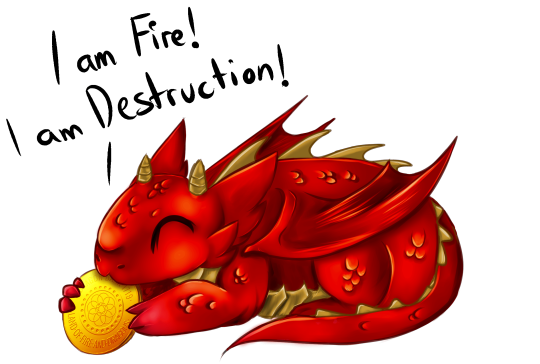
The world’s tiniest dragon must defend his hoard, a single gold coin, from those who would steal it.
Suggestion: The dragon’s definition of “steal” is somewhat loose. It still allows the coin to be used and bartered and change hands–but on one condition: the dragon must be with it at all times.
They become a familiar sight in the marketplace.
“Here’s your change, ma’am. One gold piece.” The merchant holds out a palm, on top of which rests a tiny, brilliantly colored creature clutching a single gold coin.
“That’s a dragon,” you say dumbly. “One piece… and a dragon.”
“Yes.”
You cautiously reach out and attempt to take your change. You tug. It holds. You tug harder. The dragon lets loose a tiny, protective growl.
“Ma’am–no, ma’am, you have to take the dragon, too.”
“Sorry?”
The seller notes your dubious expression. “Not from around here, are ya?” They shrug. “Them’s the rules. Take the coin, take the dragon.”
They wait expectantly. Wondering how the world has so suddenly gone mad, you slowly, slowly hold out your hand.
The dragon perks right up. It scampers from their palm to yours with the coin clamped in its jaws and scales your sleeve with sharp little claws.
“Have a nice day, ma’am,” the merchant says. “Spend him soon, now, you hear? At another booth, if you can. He likes to travel.”
From its perch upon your shoulder, the dragon lets out a happy trill.
Bonus: the coin eventually passes to the rogue in a group of travelling adventurers. The dragon becomes the mascot of the entire group, and they lay out a small pile of coins for him to sleep on every night, clutching his coin like a teddy bear.
In a world where puns are illegal, one man rises up in opposition.
“Sir, I was looking for you,” Howard said, staring at the back of the chief’s neck. “We got him.” He turned around slowly, eyes staring down at a manila folder in his hands. He was an intimidating man, even despite his enlarged belly and the countless wrinkles spiraling down his face, neck, and everywhere else. Tall, maybe 6’2’’, and still quite muscular—especially for a 63-year-old that refused to retire. He was bald now, but he’d had thick, black hair when Howard had first joined the department over a decade ago. Even after all that time, he still felt as if he were a child talking to an adult whenever he was around the chief.
“Him? Who is him?” Chief said, not looking up from the manila folder.
“Him,” Howard said, nodding toward the folder. “We got him.”
“Him? Al? You got Al?” Chief said, glancing up from the folder in his hand, then slowly closing the cover. A large, red “CONFIDENTIAL” was stamped across its front.
“We did, he was outside of an arboretum. We caught him red handed. No, red lipped. Red worded? We caught him in the act is what I’m trying to say.”
“The fuck is an arboretum?”
“Sir, it’s a garden with a large collection of trees instead of flowers. Kind of like a forest, except man made,” Howard said. “It’s basically a forest.”
“Where is there an arboretum in New York?”
“Central Park. Does it matter? We got him.”
“Where is he?” Chief said, glancing around the room. The veins on his neck, visible through his wrinkled, dried skin, popped out slightly as he swiveled his head.
“He’s in the interrogation room.” Howard nodded toward the big, metal door on his left.
“How do you know you got the right guy?” Chief asked.
“He was standing outside of the arboretum telling people they were barking up the wrong tree.” Howard paused. “You know, bark: like a tree has.”
“My god,” said Chief, lowering the folder down to the side of his left leg.
“That—that wasn’t all,” Howard said, stuttering slightly. “When I approached him, he told me to leaf him alone. Not leave, but leaf. To leaf him alone.”
Chief slowly walked to the wooden table in the corner of the room and lowered the manila folder onto the top of it. He placed both palms down and sighed.
“We got a real sicko on our hands, Howard. You did good getting him off the street. Has he confessed yet?”
“No, sir. We sent Chuck in earlier. He came out in tears, an absolute wreck. He didn’t even get a chance to turn on the recorder. Said he wouldn’t stop punning, that Al told him to spruce up the place. Said that it would help us branch out creatively. Chuck tried to play it off, tried to be the tough guy, but Al just didn’t let up.” Howard turned his head toward the metal door to his left. “Chuck told me Al claimed he had an idea for an escape that he maple off. Maple, not may pull. He made it clear that it was a pun.” Howard exhaled deeply and stared up at the ceiling. “He said Al called all of us saps, and that he wooden be surprised if he just walked out the front door. Wooden. Like wouldn’t.”
“Dear lord in heaven,” Chief said, lifting his palms off the table then smashing his fist down on top of the manila folder. “God damn this monster. I’m going to go in,” he said.
“Chief,” Howard pleaded, his voice higher than he had intended it.
“No, I have to do this. I can’t send any more of my men in. I need to be the one to face this maniac.”
Howard nodded and took a step back so that the door was clear. Chief slowly unbuttoned his sport coat, revealing a leather holster underneath. He unlatched it, the grip of his Glock now exposed, then re-fastened the top button on the jacket.
“Turn the recorder on by the window. If it gets too much, please leave the room. I will not hold it against you. Just make sure the recorder is running—we can’t let him go this time.”
Chief exhaled, brushing the side of his hand down the front of his jacket, then made his way toward the door, unlocking it and pulling it open before stepping inside. Howard walked around the wall to the one-way window, flipped on the old tape-deck recorder, and peered inside.
“Al?” Chief said, sliding a chair out from the metal table in the middle of the room. “I’m Dave Johnson, Chief of Police. Do you know why you’re in here?”
Al glanced up at the chief, but seemed to be looking toward the corner of the room.
“That,” Al said, pointing to a whiteboard in the back of the room, “over there.”
The chief turned around. “The whiteboard? What about it?”
“It’s remarkable.”
Howard involuntarily smashed his fist down on the table in front of the glass, but the chief seemed not to notice Al’s pun.
“Nothing remarkable about it.”
“The whiteboard,” Al repeated, “it’s remarkable. Re-markable.”
The chief squinted slightly, as if he were in pain. “Seems unremarkable to me. Now please answer the question. Do you know why you’re here?”
Al sighed. “Let me guess, is it because of the two pieces of string I ate?”
“What?” said the chief.
“The string, I ate two pieces of string. I shit you not.”
Chief’s face became visibly tense, a reddish hue slowly replacing his normal pale color. “You are here for your puns, Al. You’ve been on the pun,” Chief stopped, his eyes wide. “Run. You’ve been on the run for a long time, but we got you. And we have you recorded making these puns.”
Al stared down at the metal table and his eyes closed. “I know,” he said.
“So you admit it?”
“You think I like making puns? You think I like breaking the law?”
“If you don’t like it, then why do you do it?”
Al slowly lifted his head back up toward the chief.
“A long time ago, I was kidnapped and brutally tortured. My life was threatened and I was brought to the brink of death. Do you know what that’s like? Six men accosted me, beat me and chained me to a tree as I walked home. They said they’d tell me ten puns to dictate my future. If I survived, then I was free to go. They told me no one had ever lived through them, they assured me I would die. They laughed when they said that, stared straight in my eyes and pulled the chain tighter to keep me from squirming. Then they began. Each pun was said with hate, each one was meant to kill me. Yet in the end, no pun in ten did.”
The chief’s eyes rolled back in his head, his torso slumping forward onto the table in front of him. He began convulsing, seizing hard enough to knock the chair out from under him, his body plummeting to the floor behind the desk. Howard tried to reach for the alarm on the far right of the window, to hit the button and call for help, yet his limbs refused move. His mind refused to listen. The room turned black.
Howard awoke to a uniformed man standing over him, one of the new recruits he’d not yet learned the name of. He was towering over Howard, yelling for him to get up.
“Gone!” shouted the recruit.
“Huh,” Howard said, voice groggy and slow.
“He’s gone. He took the tapes and he’s gone.”
“Ch-chief,” Howard said, pulling himself up. His arms felt weak, as if he’d spent the past few hours lifting weights. “Where’s the chief.”
“He’s okay, we’ve got him in the office. He’s awake. You’re both going to be fine.”
“Al,” Howard said, remembering the barrage of puns. “Where did he go?”
“He’s gone,” said the recruit.
“Where did he go?” Howard repeated, now shouting.
“Gone, sir. He walked right out the front door.” The recruit paused, but Howard could tell he wasn’t yet done speaking. “We also have reason to believe the name we’ve been calling him is fake.”
“What? Why? We had him here, he responded to Al. All the background checks matched his name.”
“It’s just, his name. Mr. O’Bye. Al O’Bye.”
A stinging pain shot through Howard’s skull. Alibi. Why hadn’t he seen it before; that was why his history was so clean, why he had been so elusive. They were tracking a ghost.
“Fuck me,” Howard muttered, holding his left hand to his throbbing temple. He stared into the empty interrogation room.
“Sir, that’s not all,” said the recruit. He picked up a folded piece of paper from table and handed it to Howard. “He—well—he left you a note.”
Howard stared at the paper. “Detective,” it read in cursive on the front, hand written in blue ink. He flipped it open.
“You ask me why I do what I do, what makes me who I am. Yet you don’t even know who it is that I am. Perhaps I’m simply an unappreciated baker getting revenge on the world after suffering through long hours because I kneaded the dough. Maybe I’m a forlorn banker, doing this because I’ve finally lost interest. Or maybe I’m just a backwards poet, writing inverse and making no sense. Yet, in the end, you’re not much different than I. You stay up all night and day, searching for me, wondering who I am, waiting for the light that never comes. Only when I stayed out too late waiting for that sun to rise, it dawned on me.
It’s been my pleasure meeting you, perhaps I will see you around.
Sincerely,
Mae B. Layter”
Howard lowered the note, a warm sensation running down his face as if an insect were crawling on the flesh above his lip. He placed his left hand beneath his nose, rubbed it, and then glanced down at his fingers. They were covered in blood. Darkness again drowned out his vision.
Omg this is the greatest. As a pun enthusiast this is the greatest thing I have ever read.
Someone says, “I’d sell my soul for that.” You decide to take them up on their offer.
“What are you going to use it for?” Duncan asked, scratching his head.
“Iunno, but don’t worry I’ll take good care of it. When you want it back I’ll let you know what I want to trade,” said Nate, and that was that.
Forty years passed, and Duncan never had got around to trading back for his soul.
“I figure Nate’s as good as anybody for holding onto it,” he explained once. “I was dumb enough to trade in for tickets to see a band I can’t remember anymore, and it’s probably just as well I didn’t have a second opportunity to make a more dumbass deal with a worse person.”
Nate didn’t often think about the contract that he kept in the dashboard compartment of his truck signed in Duncan’s blood, but when he remembered he just shrugged. He’d willed the thing back to Duncan in the case of his death, because he figured if that happened then Duncan would have to take care of himself.
He probably should have been more surprised when one day a faintly glowing figure popped into the cabin of his truck with him.
Nate carefully pulled his truck over into the shoulder. He figured this would probably take his full attention.
“Hello Nathaniel Graham Bourke,” said the figure.
Nate grunted in response, inclining his head.
“I believe you have something that belongs to me,” the figure continued.
“How do you figure that?” Nate asked warily.
“Your friend Duncan is deceased. Fell down a flight of stairs,” the figure replied.
Nate sighed. “Had he been drinking?” He asked.
The figure hummed as though checking through some mental list. “No. Tripped on his shoelace. Broke his neck.”
Nate nodded to himself. “Well that’s something,” he said. Lisa would have been so disappointed if Duncan had been drinking again, so it was good she at least had that cold comfort that her husband hadn’t lied when he’d said he’d try harder.
“Yes. Your friend is dead and so I’m here to collect the soul I’m owed,” the figure said.
Nate frowned. “Does it work like that?” He wondered doubtfully, “Because I traded for that soul fair and square, so I don’t see how that means I need to just give it away at the first opportunity to the first comer.” Nate wrinkled his nose. “You haven’t even introduced yourself. I’ve kept that soul safe for years, and done my best to encourage Duncan away from making dumbass decisions. I’m not letting it go unless you can prove to me that it’s going to good hands.”
“I am an Angel. What better hands then mine?” The figure asked rhetorically. “I will take Duncan Jacobsen’s soul to the afterlife.”
Nate raised an eyebrow. “Which afterlife?” He wanted to know.
“Duncan Jacobsen was a sinner,” the Angel replied.
“That’s as maybe,” Nate allowed, “but you didn’t answer my question. I’ve been taking care of that soul for forty years now and I’m not going to just give it away to someone who’s going to mistreat it. Duncan was not the clearest thinker, but he tried his best most of the time and I reckon that should count for something.”
The figure started emitting a smell similar to sulfur. (Nate hoped it wouldn’t take too long to get out of the upholstery.)
“Ah,” said Nate. “Well in that case I think I’ll be holding onto it for a while until someone comes up with a better offer.”
“Even if it is inevitable that your friend should end in my custody?” The Angel demanded.
“If that was true,” Nate replied, “then you wouldn’t need to negotiate with me. You could just nab it.” He shook his head and smiled crookedly. “I’m not a well read man, but I do know about salespitches.”
The Angel snarled, but Nate refused to buckle.
“See now you’re just being a bully,” Nate said. “And a sore loser,” he added. “And this is doing nothing to convince me that you’re going to take good care of my buddy’s soul. The opposite really,” he nodded to himself.
The Angel calmed abruptly. “You say you’re waiting for a better offer,” the Angel said with honeyed tones. “So, what would induce you to give the soul to me? What do you desire?”
Nate scoffed. “Already said, didn’t I? Just want to make sure Duncan’s soul is going somewhere good where it’s going to be looked after proper.” He looked the Angel in the rough position where its eyes should be. “If you can honestly promise me that, then we’ve got a deal. If not…” Nate shrugged, “then I reckon I’ll be holding onto this soul a bit longer.”
The sulfurous smell increased in intensity.
“This is not over, Nathaniel Graham Bourke,” the Angel hissed, and disappeared.
“Didn’t reckon it would be,” muttered Nate. “But there’s still time.”
After a few minutes of quiet, Nate restarted the truck and pulled out into the road.
“Thanks Nate,” came a thin whisper from the dashboard.
Nate smiled sadly. “No worries, Dunc. Got your back.”
In fairy tales and fantasy, two types of people go in towers: princesses and wizards.
Princesses are placed there against their will or with the intention of ‘keeping them safe.’
This is very different from wizards, who seek out towers to hone their sorcery in solitude.
I would like a story where a princess is placed in an abandoned tower that used to belong to a wizard, and so she spends long years learning the craft of wizardry from the scraps left behind and becomes the most powerful magic wielder the world has seen in centuries, busts out of the tower and wreaks glorious, bloody vengeance on the fools that imprisoned her.
That would be my kind of story.
When
Princess Talia was fourteen, her eldest sister was placed in a tower.
Princess
Adina was eighteen by then, and so of a marriageable age. She had grown quite
beautiful, though she was more willful than winsome, and she did not care for
the notion of the tower very much at all. Their mother did her best to persuade
her on the subject. After all, the queen herself had been eighteen when her own
parents had sent her to live in that very same tower, to be safely tucked away
until her husband could be chosen, and then ride out to claim her. A tradition
going back ages and ages.
“It was
such a sight,” their mother said, wistfully. “I had been alone for so
long. Reflecting upon the nature of the world, and my place in it, and what it
would mean to serve my kingdom. And the solitude was difficult. But then one
bright morning I saw a vision of a gallant knight riding towards me; and I knew
I would never feel lonely again.”
“Then
you had best make certain you pick a strong man to be my husband,” Princess
Adina had replied. “For if I go to that tower you can bet I will spend my
time honing my skills with a blade, rather than staring wistfully out of
windows. And any man who thinks to claim me for a bride by anyone’s leave save
my own will need to defend himself.”
Their
mother had tutted, and their father had rolled his eyes; and when Princess Adina’s
belongings were packed with a very pointed dearth of swords or spears or
knives, it was Talia who slipped a wrapped sabre into the travel wagons, and it
was their middle sister, Devorah, who tied another to the underside of the
first food cart to leave for the tower.
Barely
a few weeks had passed since Adina left the castle, however, before word began
to spread of dragon sightings in the south. The king and queen, of course, saw
this is a good sign; and they let it be known that any lord bold enough to slay
the dragon would be granted leave to rescue Princess Adina from her tower. It
seemed all too fortuitous, for surely any man who could defeat a dragon could
handle a willful princess; and Adina could hardly deny
the bravery or skill of any such person.
“It is
perfect,” their mother had said.
That
was before the dragon reached the tower.
Talia
had been present when the messenger had arrived, bursting hastily into the
hall, and speaking in broken tones about barricades destroyed, and mountains
crossed, and ancient enchantments broken as the dragon had forged its way
straight to the hidden princess. Rumours abounded of the dragon absconding with
Adina; though some varied as to whether she had been seen clutched, terrified,
in the menace’s claws, or riding on its back, whooping loudly. (Calling for
help, the court agreed – if anything; the confused descriptions of startled
shepherds were unlikely to be too reliable, under the circumstances, of
course).
The
matter of rewards changed, of course, and so it became that any brave soul –
lord or no – who could rescue Adina from the dragon could claim the princess
for their bride. Talia worried, but she didn’t worry too much. She was of a
mind that if the dragon was still alive, then it was likely because Adina
wanted it that way; and her sister was, at least, out of the tower she had held
such contempt for.
Not six
months after the incident, a story came back, too, of a renowned hero who had
nearly slain the dragon at its caves in the west; only to be disarmed by
Princess Adina herself, who, by his report, made a very rude and anatomically
improbable suggestion, before knocking him down a mountainside.
The
king and queen seemed convinced the report was nothing but slander; but Talia
was inclined to give it far more credence than tales of her sister weeping
whole rivers of tears or cowering beneath the dragon’s glare.
It was
around that time that Princess Devorah began sneaking out of the palace at
night.
Talia
discovered this one evening while in the midst of her stargazing. If her eldest
sister could be said to be beautiful and headstrong, then it would be easy to
claim that the middle sister was plainer, and yet more charming. She owned a
pale blue cloak, that suited her quite well; but that stood out, too, in the
moonlight, as she slipped away through the palace gardens.
This
went on for quite some time before Talia at last confronted her sister, who
blushed most tellingly at being discovered.
“I have
found my knight,” she admitted. “There is a doorway in the gardens, and it
opens to the fairy forest. I did not mean to go, the first night. It was only
that I saw the doorway, and I wondered where it went. And I could not help but
think that my own time to be locked away in a tower is coming swiftly, and what
a thing it might be to escape, and that perhaps fate had given me a chance. But
then I got lost in the fairy forest. It was strange and dangerous, and I feared
I had been too foolish for words, until my knight found me.”
Talia
saw the lovestruck look on her sister’s face, and felt a great well of sympathy
for her.
“Fairy
folk are strange and dangerous, but Mother and Father are not without pity. If
your knight is as noble as he sounds, perhaps they will understand,” she suggested.
But
Devorah only sighed, and shook her head.
“Perhaps
they would, if my knight were a man. But she is a maiden, as fair as moonlight.
And I would have her no other way.”
Talia’s
sympathy increased tenfold, at that, for she knew as well that their parents
might make some concessions, but that would be a bridge too far for either of
them. As she began to offer comfort, however, Devorah turned it back towards
her.
Her
sister told her, then, of the plan she and her fairy knight had concocted; that
when Devorah was taken to her tower, her knight would come, and open a door
there; and then Talia’s sister would away with her to the fairy realm for good.
The tower would sit empty. The suitor their parents at last settled upon would
ride out to find no one waiting for him.
“I
planned to tell you,” Devorah assured her, and then offered her a single silver
bell. “When it is your time to go to the tower, stand on the highest point
and ring that bell. A door will open, and you can come away with us. The fairy
realm can be frightening, but my beloved will help us, and as well-read as you
are, I am certain you will have more of an idea of what to expect than I ever
did.”
Talia took
the bell, and hugged her sister, and thanked her; though she admitted that she
did not know what she would feel, when it came her own time to go to the tower.
But Devorah only said it would be her choice, whichever she made.
And
indeed, after a year had passed, her sister went to the tower with none of the
fuss nor complaint that Princess Adina had put up. Being as charming as she
was, there were no lack of suitors for their parents to choose from; and it was
not long at all before the king and queen made an advantageous match with the
eldest son of a neighbouring kingdom, just beyond the western mountains where Adina
and her dragon still roamed.
When
the son came back empty-handed, accusations of trickery abounded. The western
kingdom accused the king and queen of withholding their daughter; and the king
and queen accused the western kingdom of stealing her to some unknown fate. In
the end matters were only settled once a scryer confirmed that Princess Devorah
had not been in the tower when her suitor arrived; and then, the dispute was
settled with the consolation offer of Talia in Devorah’s place.
The
rulers of the western kingdom demanded their princess at once; but Talia’s
parents insisted that she was still too young. A compromise was reached. Since
the tradition of the family was to ensconce their princesses in towers, and
since twice these towers had been breached and the princesses lost, the king of
the western lands offered a tower in his own domain. There Talia would stay
until she turned eighteen, and was of age to marry the prince.
Even
so, the king and queen would not have agreed, but for the fact that the western
rulers were renowned for their masterful sorcery and spellwork. Should conflict
break out, the armies they could amass would be formidable indeed.
“Sometimes
princesses must think of their kingdoms first,” Talia’s mother told her.
And so
Talia did think of her kingdom.
She
thought of it as she rode with her accompaniment through the mountains, and
when a great dragon’s roar split the air; and when her guards scattered in
fright, or else were pinned down by the claws of a great, emerald beast, with
eyes like flames and wings that sounded of lightning when they clapped. She
thought of it when her eldest sister slid down from the dragon’s neck, and
rushed to hold her, and begged her not to be afraid.
“You
come with us,” said Princess Adina. “The western prince is a monster, and
the rest of his family no better. I would not let a pig marry him, nevermind my
little sister.”
Talia
marvelled at how well-informed her dragon-riding sister seemed to be, but Adina
only waved off such questions.
“I go
into town all the time,” she said. “No expects to see a princess who was
kidnapped by a dragon wandering around a market square.”
“And
you spend enough of my coin for them to overlook it, even if they were
suspicious,” rumbled the dragon, though it sounded more amused than anything
else.
“You
are the one who demanded expensive company,” Adina returned.
Talia
watched them with fascination, and wondered if they might not be able to fight
an army themselves. But her sister was forced to sadly admit that her dragon
was nearly more show than substance, and that any well-armed force would take
them down with relative ease. Particularly when they could bring magic to bear.
And so
Talia thought of her kingdom, as she declined her sister’s offer, and sadly
sent both she and her dragon on their way. Then she set about encouraging her
guards to come back, and help gather the horses, so they could head out again.
She
thought of her kingdom all the way up to the tower itself. It was a bleak
spire. Once a sorcerer’s lookout and secluded place of study, according to
their guide; who then helped set up the wards and enchantments. Talia thought
of her kingdom as she bid everyone goodbye. As she made her way inside with her
things, and found that though the place had clearly been cleaned and dusted, it
was sparse and severe and cold. Dark stone twisted up the walls, and drafts
blew through the ragged edges of the window frames. The lights were magic, at
least, but only half of them worked, and there was little in the way of artwork
or decoration.
Talia
thought of her kingdom as she selected a room on the highest floor, and
unpacked her things.
But
when at last it was dark, and she was alone, she did not think of her kingdom.
She thought of herself, instead, and she wished she had flown away with Adina
and her dragon. She wished she could climb to the top of the tower, and ring
her silver bell, and escape with Devorah and her knight. She thought of the
unfairness of being sent to her tower too soon, and even vindictively imagined
having told her parents of Devorah’s escapades, and being spared this fate by
forcing her sister to do her duty instead.
And
then she felt an awful wretch, for thinking such a thing; and she cried herself
ragged until she fell into a deep sleep.
In the
morning, her mood was grim.
She
woke to the discovery that the usual enchantments were in place, which was
something of a relief. Princess Talia was educated in matters of diplomacy,
finance, tactics, mathematics, literature, history, geography, and many more
besides, but she had no idea of how to boil an egg. The tower gave her meals in
the kitchens, and warmed the hearth against the cold; and she spent her first
day mostly in that room, with one of the books she’d brought clutched firmly in
her hand, wondering how she was supposed to survive years of this without
going mad.
Or if,
perhaps, the intent of all this business with towers was precisely to drive a
princess mad. It would explain a good deal about her mother.
The
second night, she cried again, and the one after was much the same; but on the
fourth day, she woke to the grey dawn, and the cawing of ravens outside her
window; and she decided that if she was going to live in this tower for many
days yet to come, then she may as well explore it. She made a point of mapping
out all the floors, and figuring out how to reach the highest part, if it ever
came to it. And she found that the attic was full of old boxes of clothes.
Robes and hats and gloves and scarves, worn things and shimmery things, and a
very impressive collection of walking sticks.
That
was all well and good, and sorting through it gave her a diversion, at least.
She aired out some of the clothes. They were much too big for her, of course,
and the tower wardrobe could provide her with some very nice dresses. But she
imagined she might tire of very nice dresses, after a while, and some of the
robes looked very comfortable.
The
real find, however, came the next day, when she discovered the door to the
basement.
She had
thought that the spareness of the tower was owed to its lack of usual
occupancy; but when she found the basement, another answer made itself clear –
someone had taken practically everything out of the main rooms, and shoved it
all haphazardly into the basement, and closed the door on it.
Talia
supposed she could see, on one level, why someone might have deemed the objects
in the basement unsuitable for a princess. Though she could not fathom why they
assumed a bored princess would not simply go downstairs at some point. She felt
inexplicably insulted at the lack of locks on the door; though this feeling
swiftly gave way to curiosity, instead.
The
rooms contents had not been kindly handled. She tsk’d over books that had been
dumped in piles, their pages crinkled and their spines twisted. Some heavy
tomes on stands had been left to accumulate dust and cobwebs, and boxes full of
glass bottles had been ungently handled, leaving some to crack and leak
suspicious liquids that stained the floor. Several rune-marked skulls lined a
shelf in the room, and looked to be the only things that had not been touched
much. There was strange furniture, and jars of things like powdered unicorn’s horn, which
told her plenty about the ignorance of the people who had cleaned up this
place, because even she knew that was valuable stuff.
At
length, she rolled up her sleeves, and set about organizing it, just as she had
done the attic. Though, in this case, the task was much larger. She broke down
into its simplest steps. Step One – the books. Going through the mess, she
picked out all the books she could find, and did what she could for them. Some
were in languages she did not recognize. Even the ones she recognized had
uncommon titles, like A
Beginner’s Guide to Necromancy, and The
Lost Art of Summoning, and A Comprehensive Bestiary of the
Northern Wilds.
The
books proved not only to be the first step in cleaning up the basement, but
also the world’s most sufficient distraction. Talia found herself paging
through them out of sheer fascination with the volume of subjects available,
and the fact that she knew next to nothing of these topics. Soon enough she had
gathered up every book for beginners she could find, and before long she
discovered that one of the largest tomes was a dictionary, and she unearthed
also a translation guide for one of the unfamiliar languages that seemed common
to the texts.
It was,
then, slower going for the tasks of dealing with the broken bottles in the
crates – in the end she found a pair of thick gloves in the attic, and picked
out the ones that were not broken, and shoved the rest – crates and all – into
one of the empty closets.
After a
reading a bit more, she then barricaded the closet.
She
left the skulls be until she opened up the book on Necromancy, and then she
carried them up to a room where the moonlight could hit them. That evening she
had her first proper conversation inweeks as she took a chair into
the room, and waited for nightfall, and then spoke to some quite interesting
and helpful spirits. They were transparent of course, and not all of them were
very coherent. But they seemed happy to be out of the basement, and keen enough
to help her get a better understanding of some concepts from the books that had
been tricky for her.
She
organized the jars of ingredients, and discovered several discarded cauldrons,
and after some more reading, she went back up to the attic and fetched down the
wizard staffs that she had taken for walking sticks, and put them where they’d
be closer to hand. In a box under an overturned table she discovered a smashed
crystal ball, with a tiny pixie’s skeleton in it; and an unbroken crystal ball
which gleamed and glowed only faintly when she held it up to the stars.
It made
her think of Devorah and her knight. So that evening she did at last go up to
the highest point of her tower, and ring her silver bell.
Sure
enough, a door appeared in the basement. She wrapped the pixie skeleton in a
piece of black velvet, and tucked the crystal ball under her arm, and opened
the door.
Her
sister was delighted to see her, though confused as well. It was too soon for
Talia to be in her tower. So it was that Talia had to explain what had
transpired, and when she did, Devorah was overcome. It made her feel triply
awful for her uncharitable thoughts that first evening, to see her sister cry
and offer to go back and take her place.
“You
have to stay here with your knight,” Talia insisted. “It isn’t all bad.
There are some interesting things in the tower. And if I can talk to you
sometimes, as well as the skulls, I probably won’t go mad.”
Devorah
blinked back her tears.
“The
skulls?” she asked, in a voice that said she was worried her sister’s mental
state had already faltered.
So then
Talia found herself explaining about the tower, and its basement, and the
crystal ball she had brought, and the little skeleton, too. That made Devorah
cry a bit more, because she was a kind heart, and she had grown fond of the
little pixies in the fairy realm – even the vicious ones. She called for her
knight to come, then, and Talia watched as a silvery figure rode up on a white
horse that looked more like a ghost than a proper steed, however solid it may
have been to the eye.
Devorah’s
love looked like moonlight made flesh; slender but sharp as the blade of a
knife, and she bowed with courtly grace. She showed less grief over the pixies
than the princesses did. But then, her expression seemed to reveal very little
at all, until it turned to Devorah. At which point it would soften, and stars
would seem to dance in the dark pools of her eyes.
“Who is
this prince, who is so perilous a betrothal?” the fairy knight asked.
“I do
not know him. I know only his reputation, which had seemed fine enough, until Adina
spoke to me,” Talia explained.
“I know
a little more of him,” Devorah admitted, frowning. “Adina and I went to
one of his sister’s weddings, years ago. You were too young to come along. He
was a horrible brat, but then, he was a child. His father wasn’t much better,
though.”
The
fairy knight looked at the tiny pixie skeletons, and then at once broke the
crystal ball. The wisp of a sprite which escaped was small and quick, barely
there before it was gone again. But Talia didn’t mourn the loss of the crystal
ball. And after a moment, her sister’s knight tilted her head towards her, and
went and drew a small vial from her saddlebags.
“This
is a poison of sleep,” said the knight. “If you drink of it, you will fall
into a trance, and will not wake but for true love’s kiss. In dreams you may
find freedom. I would have offered it to Devorah, had she refused me, and her
suitor proven cruel. I will offer it to you, now. Should the worst come to
pass, drink it.”
The
tiny vial was silver and elegant. Pretty enough, even by the reckoning of
princesses. Talia took it, with gratitude. And when she left through the fairy
door before dawn, and came back into her tower, she felt lighter than she had
since leaving home.
For
several months, then, the little silver vial rested in her pockets, as she wore
dresses but also sometimes robes. Talia learned the few benefits of a life
primarily alone, in an empty and unoccupied tower that was locked up tight –
though even her mostly-indoor spirit began to long for the feeling of wind in
her hair, and grass between her toes, she could also parade around the rooms
naked as she pleased. Or clad only in a long robe which railed behind her, as
she sang songs with no one to care that they might be off-key, or that they
were ones she had overheard drunken servants singing.
She
poured through her new books and consulted with spirits, cavorted with her
sister and the fairies by night, and one morning she woke up and snapped her
fingers in a moment of grand epiphany; and flames darted up at the gesture.
And
alone, in the long and quiet days, she learned.
Four
months into her stay, Talia discovered how to unlock the tower door. It was a
simple spell, in fact. More a matter of tricking the tower into doing as she
wished. She strolled the grounds, well away from any guard posts, and found
wild vines and strange plants growing in the tower gardens. There was a book of
plants inside, and so she dragged it out with her the next day, and set about
identifying all the growing things she could not recognize; which, apart from
the dandelions, was nearly everything.
She
dusted off the cauldron, then, and must have burned herself sixteen different
times in attempting to master the various magical recipes involving the garden
plants. And plants from the fairy realm, as well. In one of the big, heavy
tomes, which always seemed to fight her every time she turned the pages, she
discovered a recipe for the sleeping draught which Devorah’s fairy knight had
given her; and by the gleam of a full moon, she gathered ingredients from both
worlds, and set about trying to recreate it.
Success
was difficult to gauge without tasting the end results, though. She was very
sure to label her own attempts accordingly, and dared not drink any of them.
It was
not a bad life. Not at all. It was lonely, at times, but with Devorah and the
spirits, not terribly so. And the freedoms she found were beginning to seem
more and more appealing. As time went on, Talia found herself thinking she
would much rather stay in her tower than see any shining prince approach from
the horizon.
But
when at last he came, she was ready for him.
The
time almost snuck up on her, but the terrain visible up from the tower window
was wide and barren, and one night as she went to bed she chanced to see a
campfire burning. And she counted the days in her head, and then fell into a
flurry of activity. She readied a fine dress, and packed up her things. She
slipped the best staff in amongst her chest of clothes, and packed the skulls
in with her jewellery. She slipped the sleeping potion into her pocket, and
emptied out the bottom of the crate containing her shoes and slippers; and she
did away with half of them, and fit as many of the most important books she
could manage in their place. She hid potions ingredients in among her make up,
and her own notes were kept safely in her diary. And every spare nook or cranny
she could find, she stuffed something she deemed worthy; until the things she
had first arrived with had become like a veil for the things she had uncovered
since.
“You
find yourself in that tower,” her mother had once told her.
And her
mother had found her place as queen; and Adina had found a dragon; and Devorah
had found her doorway out. As the sound of hoofbeats grew closer, Talia stared
towards the horizon of the western kingdom. Her fingers toyed with the stopper
of the sleeping draught.
She
wondered what she had really found.
Why
drink it yourself? one of the spirits had asked her, the first night she had
come back from visiting her sister, with the tiny vial in hand. It seems to me that the logical
thing to do, in an unhappy marriage, is poison the other person. Especially
when that opens a door to you taking his kingdom out from under him.
Such
interesting things, her skulls had to say.
And of
course, the kingdom she would marry into was one ruled by magic. Sometimes
princesses must think of their kingdoms first.
With a
wry little twist of her lips, Talia practised her best expression of swooning
relief, and waited for her prince.
While putting your favorite condiment on a sandwich, you accidentally make a magical occult symbol and summon a demon.
You silently take two more slices of bread out of the package and make another sandwich. You put it on a plate with a handful of potato chips and hand it to the demon. He takes the sandwich, smiles and vanishes in a puff of demonic smoke. The next day you get that job promotion you were after. There was no contract. No words spoken. You owe nothing. But every now and then, another demon pops in for lunch. Demons don’t often get homemade sandwiches.
Can I keep this going? I’m going to keep this going.
It would be a little annoying, if they weren’t so nice about it. You don’t know what you expected demons to be like, but you certainly didn’t expect them to be nice about it. There’s no demands, no voices like wailing babies, no blood on the walls (well, there was that one time, but Balthazak was very apologetic about the whole thing and cleaned it up right quick). Just the occasional demon stopping by for lunch. In fact, you could almost forget that they weren’t just ordinary people, the way they act. Nice people, too.
You start talking with them, as time goes on. In the beginning you carefully pick your words so they couldn’t be spun to even imply a contract or reference a soul, but when they seem politely eager to have a normal chat, your words become a bit looser. You even begin gossiping with them – turns out, demons have breakroom gossip just like anyone else. You listened to Rek’ththththtyr’s account of Drokyarix’s torrid affair with Irkilliz, and Ferkiyan didn’t even know what Drory was doing behind his back, poor dear, and you kept quiet and let Ferkiyan cry on your shoulder after Drokyarix finally broke up with him (the shirt was a bit of a loss, demon tears are ruinous to cloth, but Ferkiyan’s a good sort and you couldn’t just turn him away). You even managed to talk him down from going and starting a fight with Irkiliz, who didn’t even know that Drokyarix was in a relationship, and who was almost as horrified as
Rek’ththththtyr.
After that event in particular, you start to get a sort of a reputation as a place where a demon can come to relax, talk, and – of course – get a sandwich. Your sandwich-making skills have really improved since this whole thing began. Your luck seems to have improved too – you’re not sure if you can attribute the whole thing to the sandwiches and the reputation, but you don’t really want to know anyway.
One day, there’s a bright flash of light from your living room. Nothing unusual in itself – most of the younger demons haven’t quite got the style of their elders, and usually just go for a materialization in a flash of hellfire over your fireplace – except that it’s white instead of the usual red. You look up, and who do you see but an angel looking at you with a spear in his hand. Shrugging, you tell him to sit down and you’ll have a sandwich for him shortly, and meanwhile he can just tell you all about what’s on his mind. This clearly is not at all what he was expecting, but after a moment’s thought, he decides to take you up on your offer and starts talking. Apparently, he’d been dispatched to take care of some demon summoner in the neighborhood, and while he’d evidently got the wrong house the right one shouldn’t be hard to find – have you seen anyone practicing satanic rituals nearby? You laugh, a little, and tell him that you don’t really summon them, they just come on their own. They do like their sandwiches, and they’re quite nice folk.
The angel’s jaw drops, and you remind him to chew with his mouth closed.
And I’m going to take this even further. Here we go.
It took a bit of explaining with the first angel to arrive. Telling him about the first accidental summoning and then how the demons just started stopping by around lunch time on your days off. But once he understood what’s been going on (and finished his sandwich) he nodded solemnly and said he would get this all straightened out “upstairs.”
You eventually start getting more angels coming around for lunch. Sometimes they bring a small dessert for you to share after the sandwiches, and the dishes are always magically clean and back in the cupboard when they leave.
You lean that angels don’t have much of their own drama, but they do know all the truths about human tabloid drama and they’re more than willing to dish on what the Kardashians have been up to.
The first time an angel and a demon show up for lunch on the same day is a little tense. You tell them that ALL are welcome for lunch in your house and that you would prefer it to be a no-conflict zone. It takes a while for them to settle, but eventually they grow comfortable enough to start chatting. Which is when you learn that because demons are technically fallen angels, you’ve been having two sides of an estranged family over for lunch regularly.
Soon, you have an angel and a demon at every lunch. Old friends and estranged siblings meeting up to reconnect over a sandwich at your dinning room table. You help the ones who had a falling out reach an understanding, and you get to hear wild stories of what the “old realm” was like.
One day, as you’re pulling out the bread and cheese, a messenger demon appears. You greet him and tell him a sandwich will be ready soon, but he declines. He is here on behalf of Lucifer to ask if it’s alright by you for him to “enter your dwelling so as to meet with his brother Michael over sandwiches.”
A little stunned, you agree. The demon disappears and you prepare three sandwiches, setting them at the table.
When Lucifer (the actual devil!) appears in small puff of smoke, you welcome him and ask what he’d like to drink. As you’re fetching the apple juice, a blinding flash of light comes from the dinning room indicating Michael’s arrival. You grab a second cup and walk back in to find a tense stand off between the brothers. You set down the cups and juice while calmly reminding them that this is a conflict-free zone, and if they are going to fight, please take it to an alternate plane of existence.
They don’t fight. They sit and enjoy the sandwiches and talk about what happened. You learn a lot about why creation started, what the purpose of humanity was and what it’s grown to be. You only have to diffuse two arguments. And at the end when it’s time for them to leave, they hug each other, agreeing to meet up again somewhere else.
In the following weeks you have the usual assortment of demons and angels stopping by. The regulars ask how you’re mom is doing and if your friend is settling in to their new apartment nicely. At some point during each visit though, they ask if it’s true. Did Lucifer and Michael really come for lunch? You tell them yes, but won’t say what was talked about. They’re disappointed, everyone likes the gossip, but they understand. Before they leave, you ask each angel and demon about this idea you have for the summer, what if you had a barbecue on the back patio for everyone who wanted to come? They think it sounds like a fun idea.
Yep, I’m picking up, here we go!
Everyone had a lot of fun at the barbecue. There wasn’t much fighting, but some sparks and noises made you grateful your neighbors were either out of town or older/deaf. There was a great three-legged race and a small football game with parties on all sides involved, you’d never fixed so much food before.
Then, two latecomers. Angels and demons alike gasped in shock and parted like the Red Sea (Which, apparently, is a VERY exaggerated story) to let them pass.
You smile warmly and ask what they’d like. Both decline to answer that, looking at each other awkwardly. The demon bows its head to let the angel speak first.
God Himself heard the fun and wanted to come join the barbecue.
You look at the messenger demon, the same one as before, and as you insist that “Oh, you really should stay this time!”, you’re told that Lucifer ALSO wants to come to your barbecue.
You look between the two. You tell them you won’t deny one or the other, but that they must keep in mind that this is a neutral zone and you won’t have their conflicts interfere with the atmosphere.
Both vanish momentarily (after each taking a plate of food). There’s a long, awkward silence.
Lucifer arrives first, flash of fire in the firepit, coming over to get a burger. He doesn’t look… displeased. But he’s not necessarily happy.
There’s a beautiful flash of white light and a rainbow, and then God descends onto your back porch. Your long-dead flowers spring back to life in His presence. Shit, now you actually have to go back to taking care of them.
The two regard each other from across the backyard. There’s still complete silence from the crowd of angels and demons.
You clear your throat. “What do you two want to eat? I have burgers, hot dogs, chicken, and some vegetarian alternatives.”
They slowly look at you. You return each of their gazes. “This is a no-conflict zone. We’re all here to have a good time at a good barbecue.”
More silence. Then, Lucifer dishes himself a burger and goes to prepare it the way he wants. God approaches calmly and looks over your vegetarian palette (Not the best, but it would do in a quick pinch, you found out just yesterday that some of the attendees would be vegetarian), fixing Himself some food as well.
As this goes on, the others begin to relax, and soon, everyone goes back to having a good time. The food is great, desserts brought by your angelic guests really compliment the meals you cooked, nobody starts sacrificing anybody or arguements (except later there’s a massive water gun/water balloon fight that knocked Michael into the fire pit and got ashes all over his bRAND NEW ROBES, DROKYARIX! but everyone laughed it off and carried on), and as you sit on your porch, taking in the sights, you wonder to yourself if you should do this kind of thing more often, and if you would have had this situation any other way.
Nope, you decide, when God hits Lucifer with a water balloon as he’s trying to refill his super soaker, you really wouldn’t have this any other way.
 just moving along like everyone else