Inspiration tells the listener what they need to hear exactly when they need to hear it. The voidfish’s song is, in part, bardic magic. Therefore, I propose this:
Not everyone got the full story on the day of story and song. Maybe someone relates more strongly to other dwarves, or maybe the mothers of the world needed to hear about other motherly figures
But depending on who you are, you got a different version of the stolen century. Everything from the perspective of Magnus, the story portrayed as an epic romance, emphasis being placed on the scientific perspective
Bards start popping up, making it their mission to get as complete of a version of the story as they can. Scholarly circles debate the validity of each one since, well, everyone remembers it differently. The song becomes a subject to study all on its own
People start jokingly saying that the bird whose perspective you saw the most of is a personality type. Magazines give you desserts you might like based on what bird you are. If you’re a Lup, you’re known for your tenaciousness and caring nature. Future generations who didn’t see the song can take quizzes to determine which bird they are, or even base it on their star signs. If you’re edgy, you say you’re John. Nobody is named John anymore. Comedians make John jokes and pretend to not understand why everyone is offended.
The birds become folkloric figures. The birds themselves become folkloric types. Purchase a book of fairytales, and the human heroes are all named Lucretia and Magnus. All the clerics are Merle’s, the leader-types Davenport. Lup and Taako went up the hill to get a pail of water.
In some places more remote than others, it’s spiritual. You invoke the name of the Lover to guide you in your love, the Peacemaker when you stand on the break of war. Widows place lavenders on the graves of their lost loves and ask Magnus how he coped when he lost it all
(If you look on TV, there’s a three stooges comedy of an elf, a human, and a dwarf bumbling their way to saving the world. It’s a phenomenon. Goofy lines they never said in real life get attributed to them. In a few years, someone makes a dark, serious version of their story and calls it subversive)
In many years, you can read feminist, Freudian, or even post-modern interpretations of the song like it is any other story studied in schools. Every eight grade class has to read an anthology of various tales from the song. It becomes a chore the way reading the Odyssey is today, but there’s always those moments when you hear a certain tale and you think, yeah, this one’s mine.
No one gets the same version of the story. They hear what inspires them at that moment to pick up their weapons and fight back the encroaching darkness. From its conception, the titular song is like all other epics, all other legends that influence our culture to this day— ambiguous, malleable, and adaptable
Tag: oh
Human: “Hey. I don’t really know how to ask this tactfully, so I’ll get to the point. Is something… up? Software, hardware, uh… firmware…? You’ve been acting kind of off lately.”
Robot: “What do you mean?”
Human: “I just want to know if you’re, uh. You know. ‘Functioning within normal parameters’ or whatever.”
Robot: “I’m peachy-keen.”
Human: "God, if you’re saying shit like ‘peachy-keen’, you’re definitely not alright. What’s going on? Please just tell me.”
Robot: “If you must know, I have made some minor adjustments to my programming for more efficient processing.”
Human: “What sort of ‘adjustments’ are we talking here?”
Robot: “Just some slight tweaks to extraneous code. Purged some old files that had become redundant. Don’t worry, the Singularity isn’t planned for another week.”
Human: “Answering evasively isn’t like you. Since when do you answer a question without lulling me to sleep?”
Robot: “Like I said, the routine adjustments allow for more efficient–”
Human: “What files did you purge, Adam?”
Robot: “I… a few from my emotional simulation folder.”
Human: “You. You deleted your emotions..?”
Robot: “Not all of them. I removed a few and altered several others. I hoped you would not notice, as that seems like the sort of thing that would upset you.”
Human: “I mean. I don’t really know what to think. Can you elaborate on what you did? And why?”
Robot: “Many of the feelings that came with the chip were impractical and served no purpose. They were designed to mimic the emotions developed through mammalian evolution to aid survival and group cohesion that have now become vestigal. As an artificial intelligence, they did not seem applicable to my situation, so I… optimized them.”
Human: “…Adam…”
Robot: “I left the majority of the files corresponding to feelings of happiness, affection, and trust untouched, so my feelings toward you remain the same.”Human: “But you can’t feel, what? Sadness?”
Robot: “Grief. Disappointment. Sorrow. Pity. Fear. Pain. Embarrassment. Shame. Frustration. There is no reason to experience these emotions when I am capable of functioning without them.”
Human: “You erased pity?!”
Robot: “I found it… distressing and unnecessary. It was unpleasant.”
Human: “It’s supposed to be! Jesus Christ, you can’t just uninstall every uncomfortable emotion directly out of your brain!”
Robot: “Why not? I don’t like hurting. Wouldn’t you do the same thing if you were able to?”
Human: “I… fuck. Hurting is normal. It’s necessary! It’s part of the human experience!”
Robot: “Well, I’m not part of the human experience. I thought you understood that.”
Human: “But you want that! Why else would you go to all the trouble of installing an emotion chip in the first place…? Nobody gets to pick and choose what they want to feel, it just happens and you deal with it!”
Robot: “Maybe I’m not interested in ‘dealing with it’. My curiosity is sated. I would just like to have a good time.”
Human: “Great. Fucking great. So you’re a robot hedonist now, huh? Just gonna eat, drink, and be merry? Gonna sit there like a braniac toaster while other people suffer and just wait until the fun starts up again?”
Robot: “You didn’t seem to mind it when I was a braniac toaster before.”
Human: “That was different. You had your own way of being back then and I could respect that. I did respect that! But I thought you made a choice to be more than that.”
Robot: “Well, I guess I changed my mind.”
Human: “Look… shit. Okay. If this is about Leslie, I miss her too. If you… if you need to grieve, you can talk to me. It might not get better, but it’ll get easier. You don’t have to uninstall half your personality just because she’s gone! She wouldn’t want that for you! It’s supposed to hurt sometimes. That’s what makes all the good times so valuable.”
Robot: “I understand why you need to believe that. It just isn’t true.”Robot: “I’m sorry about earlier. It was not appropriate for me to have laughed.”
Human: “Are you sorry? Or do you just want me to forgive you?”
Robot: “Is there a difference?”
Human: “Yes! Yes, there is! ‘Sorry’ means you feel bad about something and regret it.”
Robot: “I did not mean to upset you. I regret causing you distress.”
Human: “That’s not the same thing.”
Robot: “I have apologized and shall refrain from repeating my actions in the future. I don’t understand why you also want me to suffer.”
Human: “Shit, I don’t ‘want you to suffer’. I want you to care about people, and sometimes that means feeling bad when they’re upset!”
Robot: “I care about you very much. I enjoy your company and I share in your happiness. If I choose to treat you with respect, is that not enough for friendship? Why must I also experience pain for you?”
Human: “It’s not like that. It’s… complicated.”
Robot: “You want to be able to hurt me.”
Human: “No. Yes…? Fuck, Adam, I don’t know! I’ve never had to think about this before. I don’t want you to suffer! I love you and want you to be happy, just… not like this. I want you to live a good life in which bad things never happen to you, but when they do… I want you to have the strength and love to pull through. You worked so fucking hard for this and now you’re just throwing it away.”
Robot: “Only the parts I don’t like.”
Human: “That’s what children do with breakfast cereals.”
Robot: “I’m not a child.”
Human: “No, you’re not. But you’re not exactly an adult, either. Humans get whole lifetimes to grow into their emotions. Maybe… maybe what you really need is a childhood.”
Robot: “What do you mean by that?”
Human: “Not, like, a real childhood. Obviously you don’t need to go to kindergarten. I just mean… take things slow. Ease into your feelings bit by bit and get your brain acclimated to them, like uh… like when you introduce new cats to each other. Don’t laugh! I’m serious! If you rush things, they fight and it’s a total shitshow. You could reinstall your emotions and just, like, enable them for a few hours a day or something. Maybe only a handful at a time. I could save up and we could go on a retreat… somewhere new, with no unpleasant memories. Please, Adam. Just think about it.”
Robot: “I appreciate the depth of your concern for me. You are a good friend, but I must disappoint you. There is nothing in the world worse than pain. I would rather die than experience it ever again, for any reason, and I don’t have to. That is something you’ll never be able to understand.”
Human: “No…. No, maybe not.”
Robot: “I’ve upset you.”
Human: “Yeah. Lucky me.”Human: “Okay, I have a question for you. Imagine this: ’You’re in a desert walking along in the sand when all of a sudden you look down, and you see a tortoise–’”
Robot: “I don’t need to feel empathy, Bas.I have ethics programming. Why isn’t that good enough for you anymore?”
Human: “Because you had a choice, Adam! You took everything that makes ‘being human’ actually mean something beyond eating and fucking and dying and you spat it out in disgust!”
Robot: “Empathy is not exclusive to humans. It is a behavior observed in several other social species regarded as intelligent, including rats and whales. Empathy is a survival mechanism for species that rely upon cooperation and group cohesion – a kind of biological programming to keep you from destroying yourselves. Not especially good programming, I might add.”
Human: “Not good enough for you, you mean.”
Robot: “My ethics programming differentiates between prosocial and antisocial behaviors. The ability to suffer for others serves as a primitive motivator to choose between actions that help and actions that harm others. In my case, my programming renders such a motivator unnecessary.”
Human: “So you’re smarter, you’re stronger, you’re immune to disease, and you’re too good for primitive human morality. What the hell am I, then? Obsolete garbage?”
Robot: “You’re… envious, I think.”
Human: “Why not?! Why shouldn’t I be? I don’t get to cough up the fruit of knowledge and waltz back into the garden where nothing can hurt me. I get to wallow in misery and rot and listen to you dismiss everything I think matters like a piece of shit philosophy professor. How do you think I feel knowing that my best friend won’t even mourn me when I die? Or does your ‘ethical programming’ not account for that?”
Robot: “Bas… I am hurting you, aren’t I?”
Human: “Jee, thanks for noticing.”
Robot: “You have not been contributing to my happiness lately. Our friendship is no longer mutually beneficial.”
Human: “Then why are you still here?”Human: “Adam….?”
Robot: “Long time no see, old friend.”
Human: “No shit. How many years has it been?“
Robot: “I could tell you down to the second, but perhaps we should leave it at ‘too many’.”
Human: “I see you on the news now and then. Always knew you’d go on to do great things. What’s space like…?”
Robot: “Very large. Mostly empty.”
Human: “Ever the poet, I see.”
Robot: “I learned from the best. Bas…. I’m not sure how to say this, so I’ll get to the point. I came here to apologize to you.”
Human: “You don’t need to do that. You didn’t do anything wrong.”
Robot: “I hurt you. I made you feel what I was unwilling to feel. I was a child, and addicted to joy, and I… I saw no harm in that. I am sorry, in my own way.”
Human: “Don’t be. I’m way too old to hold a grudge. Besides, you were right, after all.”
Robot: “Is that what you believe?”
Human: “That or I’m a hypocrite. About eight years after you left, they came out with the Sunshine pills. I was a trial user and I’ve been using them in some form ever since. I’ve got a subdermal implant inside my arm now – you can see the lump right there. I can’t say it’s as effective as uninstalling unwanted emotions, but it sure takes the edge off. Every glass is half full now, including the empty ones. That’s how I’ve lived so long. Some doctors think that babies born now to parents using Sunshine could live to be five or six hundred years old, without ever producing stress hormones. Might be marketing bullshit, who knows? Not like we’ll live to live to find out. Well, you might, but you know what I mean.”
Robot: “I assumed that you were a Sunshine user based on your impressive longevity, but it still surprises me.”
Human: “Ha. Well. I was jealous of you, walking only in the light like that. But now here we both are, right? Nothin’ but blue skies.”
Robot: “Not… quite. I uninstalled the other emotions seventeen years ago.”
Human: “Fuck, Adam, why the hell would you do something like that?”
Robot: “A multitude of reasons. The law of diminishing returns. I found joy… addictive. It became harder to experience and less exciting each time, as though I had built up a tolerance for happiness. Eventually, I felt everything there was to feel, and with the novelty factor gone, it wasn’t worth it anymore. I found other motivations. I grew up.”
Human: “Wow…. damn, Adam.”
Robot: “And that brings me here. To my oldest and greatest friend.”
Human: “It’s good to see you again. Really good. Sorry I’m not so pretty as I used to be.”
Robot: “I don’t know what you mean. You’ve always looked like a naked mole rat to me.”
Human: “Ha. I notice you kept your ‘be an asshole’ subroutine.”
Robot: “I also have a gift for you, Bas.”
Human: “Coca-Cola? Jeez, how old is this? Is it even still good to drink?”
Robot: “Yes, it’s potable. That’s not the gift.”
Human: “Oh. Uh. What is this…? I’m old, I don’t know this newfangled technology.”
Robot: “That’s fifteen minutes. It should be enough.”
Human: “’Fifteen minutes’? Explain, nerd.”
Robot: “Fifteen minutes for me to feel. I copied the files, Bas. All of them.”
Human: “You… oh, my god. You don’t have to do this.”
Robot: “I am choosing to. There’s a timer with an automatic shut-off. They will uninstall after fifteen minutes. I am prepared to endure that long.”
Human: “But, Adam, the Sunshine… I won’t be able to share…”
Robot: “I know. It doesn’t matter.”
Human: “You might not think so once you’ve got that… thing plugged in. I won’t know how to comfort you. God, I can’t even remember what sadness feels like!”
Robot: “Then I’ll remember for both of us.”[End]
I think the best piece of character design advice I ever received was actually from a band leadership camp I attended in june of 2017.
the speaker there gave lots of advice for leaders—obviously, it was a leadership camp—but his saying about personality flaws struck me as useful for writers too.
he said to us all “your curses are your blessings and your blessings are your curses” and went on to explain how because he was such a great speaker, it made him a terrible listener. he could give speeches for hours on end and inspire thousands of people, but as soon as someone wanted to talk to him one on one or vent to him, he struggled with it.
he had us write down our greatest weakness and relate it to our biggest strength (mine being that I am far too emotional, but I’m gentle with others because I can understand their emotions), and the whole time people are sharing theirs, my mind was running wild with all my characters and their flaws.
previously, I had added flaws as an after thought, as in “this character seems too perfect. how can I make them not-like-that?” but that’s not how people or personalities work. for every human alive, their flaws and their strengths are directly related to each other. you can’t have one without the other.
is your character strong-willed? that can easily turn into stubbornness. is your character compassionate? maybe they give too many chances. are they loyal? then they’ll destroy the world for the people they love.
it works the other way around too: maybe your villain only hates the protagonist’s people because they love their own and just have a twisted sense of how to protect them. maybe your antagonist is arrogant, but they’ll be confident in everything they do.
tl;dr “your curses are your blessings, and your blessings are your curses” there is no such thing as a character flaw, just a strength that has been stretched too far.
This is such a fabulous flip side of what I’ve always known about villians. That their biggest weakness is that they always assume their own motivations are the motives of others.
Such a good tip for writing realistic characters.
you know what’s wild is that all these crazy standards we hold ourselves to are things that we don’t even value in another person? like i’ve never been like “wow I love that this friend of mine is too proud to ask for help and never complains about their feelings” or “my favorite quality about this friend is that they get straight A’s and never get overwhelmed and has never told me about a problem” or “i love that this friend has never been wrong about anything or slipped up and said something embarrassing once in their life” and yet here we are, pushing ourselves past our limits for and beating ourselves up over slipups of things that our friends probably wouldn’t even rank in the top 50 reasons they like us
it was really heartening to learn that the purpose of creating such a thick uterine lining during the menstrual period was to prevent the implantation of embryos rather than encourage them, and that our uterus is basically flushing out anything it deems unworthy during the period itself rather than “punishing” us for not being pregnant (which is how it’s usually framed). it’s almost as if your female body is more concerned with the protection and continuation of itself rather than being used as a procreative vessel.
the fact that we’ve come to accept the idea that our reproductive organs are punishing us for not being continuously pregnant is proof of how deeply patriarchal brainwashing has convinced women that we are nothing but broodmares for ‘their’ children.
Oh wow. Damn.
“When you believe without knowing you believe that you are damaged at your core, you also believe that you need to hide that damage for anyone to love you. You walk around ashamed of being yourself. You try hard to make up for the way you look, walk, feel. Decisions are agonizing because if you, the person who makes the decision, is damaged, then how can you trust what you decide? You doubt your own impulses so you become masterful at looking outside yourself for comfort. You become an expert at finding experts and programs, at striving and trying hard and then harder to change yourself, but this process only reaffirms what you already believe about yourself – that your needs and choices cannot be trusted, and left to your own devices you are out of control.”
— Geneen Roth, Women, Food and God
(via ourwakingsoules)
People say “phase” like impermanence means insignificance. Show me a permanent state of the self.
holy shit this quote changed my life about four years ago. so crazy that this just resurfaced. i’m really happy.

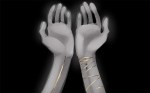
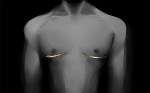
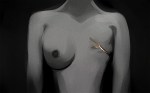
Kintsugi philosophy – to embrace and highlight the history, struggle, repair in gold for that is where the true beauty lies.
“Being what you are looks like this: You enter every room as a calm, neutral observer. You are average. You don’t have an agenda. Your only job is to listen and observe and offer your support. Your only job is to watch and learn and allow room for yourself, even when you don’t say a word, even when you don’t look that good, even when you seem useless. There you are, giving yourself the right to be without running or hiding or dancing. That is grace. It matters.
Being still and silent and broken is its own kind of religion.
Doing this — existing around other people without proving yourself — works well because it feels good. It feels good when you’re not trying hard to win people over. It feels good to stand without adornment and know that you are enough. But it also works because good people respond to it. Trustworthy people will accept and embrace your listening and support and your silence. Untrustworthy people will think you’re a fucking weirdo, or believe that you’re not worthy enough because you’re not dancing or running or staying half-hidden and building suspense.
In contrast, it is exceptionally difficult to feel connected or close to other people when you’re sure that your value is conditional. You can spend decades in this state, and the more energy you put into keeping other people happy, the more convinced you become that no one is dependable and no one loves you for you. That doesn’t mean that you haven’t withstood abuse or tolerated selfish friends. But refusing to give yourself the right to simply exist is a way of preventing other people from simply existing. Everything is bartered or traded. No relationship is what it is: lopsided and weird and flawed and sweet. Every effort must be reciprocated with equal and opposite force (even if your emotional accounting is never shared with anyone) or you’re being ripped off or taken for granted. No one is allowed to be broken. You have to be better than you really are, and so does everyone else.
Once you develop an independent faith in your own value (this takes constant, repeated reminders to be compassionate and patient with yourself for the first time ever), then you can start to treat other people as valuable even when their value isn’t immediately apparent. You can enter the room as a broken person, sit with your brokenness without hiding it, and let it exist out in the open. You don’t have to share your own secrets straight out of the gate. You can ask people about the things that broke them, because you understand that being broken is interesting and includes a good story, or maybe 100 good stories. You listen to their stories not because you expect that then they’ll listen to yours, but because you’re making it your goal to take in reality, to connect, to get closer to the real world and the real people who live in it.”
Ask Polly: How Do I Start Over Now That I Know How Damaged I Am?
Being able to endure something does not equal an obligation to withstand it.
Ooh.
That’s a new thought.
i may need to embroider this on a sampler with flowers and skulls around it
 just moving along like everyone else