sarcastic theory shitpost: post-retcon HS’s increasingly disturbing treatment of harassment and consent was not in fact the result of the author getting lazier and/or scuzzier but was in fact a representation of how, by hewing to the alpha timeline and Skaia’s will, the characters objectified themselves
It was always scuzzy. Vriska sexually assaulted Tavros and no one cared. Plus, I’m sad to say, there’s Equius and his treatment of Aradia.
There’s a reason I said scuzzier.
There’s at least like, an attempt occasionally with earlier stuff to indicate that it’s a problem. Tavros, Dirk, and Aradia are not happy about their treatment by Vriska, Roxy, and Equius, for example. (Although Roboradia then goes ahead and kisses him anyway, so ymmv.) HIC’s treatment of the Helmsman is pretty clearly fucked up, and Mindfang and the Dolorosa is romanticized because Mindfang’s writing it. Far be it from me to defend many of AH’s sketchier choices, but there at least, it was trending differently than it trends later.
Now, obviously I’m not saying every narrative has to have a footnote saying “this behavior is bad”. That’s… not how fiction works. But I do think especially post-retcon harassment and assault is played way more as positive, funny, and excusable. Jasprose catcalling Jane (someone who’s already been shown to be uncomfortable with her body) is played off with comical 😮 reactions and set up as more ‘lol that quirky catgirl’. D/avepeta kissing Jade is fine because ‘she didn’t mind’ and besides part of them dated a version of her, and that means they can kiss her whenever they want, right? And then of course there’s the unnecessary crotch shots for Jake. The shift seems to be that in post-retcon, there’s absolutely no indication the author thinks this is a problem at all, and it is instead used as a joke or a positive thing. It’s just… unsettling.
There’s consent issues or themes of control in other places as well but in terms of the sexual harassment, that’s the stuff that sticks out most to me.
Then there’s Porrim touching Kankri without his permission and Kankri’s supposed to be a brat for getting angry
Never thought of the Davepeta problem before. Good point.
I don’t recall that but then I started skimming over a bunch of Kankri logs after they started mocking different orientations.
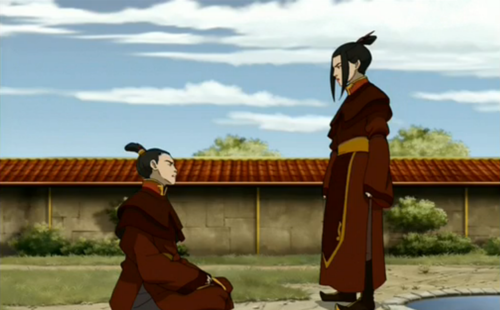
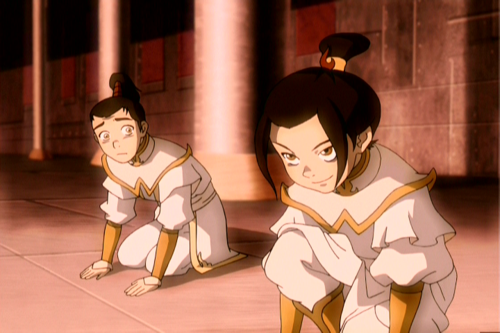
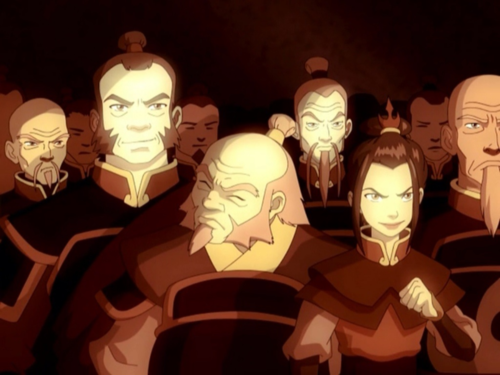
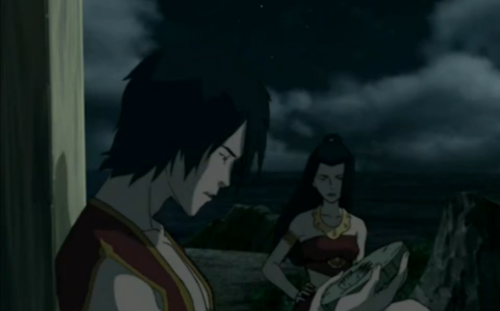
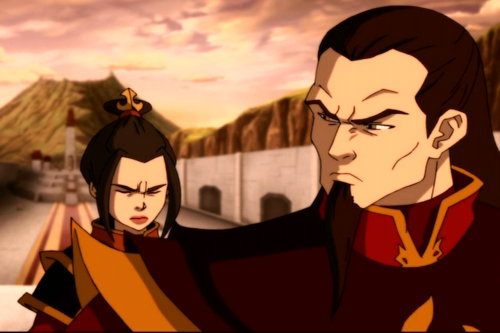
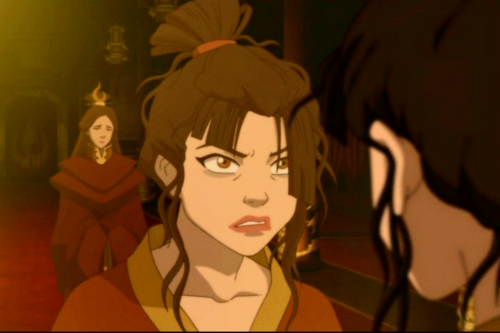
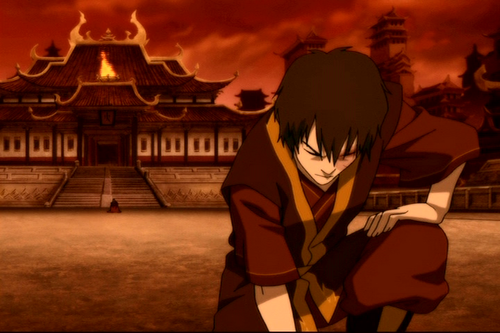
Sibling rivalry is often a trite story of one sibling hating the other out of jealousy. On the surface, the Zuko and Azula may look that way. They have no problem blasting fire and lightning at each other and both of their parents had a favorite. But there’s so much more to it.
First of all, I would argue that in spite of many near-fatal encounters, they don’t necessarily hate each other. It’s far more complicated than that. How they view each other is closely tied to how they view themselves.
For most of Zuko’s life, Azula is the standard he’s held to. She’s ambitious, ruthless, and a prodigy. No matter what he does, he can’t earn their father’s approval like she can. And she rubs it in his face constantly. When Azula is cruel to Zuko, Ozai affirms that she’s not wrong to do so. Zuko rarely argues with her because he’s been conditioned to believe she’s right. Zuko has internalized the blame for how his father treats him rather than project it onto Azula, and accepts how she treats him as normal. He has plenty of bitter feeling toward her, but none quite as clear as hate.
Azula’s view of Zuko is even more convoluted. The first time we see Azula, she’s smiling because their father is about to burn him. The next time they meet, she berates him for being a failure of a son. It looks like she enjoys watching him suffer.
But when Zuko helps “kill” the Avatar in Ba Sing Se, we get to see them in a new context. In the rare moments that they aren’t pitted against each other by the ever looming presence of their father… they actually get along fine.
Every time Azula appeared happy to see Zuko suffering, it was at the hands of their father. It wasn’t just that Ozai hurt Zuko, it what that Ozai hurt Zuko and not her. Every time Ozai insulted or injured her brother, it cemented Azula’s position as the favorite child. And she had to stay the favorite child because she’s seen what would happen to her if she wasn’t. Deep down, she knows just how conditional her father’s positive regard is. When Ozai leaves her in the Fire Nation while invading the Earth Kingdom, the first words out of her mouth are “You can’t treat me like Zuko”. Being better than Zuko is part of her identity.
When Zuko defects from the Fire Nation and begins to succeed without meeting, or even trying to meet, the standards set by their father, it throws her priorities into doubt. In her mind, Zuko is supposed to fail. But she isn’t truly unnerved until she’s betrayed by Mai and Ty Li.
She is incapable of understanding why Mai would chose Zuko, and this drags to the surface her inability to understand why her mother preferred Zuko. She believed her mother loved Zuko and not her. Now Mai, her closest friend, loves Zuko and not her.
This conflicts with her entire view of the world. She sees the worth of a person as equal to their quantifiable skills and accomplishments. She has been admired, respected, and feared, but as far as Azula believes, no one has ever loved her. She was a prodigy who did everything right, while Zuko was the family screw up. Yet people loved him and not her.
For years, being better than Zuko was how Azula measured herself. Ozai said Zuko was lucky to be born. That he was worthless, weak, disrespectful, and both his children believed him. When Zuko left, he finally saw that Ozai was wrong about him. When Zuko returns during Sozin’s comet, Azula too is forced to see that her perception is wrong.
Zuko has become the embodiment of everything she lacks. She thought he was weak, but he’s not afraid enough to fight her fairly as an equal. She thought he was dishonorable, but really he was independent enough to break away from their father’s control. She thought he was worthless, but he’s found people who care about him in spite of his flaws.
Azula isn’t just trying to kill him, but everything he represents. And when she can’t, she breaks. Zuko is still standing. She has nothing left.
Word of God (Bryke) confirmed that at the end of the Agni Kai, Zuko felt pity rather than hate for his sister. This continues into the comics as he genuinely tries to help her. He knows that while she may not have been overtly abused like he was, she was raised in the same web of lies, agendas, and violence.
Their past left them both unable to trust people. Azula controlled everyone around her with fear. Zuko shut other people out and tried to do everything on his own. It isn’t until Zuko has left his old life behind that he slowly begins to let people in.
While Azula hangs onto the beliefs of Ozai and the Fire Nation, Zuko can see their situation from the outside. He sees two screwed up teenagers who spent their lives fighting their father’s war, manipulated into a conflict that isn’t their fault, forced to kill each other over choices made a century before they were born. It took Zuko years to figure out the hell that was his home life wasn’t his fault, but only a few minutes to see that it wasn’t Azula’s either.
Someday I’d like a compendium of Shit Sburb Does So Kid-Gods Die Young. In the first place, targeting kids who want to play a game for a huge responsibility. Separating them from their guardians, wanting the new world to have no godly help growing or knowingly preparing for the next session, the God Tier system of dying encouraging players to stay out of significantly interfering when they don’t have to…
SERIOUSLY. I hope you don’t mind me answering this publicly (I’ve stripped off the username) but I was meaning to make a post about this sometime anyway.
I don’t know if Hussie meant it this way, but it doesn’t take much effort to view Skaia/SBURB as grooming kids to fulfill its aims and then disposing of them.
I’m looking at screenshots of this horde of furious girls and women destroying Joss Whedon on twitter and it’s so great
Motherfucker you knew you were a misogynist and a fraud in 2002 when you wrote the autobiographical Buffy episode about Andrew the filmmaker fetishizing the pain and hero stories of the house full of women who despise him, and now it’s finally coming crashing down on you and happening in real life.
I sincerely hope some of those girls calling him a piece of shit and a trash can and demanding, “fight me” shook him; this has been his deepest fear about his behavior towards women for over a decade now, but he hasn’t made a change, and he’s always known on some level that he deserves to be hated for it.
BUFFY: Are you still filming me? Stop.
ANDREW: But it’s a valuable record. A-an important document for the ages. ‘A Slayer in Action.’
BUFFY: ‘A Nerd in Pain.’ Would they like that? Cause we could do that.
BUFFY: When your blood pours out it might save the world. What do you think about that? Does it buy it all back? Are you redeemed?
ANDREW: No.
Ugh ok ok I actually have a ridiculous amount of words about this (hi ocelot, can I post those emails from 2012??) But I wanted to say that this… idk. This has been a long time coming for Joss and it’s absolutely a bed he made for himself, and it makes me gratified on a brutal visceral level to see it coming back to bite him, but a lot of that anger is watching an artist I loved curdle into his own self-hate and turn into the kind of awful man he used to write about. Joss…Joss has had a recurrent fantasy of self-loathing and shame about his treatment of female characters and actresses that started, afaik, in season 6 of Buffy, with the introduction of the three nerd villains Warren, Jonathan, and Andrew.
The initial patriarchal villains of the Buffyverse were men who abused women using either brute strength or political power: Angelus, the Watchers, the Mayor. The three nerds introduced another kind of misogynistic male antagonist that grew to dominate and completely consume Joss’s work in the 00s: the nerdy, story-obsessed guy who used his intelligence and mastery of technology to abuse and control strong, heroic women. Nerdy men who, like Joss, either created or tampered with the women they wanted total control over, either by building androids or altering existing women, usually via invasive medical torture. Joss the writer invents the character of Buffy while having workplace clashes with her actress Sarah Michelle Gellar; Andrew, Warren, and Jonathan drug their girlfriends into compliance and create the BuffyBot to obey their will. This villain character would show up again and again in Joss’ later works: the scientist who had, thanks to his technical and storytelling skills, been given custody by higher powers over women who would normally be far out of their range of influence. And, uncomfortably, all of the actors cast for these roles bore a striking physical resemblance to Joss.
When Joss aired “Storyteller”, I was surprised and impressed. It was penned by Jane Espenson, Buffy’s strongest staff writer, and was a story about Andrew the Joss doppelganger filming the house of potential Slayers for a series he called “Buffy, Slayer of the Vampyres.” A major theme of “Storyteller” was Andrew’s intrusive use of the Buffy cast’s personal lives and pain to make a good story, his refusal to acknowledge their privacy, and possibly, as Anya kept insisting, to use his videos as masturbation material. It seemed like a huge moment of self- awareness and self-reflection about the relationship Joss had to the real and fictional women who worked for him, especially given the conflicts he had at the time with actresses like Charisma Carpenter over her character Cordelia and personal bodily autonomy (pregnancy). It was self-critical and raw and I was incredibly proud of Joss for being willing to go there in such a public way.
Buffy ended, and Andrew redeemed himself, but the misogynist-nerd-self-loathing metastory intensified. One of the aspects of the Three Nerds villain arc that had always made me profoundly uncomfortable was the way Joss positioned the boys’ nerdy pursuits and lack of traditional masculinity– not just their treatment of women– as something inherently repulsive. Viewers were supposed to be disgusted by the sight of three dorky boys nerding out over Star Wars figurines. Buffy and the house full of potential slayers call Andrew vile names for being a nerd, not in response to his behavior; by the end of his run, I felt the urge to protect Andrew, not from the girls, but from Joss, who was clearly using him as a punching bag onto which he was projecting his own self-loathing. (Eventually Joss was quoted saying that Andrew was, as had been hinted, gay, but would remain in the closet indefinitely “because it’s funny,” something that horrified and enraged fans, but which Joss seemed to view, appallingly, as as an ultimate emasculation.)
The next major Joss project was Dollhouse, with evil scientist and Joss lookalike Topher Brink programming, manipulating, and violating various women into playacting roles he’d scripted for them. It was such a blatant story about Joss and his actresses it was difficult to watch. Like, My Feminism Is Just An Excuse To Exploit Hot Actresses, I Am Such A Disgusting Creature!!! Coming soon to the CW! His next project, the webseries I Am So Horrible And My Feminism Is A Sham, featuring NPH as the Joss stand-in, was similarly cringeworthy.
A big outlier here is Wash, from Firefly and Serenity, who almost fit the pattern, but not quite, and that “not quite” was enough of a problem that, like the similar character Oz, he had to be written out of the story. Alan Tudyk had the same general physical resemblance to Joss and the same dress sense as Andrew, Topher, and Billy Horrible. His dinosaur theater sessions looked and sounded like the action figure games the Trio played, and the blurb for Joss’s media company, Mutant Enemy. But unlike all the other nerdy blond men of the Whedonverse, Wash was in a equal and loving relationship with the strong soldier woman he adored. Other characters in the series were preoccupied with the traditional gender role imbalance in Wash and Zoe’s marriage and questioned whether Wash felt emasculated by his wife being stronger than he was, but both Wash and Zoe were completely above and untouched by it. She was a warrior woman and she was married to a dorky guy who told stories and who wasn’t the most physically powerful man on her crew. She could have broken him in half with her pinky and they loved and respected each other and had a happy, healthy marriage. This was, somehow, too much for Joss to handle, and so Wash had to die.
When venting about Joss I want to say that the problem isn’t that Joss was always terrible, or that all of his work was tainted or had a poisonous message from the beginning. It wasn’t; Buffy was and still is incredibly important; it had the kind of powerful emotional intelligence that burrows into your heart and stays there and I think it still stands by itself, years later. Buffy still stands. Charles Gunn still stands. Anya still stands. When my mother passed away last year, I watched “The Body” like a ritual, and I know I’m not the only person to have done something similar. That canon isn’t going anywhere.
The problem is that at some point in his career, Joss became so intent on the masochistic fantasy of being hated by strong women for being a nerd that he spent a decade writing stories about violating those women to ensure they would hate him. I wish Joss had ended that obsession with “Storyteller.” I wish he had talked about the feelings that made him want to make “Dollhouse” with his therapist and tried to make things right with Charisma Carpenter instead of turning those particular personal demons into a bad TV show. I wish the ideas of intimacy and equality weren’t so threatening to him that he had to write men like Oz and Wash out of existence instead of trying to evolve into them. I wish he hadn’t let himself fall into that pit of destructive self-loathing back in 2002, and I wish he hadn’t stayed there so long that he started to turn that hate outward onto the women he perceived as loathing and rejecting him. I wish he hadn’t turned, in twenty years, from the man who wanted to see the blonde girl in the horror movie survive and thrive into the rich bastard who thought it was funny to call Natasha Romanoff a cunt on IMAX and who called her a monster for being the victim of medical abuse. I’m still laughing angrily at Joss being driven off twitter by a mob of angry, betrayed female fans, because wow does he ever deserve it, but man, Joss. It didn’t have to be that way.
also let’s not forget Xander Harris who was a horrible misogynist from the very first episode of Buffy and very much a Joss Whedon self-insert
Xander who was never once called out for his bs and continued to behave horribly and treat the women in his life like property, who went on to have fantasies about the Potentials most of whom were minors… Xander who left Anya at the alter and then acted as though he had any right to be angry with her for sleeping with Spike…
honestly I could go on but this is already a long post and I’m tired
To be quite honest, if you’re one of those “I don’t owe you an explanation, use google” queers/sjw, I can’t help but wonder if you realize how fucking privileged you are.
How privileged do you have to be to be able to afford telling a potential ally (or at least less bigoted) to go fuck themselves when they ask you a question.
And there’s a H U G E difference between telling an obvious sealioner to crawl up their own ass and tearing down someone asking a genuine question.
Can they use google? Yes. But for whatever reason they’ve decided to ask you. Maybe its out of convenience, maybe they want your specific opinion/perspective, maybe they’re just too lazy or don’t really care enough to do their own research.
Either way, you are being presented the opportunity to teach someone something important, and you’re throwing that away. You’re telling them, and anyone who sees your comment, that you don’t actually care about changing anyone’s opinion on queer folk.
Whether you like it or not, aggression chases off allies. Because ‘open minded’ people become ‘non bigoted’ people become shitty allies become kinda ok allies and so on and so forth. And frankly, I’d rather have a shitty ally who’s support is conditional who can maybe learn to be less shitty, than a douche bag that’s decided to continue being a douchebag forever because some trans person couldn’t be fucked to decline politely.
You don’t have to educate every single person that asks you a question. But don’t shut them down and tell them to use google.
A simple “I’m not up for explaining it right now, maybe later/maybe someone else can explain it” will suffice.
“Go use google I don’t owe you shit 🙃🙃🙃” isn’t gonna get you anywhere and its such a shitty, privileged response.
If the other person isn’t be rude, its fucking childish to respond to them with that kind of attitude.
If you’re actively putting out posts about queerness and putting yourself in the public eye as a queer activist-
If you self identify. As a queer activist. And then refuse to offer education to cishets. You’re not an activist, you’re just an angry minority.
I’ve always felt this way but I so rarely see anyone talking about it.
I know no one “owes” anybody any answers or explanations, but if someone is genuinely asking, there’s no reason to be rude and dismissive. There are polite ways to decline to answer. They’re just trying to educate themselves, don’t be an ass.
Been thinking about this even more than usual lately. I totally get that there ARE people out there who actually have no interest in understanding others and all they want to do is wear you out—but I personally don’t see this as the motive and tactic of the average person, it’s more the work of a vocal minority.
Sorry if this is all over the place, guys.
There are so many people who exist outside of Tumblr, Twitter, Facebook, etc. and there are those who spend very little time on said sites. Their questions may seem like acts of disrespect or rudeness, but think about it; you read about this stuff every day, most likely from people who share your beliefs and conviction. Not everyone is exposed to the same ideological rhetoric and at the same rate. Some people have the same passion and desire to help others, but their sources differ.
I am of the belief that the average person doesn’t lack empathy so far as to want to fuck over the world and a chunk of its inhabitants “just ‘cuz.” People may act selfishly, but most of them want others to be OK somehow. They’re not sadists. They’re not deliberately trying to cause harm for the mere sake of it—that would be cruel and evil. To assume that most of the world is senselessly evil, is just… No. Most people may be misguided, but not evil or unreasonable. (Many are jerks, but they’re not incapable of decency and may simply fail to see the real harm in what they say or do.) It’s just that these people don’t always agree how to best implement positive change. They even disagree on what is or isn’t positive. Good intentions don’t absolve a person of responsibility, nor do they erase impact, but I strongly believe they ought to be take into account.
When you talk to people, it’s important to see their humanity. It’s important to find some common ground. Hate typically stems from fear, so I implore you to learn what makes people afraid and assuage that fear with facts and compassion. I’m a Christian. When I see someone who’s afraid of Christianity so much that they hate it, I usually see where they’re coming from. I understand well that Christianity is and has been used to hurt and oppress others. I look past the anger of the person I’m addressing and see someone who, for example, abhors violence against LGBT people. Or someone who’s been terribly harmed by a religious family member, someone who opposes others being hurt and silenced the way they themselves were hurt and silenced. Well, I oppose that, too. There’s our common ground. The point is, what really is the source? Even people who say xenophobic things often have a well-intentioned goal, like “I want to protect my family.” I want to protect your family, too, and mine. Let me prove to you how immigration as a whole is not a threat to your family.
I want people to know where I’m coming from, and I wish to be understood. People seldom listen to those they deem unreasonable, and one most definitely comes across as unreasonable if one shuts down honest inquiry or ostracizes people for making mistakes—and when I say “mistakes,” I’m not talking about heinous crimes, I’m talking about insensitivity, jokes, repeating terms they’ve heard with little to no understanding of their real meaning or history, etc. Did you come out of the womb an informed member of society? Have you never said or done something, say, racist or sexist? Did you never have a phase in your life during which you thoughtlessly acted a certain way because you never stopped to think long and hard about how those actions could affect others or how they could be interpreted? Give people room to grow. Give yourself room to grow, too, because self-development and -improvement is something that ought never stop.
This might earn me some backlash, but…
I’m also of the belief that silenced ideas are not challenged ideas. You can’t get rid of an idea with a smoke bomb or megaphone or a riot. You can drive that idea underground with the threat of righteous violence, but you haven’t gotten rid of it. You can slap duct tape on someone’s mouth, but their ideas are alive and well in their heads. Harmful ideas ought to be challenged with facts, not censored without debate—maybe not 100% of the time and in all spaces, but definitely in places of education. Generally speaking, I honestly think speakers who have ideas one finds alarming, offensive, or controversial should be allowed to speak on college campuses in the form of a debate and/or Q&A. Don’t let those ideas slip away into the corners of the internet where they gain momentum unchallenged. Screaming is not an argument. Shut that shit down with research in places where people willingly come to learn. Universities are where people come to be exposed to ideas, even uncomfortable ones.
If an anti-feminist comes to speak, I honestly want to listen, not because I expect to agree, but because I want to arm myself with information. I’m not empowering the speaker, I’m empowering myself. I need to fully understand why that person thinks the way they do in order to refute their ideas. What are their sources? How do mine compare? I’m an independent woman. I don’t need other well-meaning feminists to tell me what I can or can’t handle, or what I should or shouldn’t expose myself to. I can think for myself. I have enough mental fortitude to be exposed to an opposing idea without completely losing myself. I don’t come back weaker, I come back stronger. I don’t need to be parented by feminism. And ultimately, my allegiance is not to any one particular ideology or movement, but to the truth, and I’ll go wherever that takes me. I’m not stupid, and I’m not a child. My brain is thirsty and I don’t need y’all censoring ideas left and right if they even slightly conflict with your own. How does merely shushing people up equip me to confront them later on? Because I WILL have to confront them later on.
Please know what you believe and why you believe it. Please don’t succumb to group mentality even if that group strives to do what they sincerely believe is good. I’ve seen it so many times where people can’t actually answer why they want something, they just repeat what they’ve been told and hope that it’s actually doing something positive. I’d argue that most of you guys have big, amazing hearts, but you can’t enact change with your emotions alone. Arm yourselves with facts (and understand that what you regard as “fact” may be considered debunked research or fiction compared to someone else’s “facts”). please expose yourselves to uncomfortable dissent from time to time, and please try not to treat the vast majority of people outside your groups as boogeymen. I think well-meaning people get so pumped up with passion in the heat of the moment—particularly when part of a crowd—that they react with disproportionate aggression.
I understand that debate or open exploration isn’t for everyone. If you’re a socially anxious person or the subject is too painful to discuss, there are other people in your movement who have the gifts of public speaking, good articulation, charisma, good mental health, etc. Share your thoughts with them in a way that is comfortable for you and let them engage with the others—please don’t pull them back because it’s “taboo” to have dialogue with “the enemy.” We’re all different, we all have different strengths and roles we can take on. Don’t let someone shame you for being quiet and/or nervous; you could very well be the emotional support vocal people need after a heated encounter.
I have a lot of feelings about this lol. Sorry for using this post as a launching point.
I love this.
Very much this. If you’re not willing to understand what other people believe, it’s ludicrous to expect them to make an effort to understand what you believe.
So let’s discuss the last scene of Hamlet, shall we? (Caution: long post.)
It starts out with just Hamlet and Horatio, discussing the deceit of Rosencrantz and Guildenstern. Horatio is explicitly made aware that King Claudius was at the root of the plot to kill Hamlet. Then Osric enters and informs them that Claudius has made a wager on Hamlet beating Laertes in a swordfight.
A swordfight. You know, with those sharp, pointy, potentially lethal things?
Come on, it’s obvious that this just the next attempt to get Hamlet killed. But it’s also fairly obvious that Laertes is not going to just come out and stab Hamlet to death – that would be better done in private and not in the most public situation imaginable at court, implicating the king. So, another plot is rather obviously afoot. Yet Hamlet hardly seems worried; instead he proceeds to make fun of Osric.
Why so? Well, the only rational explanation would be that Hamlet and Horatio have a plan of their own. Horatio’s offer to forestall the king’s arrival and “say you are not fit” could be read as a final test of resolve: “Do you really want to go ahead with this?” – And Hamlet replies with “We defy augury.” Given that the scene is replete with references to fate (e.g. the famous “divinity that shapes our ends”), this is hardly a throwaway comment. It is Hamlet answering: “Yes, let’s do it. Let’s play fate.”
Claudius and his party promptly enter. Hamlet, rather unsurprisingly, goes off on one of his hotch-potch rants. Its contents actually make sense – denial of responsibility due to insanity – but the phrasing is still rather more complicated than necessary, half mocking, half confused. You can just picture him waving his arms around wildly and drawing attention to himself. Meanwhile, no mention at all is made of what Horatio is up to.
So, what if he used the distraction provided by Hamlet to manipulate the rapiers? Being Horatio, he is of course well prepared. Romeo and Juliet teaches us that there is a non-lethal potion that can be used to fake death. What if Hamlet and Horatio, given the ominous circumstances, had already discussed its use in situations like this. What if Horatio, ever since then, carried a clean cloth and a flask of the potion. What if Horatio picked out the rapier which was anointed which that rather suspicious-looking liquid, wiped it clean, and dosed it instead with the non-lethal potion. What if Horatio thereby saved Hamlet using Juliet’s potion.
It explains why they went with the rapier fight at all – it gave them an opportunity to resolve things in a way that would get Hamlet out of the spotlight and allow them to start a new life in peace and quiet elsewhere. It explains why Hamlet isn’t bothered about which rapier he chooses – he knows that Laertes will choose the one carefully prepared by Horatio and actually wants to be hit. It explains why, after stabbing Claudius, Hamlet also forces him to drink from the poisoned cup – neither Gertrude’s nor Claudius’s death were intended, but the poisoned drink was not part of the plan. The fact that Claudius just lets Gertrude die gives Hamlet the final kick to actually kill him too, though, and he knows that the stab wound alone would do no harm.
It also explains all the references to playing fate – by successfully using the make-me-seem-dead potion that Shakespeare was so fond of, Hamlet and Horatio shaped their own ends in a way that would seem like fate to anyone else. All they had to do was act out the rest of the scene for the remaining courtiers (rather dramatically, one might add) and then sneak off sometime the next day. “Goodnight, sweet prince” literally means “sleep well, darling, and see you tomorrow morning”.
tl;dr: Headcanon that Hamlet and Horatio are happily living on a desert island together (just like Mercutio and Benvolio).
It’s fine if you want to avoid certain content, it’s fine if you don’t want to consume content that makes you uncomfortable, it’s fine if you blacklist the content and/or dont follow people who post it.
But what ain’t okay is telling other people they cannot consume it because it makes you uncomfortable. It isn’t okay to tell other people that they cannot create that type of content because you don’t want to see it.
Okay but OP, is this about actually generally “nonharmful” stuff – e.g. rarepairs – or about stuff like incest, pedophilia, abuse, rape, and so on?
I keep seeing posts like this and they keep being about the latter and I refuse to uncritically reblog them.
This is about any type of manner of fiction.
re: your tags, the only things that hurt real people are actions that are taken out on real people. If I stab a real person obviously the action is harmful because it hurts a real person directly and a real person is suffering consequences of an action that I directly forced upon them.
In fiction, a character being stabbed doesn’t hurt anyone because the character is not real. They’re fictional. Lines on paper, ink on paper, etc. they have no bearing, no rights, etc. in the world full of real people. They are tools meant and used for creation and content.
The idea that fiction is on the same level as real people is harmful because then people start caring more about the lives of characters than they do real people. There have already been incidents recorded of parents forgetting to feed their infants because they were too busy caring for a virtual baby or playing video games.
If someone wants to write a story that contains rape, they’re free to right that because it is fiction.
If you don’t want to read that story, you’re free to blacklist, not read, and avoid it.
say what you want about woobifying villains, but i think tragic backstories and redemption via love are staples for good reason. we want to believe that people are fundamentally good, just hardened by a harsh world. that suffering earns you a happy ending. because then it means something, then pain isn’t just senseless and futile.
people don’t ‘excuse’ the actions of villains because they just don’t take those actions seriously. i think it’s a kind of projection – we forgive them because we want to forgive ourselves, and we look for the good in them because we want to see that in the world, even in people who have wronged and hurt us. because earth is a goddamn terrifying place if other humans really are evil, if they’re really monsters.
and idk, i just think it’s kind of beautiful that we all want to believe that the scariest mass-murdering motherfucker alive can be brought down by something as pure and innocent as love. that love is the answer, not violence. i don’t think that’s cheap or ‘problematic’ or a bad influence. i think it’s human, and profoundly optimistic in a way that few people are brave enough to be.
If I didn’t hold the hope that love could make a difference, my world would be cold and bleak.
People who ONLY ever like “pure, cinnamon roll” characters and try to buff away every flaw and every morally grey dimension and reduce stories to pure heroes and pure villains give me the creeps, because it seems to me like those are people who refuse to acknowledge their own capability to do terrible things, the inevitable fact that they have done things that hurt others in the past and will do so again (because that IS inevitable if you interact with other humans), who never question themselves, who think incredibly harsh standards of judgment are just fine because of course THEY would never need forgiveness or mercy.
THOSE are the people who are most likely to stomp on your face with a boot while being utterly convinced they’re doing the right thing and you deserve it. And they will never admit they were wrong and they’ll never apologize, because only bad people do bad things, and of course they’re not a bad person, so if they did it, it must have been good.
Give me friends who are honest about their own capacity to harm, who know where their own darkness lies, and can see it played out in characters good, bad, and – best of all, somewhere in between. Who understand when to rage, when to forgive, and when to just walk away. Who understand that other people, just like them, are ever-changing bundles of contradictions. Those are people I feel I can trust.
^This last comment. I’ve been thinking about this, and it’s not just that “every villain is a hero in their own mind.” I think it’s that act of making oneself into a hero in one’s own mind, of giving up self-criticism and clinging to an identity that’s based being Good, that opens the door for a person to do truly horrible things to other people. I honestly wonder whether philosophies or faiths where good is a thing you ARE rather than a thing you DO are more prone toward instigating violence in the name of said philosophy.
Skipping back up a few points in this discussion: this is the underlying logic of a whole set of medieval saints lives. The prostitute saints (who are usually depicted as promiscuous beyond financial concerns – yeah, you have to accept the premise that sexuality is bad and chastity is good, but a fair chunk of the audience WOULD have). The set of incestuous saints who not only committed incest but a whole smorgasbord of acts of sexual and other violence before being DRAMATICALLY REDEEMED.
The logic here is: look at how depraved and evil St Whosiface was and yet STILL REDEEMED. May St Whosiface bless me because I too am problematic and yet hope for REDEMPTION. Etc. Some of the St Whosifaces started out good and got too cocky in their own virtue, and consequently were brought low. Some of them started out depraved and got worse, or were born to depraved parents, and so on. These stories revel in the evilness of the protagonist but also bathe him or her in pathos, the better to deliver an emotional payoff when they are finally REDEEMED.
You find these tropes bleeding out into non-saints stories, too – Sir Gowther was a very bad knight, a very bad knight indeed, and is consquently cursed to live ass a dog and undergo various humilations until, as a dog, he defends his master and thus is able to ascend to Good Knighthood by the power of Homosocial Bonding. Yes really. That’s a thing.
There’s a psychological thingumy going on here, and it’s not new.

 just moving along like everyone else