being a maladaptive daydreamer and getting into a new fandom is a wild ride bc ur entire mental world just kinda shifts into completely different territory
This is mostly about maladaptive daydreaming but there’s a part I really want people on this site to pay attention to, particularly young people who are confused about fiction.
In 2002, an Israeli trauma clinician named Eli Somer noticed that six survivors of abuse in his care had something in common.
To escape their memories and their emotional pain, each would retreat into an elaborate inner fantasy world for up to eight hours at a time.
Some imagined an idealised version of themselves living a perfect life. Others created entire friendships or romantic relationships in their heads. While one man pictured himself fighting in a guerrilla war, another conjured up football and basketball matches in which he displayed his athletic prowess.
Their plotlines often involved themes of captivity, escape and rescue – being chained up in a dungeon, for instance, or leading a prisoners’ revolt.
My mother sent me this article because it reminded her of me. I saw why immediately. Even as early as age 5 I remember having elaborate fantasies about stuff like that. Being captured, escaping, adventures, scary things, torture. My first fanfic was literally about an Oddworld OC being tortured and killed. I was 7 when I wrote it. I talked to my mom a bit how a lot of people like me (abused, disabled, different) absolutely have grown up with fictional characters and stories as our reference for experiences, as the way we can try to make sense of our lives and the things that have happened to us. There’s a reason I feel more at home and with family when watching a favorite animated show with all the characters I love so much than in a big group of my actual family. Through these characters I was able to not only survive everything the real world threw at me, but learn very valuable things about myself, dissect my own experiences and feelings, even if at a younger age I wasn’t aware that that’s what I was doing. That’s the beauty of fictional characters. They really allow us the safety to go scary places with them. Even if that place is morally horrifying.
A lot of us survivors explore these kinds of themes. Dark things, unpleasant things.
Just keep that in mind before you get too deep into the purity culture of this site that states that anything dangerous, dark, or twisted being explored in fiction is worthy of, uh, telling that person to kill themselves.
Most of the time, you’re telling a survivor that it would have been better for them to have died than to have survived their trauma, and that’s really dangerous considering most of us struggle with suicidal ideation in the first place.
Not all of us like to deny the darkness that we came from. There is nothing wrong with that.
fuck, i spent so much of my childhood daydreaming badass adventures. and yeah, they were bloody and dark as hell.
my first attempt at a novel was about a disabled man named thorn who was imprisoned at the heart of a dystopic city and could act only through computers; he called himself thorn because the people that left him there called him the thorn in their side, and they’d made him forget where he came from, his name and everything. the antagonist and love interest was a woman with several robot prostheses who worked with a rebel group to sabotage the city, not knowing the ‘comptroller’ they hated so much was just as much a prisoner as they were. when she finally stopped trying to kill him and decided to rescue him, he died a few hours later, unable to survive without his machines.
melodramatic, i know, but i was twelve.
looking back now, as an adult, i’m a little disturbed by how lovingly i described the violence. but i needed it, apparently. it made me feel better, going into my dark world and writing about this pale, wormlike man and his sicknesses, and the cruel things he did without understanding them, because he was a great big obvious metaphor for dissociation. and it was cathartic writing the woman – i can’t remember what i named her, something very cyberpunk and edgy i’m sure, like razor or cobalt – just mowing through crowds of company grunts with a bewildering assortment of heavy weapons. i wasn’t even allowed to watch pg-13 movies yet but i sure did like to talk about guts.
it all felt more real than the real world, sometimes, because the real world was where i wore a rigid mask of neurotypicality and gender and so on.
daydreaming is often a coping mechanism for people who are often lonely or don’t receive a good amount of love in their life, so they make people inside their heads that will love them so they can feel the right amount of love.
in addition, people often daydream about different kinds of love they crave in real life.
for example, lonely people will more likely to daydream about having friends, so they can feel like they aren’t lonely in this world.
people who have friends that constantly dissapoint them will more likely to daydream about friends that meet their (sometimes, unrealistic) expectations.
people who aren’t close to their parents will more likely to daydream about better parents that can love them more than their actual parents.
people who aren’t in relationships but crave them will more likely to daydream about it; either making their own partners or imagining their existing crush with them.
a lot of people don’t even realize the pattern until it’s pointed out. you might not daydream about yourself or putting yourself in those situations, but you still daydream about your characters having the love you crave in real life, because you can still feel the feeling.
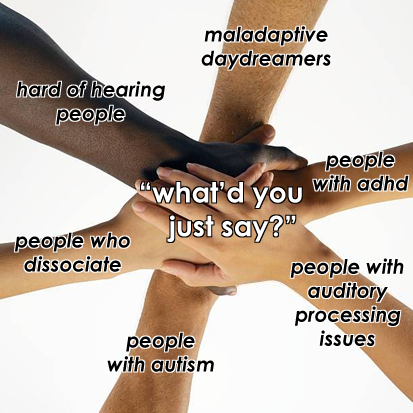
I have a bad habit of fantasizing at any and every possible moment I’ll start fantasizing mid conversation or while I’m reading a book or watching a movie I just shut down completely and fantasize for as long as I can in order to keep myself excited
 just moving along like everyone else