Legolas pretty quickly gets in the habit of venting about his travelling companions in Elvish, so long as Gandalf & Aragorn aren’t in earshot they’ll never know right?
Then about a week into their journey like
Legolas: *in Elvish, for approximately the 20th time* ugh fucking hobbits, so annoying
Frodo: *also in Elvish, deadpan* yeah we’re the worst
Legolas:
~*~earlier~*~
Legolas: ugh fucking hobbits
Merry: Frodo what’d he say
Frodo: I’m not sure he speaks a weird dialect but I think he’s insulting us. I should tell him I can understand Elvish
i mean, honestly it’s amazing the Elves had as many languages and dialects as they did, considering Galadriel (for example) is over seven thousand years old.
english would probably have changed less since Chaucer’s time, if a lot of our cultural leaders from the thirteenth century were still alive and running things.
they’ve had like. seven generations since the sun happened, max.
frodo’s books are old to him, but outside any very old poetry copied down exactly, the dialect represented in them isn’t likely to be older than the Second Age, wherein Aragorn’s foster-father Elrond started out as a very young adult and grew into himself, and Legolas’ father was born.
so like, three to six thousand years old, maybe, which is probably a drop in the bucket of Elvish history judging by all the ethnic differentiation that had time to develop before Ungoliant came along, even if we can’t really tell because there weren’t years to count, before the Trees were destroyed.
plus a lot of Bilbo’s materials were probably directly from Elrond, whose library dates largely from the Third Age, probably, because he didn’t establish Imladris until after the Last Alliance. and Elrond isn’t the type to intentionally help Bilbo learn the wrong dialect and sound sillier than can be helped, even if everyone was humoring him more than a little.
so Frodo might sound hilariously formal for conversational use (though considering how most Elves use Westron he’s probably safe there) and kind of old-fashioned, but he’s not in any danger of being incomprehensible, because elves live on such a ridiculous timescale.
to over-analyse this awesome and hilarious post even more, legolas’ grandfather
was from linguistically stubborn Doriath and their family is actually from a
somewhat different, higher-status ethnic background than their subjects.
so depending on how much of a role Thranduil took in his
upbringing (and Oropher in his), Legolas may have some weird stilted old-fashioned speaking tics in his
Sindarin that reflect a more purely Doriathrin dialect rather than the Doriathrin-influenced Western Sindarin that became the most widely spoken Sindarin long before he was born, or he might have a School Voice
from having been taught how to Speak Proper and then lapse into really
obscure colloquial Avari dialect when he’s being casual. or both!
considering legolas’ moderately complicated political position, i expect he can code-switch.
…it’s
also fairly likely considering the linguistic politics involved that Legolas is reasonably articulate in Sindarin, though
with some level of accent, but knows approximately zero Quenya outside of loanwords into Sindarin, and even those he mostly didn’t learn as a kid.
which would be extra hilarious when he and gimli fetch up in Valinor in his little homemade skiff, if the first elves he meets have never been to Middle Earth and they’re just standing there on the beach reduced to miming about what is the short beard person, and who are you, and why.
this is elvish dialects and tolkien, okay. there’s a lot of canon material! he actually initially developed the history of middle-earth specifically to ground the linguistic development of the various Elvish languages!
Legolas: Alas, verily would I have dispatched thine enemy posthaste, but y’all’d’ve pitched a feckin’ fit.
Aragorn: *eyelid twitching*
Frodo: *frantically scribbling* Hang on which language are you even speaking right now
Pippin, confused: Is he not speaking Elvish?
Frodo, sarcastically: I dunno, are you speaking Hobbit?
Boromir, who has been lowkey pissed-off at the Hobbits’ weird dialect this whole time: That’s what it sounds like to me.
Merry, who actually knows some shit about Hobbit background: We are actually speaking multiple variants of the Shire dialect of Westron, you ignorant fuck.
Sam, a mere working-class country boy: Honestly y’all could be talkin Dwarvish half the time for all I know.
2018 is þe year of using þe þorn again instead of þe letters “T” and “H” in succession
gotta keep it smooþ
þank you
Who let Feanor have a tumblr??
Are you protesting þis?
We are not starting another riot over this. This is not going to end with someone making three jewels, swearing an oath and murdering people over some boats. I’m warning you.
“Tears unnumbered ye shall shed…” Remember that little bit?
I’m fucking warning you.
– Mod Eönwë
PS. Seriously, no more mass murders with poetic names, or I’ll go full “Captain of the Host of the West” on your asses and you won’t be happy about it…
I wanna make some pretty jewels!
– Mod Manwë
Guyþ if Feanor haþ a Tumblr it lookþ þomething like thiþ.
please, please, someone help me out here because i’m broke as shit and can’t afford a copy of peoples of middle-earth to look up the actual shibboleth story – was the linguistic shift addressed by the shibboleth only applied to the unvoiced dental fricative (thulë)? the tengwar suggests that the shibboleth would only come into play when the root of a word was spelled with a thulë, and that any words spelled with a silmë would retain the voiced alveolar fricative (s-sound).
tl;dr: in fëanárian quenya, do all s-sounds become thorns? or just those whose roots contain a thulë? the consonant morphology available on tolkiengateway suggests the latter but literally everyone on tumblr seems to be saying it’s all s’s, whether thulë or silmë. pls help @verymaedhros@alia-andreth@incorrect-middleearth-quotes y’all seem like you know what you’re doing
It’s just those whose roots contain a thulë, or rather, just those that are spelled with a thulë when using tengwar. Unfortunately the English alphabet contains neither thulë nir silmë so if people obeyed those rules in their jokes it wouldn’t be funny anymore.
I love this post because it’s basically
OP: “hey guise let’s have a recreational fight about language”
Silmarillion fandom: *piles out of a clown-car ship with armfuls of miruvor, swords and diacritical marks* did sOMEONE SAY FIGHT ABOUT LANGUAGE
why do people say “don’t be a pussy” when talking about weakness more like “don’t be a man’s ego” because you know there isn’t nothing more fragile than that
uh
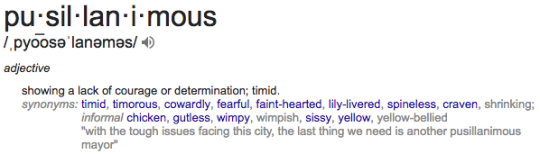
because “pussy” is the shortened form of the word “pusillanimous”, which means “timid, cowardly”
and not the slang word for the female genital region?
Random linguistic observation #137: in American English, depending on the tone, expression and posture with which it’s delivered, the word “yeah” can mean any of:
That is correct.
I approve.
I don’t care.
I am skeptical.
I wasn’t listening.
I agree to your proposal.
I require additional information.
I support you in this undertaking.
I didn’t tell you because I thought it was obvious.
I recognise the truth of your words, but fail to see their relevance.
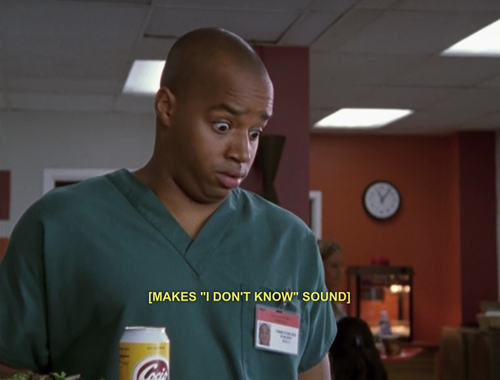
You know what I think is really cool about language (English in this case)? It’s the way you can express “I don’t know” without opening your mouth. All you have to do is hum a low note, a high note, then another lower note. The same goes for yes and no. Does anyone know what this is called?
These are called vocables, a form of non-lexical utterance – that is, wordlike sounds that aren’t strictly words, have flexible meaning depending on context, and reflect the speakers emotional reaction to the context rather than stating something specific. They also include uh-oh! (that’s not good!), uh-huh and mm-hmm (yes), uhn-uhn (no), huh? (what?), huh… (oh, I see…), hmmn… (I wonder… / maybe…), awww! (that’s cute!), aww… (darn it…), um? (excuse me; that doesn’t seem right?), ugh and guh (expressions of alarm, disgust, or sympathy toward somebody else’s displeasure or distress), etc.
Every natural human language has at least a few vocables in it, and filler words like “um” and “erm” are also part of this overall class of utterances. Technically “vocable” itself refers to a wider category of utterances, but these types of sounds are the ones most frequently being referred to, when the word is used.
Reblog if u just hummed all of these out loud as you read them
psa non chinese/white ppl, Beijing is not pronounced “"bay zhhh-ing”“ ,,, its pronounced ”“bay jing”“ with a hArd J.
and Shanghai is pronounced “sh-ahh-ng high” nOt “shay-ng high” ok pls thx bye
ok ADDING onto this bc this shit gets me heated .. Beijing and Shanghai are prob the two most well known cities in China that western countries/ other places know of and i cant recall ever hearing a non-chinese person saying Beijing or Shanghai the right way ? my history teachers, on tv, ppl i know, etc etc ..
pls make an effort to say the two easiest pronunciations correctly, its ok if u didnt kno/uve been saying it wrong but correct urself if u habe been !!! correct othrr ppl bc its rlyyy annoying thank u (edit: btw any1 can rb this!!)
I have mixed feelings about this. Specifically, I’m uncomfortable with the framing – that people who speak a particular language and who have adopted a different pronunciation of a borrowed word from the pronunciation found in the source language in a manner closer to their own phonetics and phonemes are engaging in problematic behaviour that should be “corrected”, because they are thus acting wrongfully towards the group that “owns” the word. Due to historical, cultural, and linguistic factors, the names of countries and cities in languages outside of their source languages are often very different, such as the English pronunciation of Paris (Payr-iss vs. Pah-ree) or the French pronunciation and spelling of London (Londre) or the bizarre situation that resulted in Germany is being called Deutschland, Tyskland, Allemagne, Germania, Niemcy, Alemania, and Duitsland throughout the various European languages (as well as “Déyìzhì” or"Déguó" in Mandarin, where this also happens). Two notable Canadian cities, Ottawa and Toronto, are pronounced “Wòtàihuá” and “Duōlúnduō” because English and Mandarin phonemes don’t map well. That’s not even accounting for differences between different dialects of the same language. It’s super interesting to know how Beijing and Shanghai are pronounced in China – absolutely it is. Especially because as a combination of phonemes, it is super unintuitive to the average English-speaker. Likewise, the idea of choosing a pronunciation closer to the source language is an interesting way of expressing deference and respect to the speakers of those languages. However, it is notable that such an aesthetic preference is heavily coded as a signal of high educational attainment and all the privilege that entails. The most common usage of the pronounciation of foreign-language words with the phonemes found within the source language is as of a way of obnoxiously and condescendingly positioning oneself as culturally and intellectually superior to one’s interlocutors – which makes this post’s second recommendation, that one go about “correcting” people who pronounce these place names in the accepted manner of their language community, even dicier, because this kind of reprimand and social censure, particularly for people with lower education attainment, can be incredibly shaming. Thus, seeing as the practical harm of saying Beijing with a soft versus a hard j is entirely unclear, I would endorse that one choose for oneself which one prefers, and if one really feels strongly about the issue, modelling the pronunciation one prefers oneself, with a most the occasional light, “Hey, did you know they say it like this in China? Neat huh?” rather than embarrassing people for saying it the way they’ve always heard it said.
Yeah, like… it’s not even actually the English /j/, which in IPA is [d͡ʒ]. The /j/ in Beijing is this sound: [t͡ɕ] which doesn’t exist in English. Saying “bay-JING” is still “wrong”, especially sans the correct tones.
Languages will always have their own pronunciations of foreign words, especially when adapting sounds that are not in their phonology. Like, I’m not here in Korea telling people they shouldn’t pronounce “pizza” as [’pidʑa] in Korean just because it happens to come from an English word (the pronunciation of which is different from the original Italian). I’ll correct them in English, sure, because in English it might impede understanding (especially when “zoo” becomes “Jew”), but in Korean? That’s the word, and there’s no point in being condescending about it.
also, why is this addressed to ‘white people’ as if kenyans and pakistanis definitely pronounce beijing with a hard j? that’s so tumblr.
dear OP, i know you mean well, but please be cool. pretty sure you mispronounce copenhagen and moscow.
people who dont even care about language: how can you just CHANGE grammar??? add new wORds?? unacceptable!!! language must never change!!!!!11 kids these days cant even spell!!
people who study language: ANARCHY!! ANARCHY!!!! LANGUAGE IS FLUID AND WORDS AREN’T REAL!! change! the! grammar! rules!! burn a dictionary!!! NO ONE CARES!!!!!
i understand the historical reasons why English is the most common language
but if I was writing a speculative fiction novel
and I said “the language that most people learn as a second language, usually for professional reasons, is also the only one with a spelling system so terrible that spelling words correctly is a broadcasted competition”
you’d be like “extremely unrealistic 0/10”
i never thought of this, do other languages not have spelling bees?

 just moving along like everyone else