just write a diary, it has helped me sooo much and i dare say it has been the most developing thing i’ve done while learning french, nothing else compares
1. you’re exposed to the language daily
2. you quickly see which words are missing from your vocabulary
3. you learn to write about the things you think about a lot
4. learning to actually think in your target language
5. having to look up words and when reading the entry back a couple of days later you can’t even remember which words you didn’t know
6. going back to the earlier entries and seeing all the mistakes and knowing how much better you’ve become
7. when you’ve been writing for a few months and your target language becomes a natural way for expressing yourself
8. when you’ve been writing for a few months and you start seeing the diary writing as a way of self-expression and stressrelief, and the language learning aspect becomes natural and secondary
9. filling out a whole book using only your target language and physically seeing how much you’ve accomplished
lately i’ve been thinking a lot about the specificity of language. everyone always talks about how english has one word for love, i’m bored of that. i think a lot about how we have a word for a sign of things to come (portent) and how we have a word for freeing someone of sin (absolve), we have a word for a sudden outburst of any kind of activity (paroxysm). today my brother taught me wayzgoose: “an entertainment given by a master printer to his workmen each year on or about St. Bartholomew’s Day”.
i think about this in a kiss, how we purse our lips, how we press into each other, how kiss is a small word for an action that feels big – i think about how we have french kiss, how we have a smack on the cheek, a peck. i think about this when we make eye contact, how we have “a moment” that passes between two people like an envelope, one that reads of more, more, more – i think of who gave us the names for obscure things. how shakespeare gave us elbow, and what did we call it beforehand.
what word is there for the way your eyes look when you talk about your favorite thing. we have phosphorescence, the property of emitting light, but that’s not right. what word is there for how it feels with the floor against your back while you’re watching sunbeams filter dust motes. there’s languid, relaxed, but that doesn’t work. what word is there for how it feels beside your best friend, listening to them laugh, knowing this moment is a pocket that keeps all of the good things inside, one i will tuck myself into again and again, one i am somehow distant from even though i’m enjoying it: watching the moment become a memory i think of fondly, even while it’s happening.
there’s kissing, there’s leaning in, there’s words for summer and fireflies in jars and fall creeping in. there’s words for leaves and the smoke in the air from breathing and there’s words for the fire of a sunset on an autumn evening. i think about how we made words for things. the oxford dictionary gives us 171,476 current words to make sense of things. how we let poets give us syllables for how it feels to fall into someone’s arms (melting) and someone who talks a lot (gregarious) and vast burning (conflagration). the beauty of language is we have a word for that until we don’t have a word for that and then poetry comes in.
if i kiss you i think: portent. if i kiss you i think of telling you here is where our lips purse here is where my sins absolve here is the paroxysm of my heart. i kiss you and i think: what words do other people use when they need to fill in the emptiness of “love”. do they think conflagration, the misery of scorching, or do they think of slow burning. do they think portent. do they think of kisses as french or as just kisses, no purses or bow lips. when they lean in do they melt into it. when they love, is it just that? something specific? or do they mean “the spaces around this word say more than the letters i’m given.”
for chinese new year they get all these famous actors and comedians together and they do a lil show and one of the comedians was like “i was in a hotel in america once and there was a mouse in my room so i called reception except i forgot the english word for mouse so instead i said ‘you know tom and jerry? jerry is here’
jerry is here
my chinese teacher once shared this story in class about someone who went to the grocery to buy chicken, but they forgot the english word for it, so they grabbed an egg, went to the nearest sales lady and said “where’s the mother”
When I was a teenager, we went to Italy for the summer holidays. We are German, neither of us speaks more than a few words of Italian. That didn’t keep my family from always referring to me when they wanted something translated because “You’re so good with languages and you took Latin”. (I told them a hundred times I couldn’t order ice cream in Latin, they ignored that.) Anyway, my dad really loved a certain cheese there, made from sheep’s milk. He knew the Italian word for ‘cheese’ – formaggio – and he knew how to say ‘please’. And he had already spotted a little shop that sold the cheese. He asked me what ‘sheep’ was in Italian, and of course, I had no idea. So he just shrugged and said “I’ll manage” and went into the shop. 5 mins later, he comes out with a little bag, obviously very pleased with himself. How did he manage it? He had gone in and said “’Baaaah’ formaggio, prego.”
I was done for the day.
This makes me feel better about every conversation I had in both Rome and Ghent.
I once lost my husband in the ruins of a French castle on a mountain, and trotted around looking for him in increasing desperation. “Have you seen my husband?” I asked some French people, having forgotten all descriptive words. “He is small, and English. His hair is the color of bread.”
I did not find my husband in this way.
In rural France it is apparently Known that one brings one’s own shopping bags to the grocery store. I was a visitor and had not been briefed and had no shopping bag. I saw that other people were able to conduct negotiations to purchase shopping bags, but I could not remember the word for “bag.”
“Can I have a box that is not a box,” I said.
The checkout lady looked extremely tired and said, “Un sac?” (A sack?)
Of course. A fucking sack. And so I did get a sack.
I once was at a German-American Church youth camp for two weeks and predictably, we spoke a whole lot of English.
When I phoned my mom during week two I tried to tell her that it was a bit cold in the sleeping bag at night. I stumbled around the word in German because for the love of god, I could remember the Germwn word for sleeping bag.
“Yeah so, it’s like a bag you sleep in at night?”
“And my mother must probably have thought I lost my mind. She just sighed and was like ‘So, a Schlafsack, yes?”
Which is LITERALLY Sleeping sac … The German word is a basically a one on one translation of the English word and I just… I failed it. At my mother tongue. BIG
My former boss is Italian and she ended up working in a lab where the common language was English. She once saw an insect running through the lab and she went to tell her colleagues. She remembered it was the name of a famous English band so she barged in the office yelling there was a rolling stone in the lab…
I’m Spanish and have been living in the UK for a while now. I recently changed jobs and moved to a new office which is lost somewhere in the Midlands’ countryside. It’s a pretty quaint location, surrounded by forest on pretty much all sides, and with nice grounds… full of pheasants. I was pretty shocked when I drove in and saw a fucking pheasant strolling across the road. Calm as you please.
That afternoon I met up with some friends and was talking about the new job, and the new office, and for the life of me I couldn’t remember the English word for pheasants. So I basically ended up bragging to my friends about “the very fancy chickens” we had outside the office.
Best thing is, everyone understood what I meant.
I love those stories so much…
Picture a Jewish American girl whose grasp of the Hebrew language comes from 10+ years of immersion in Biblical and liturgical Hebrew, not the modern language. Some words are identical, while others have significantly evolved.
She gets to Israel and is riding a bus for the very first time.
American: כמה ממון זה? (”How much money?” but in rather archaic language)
Bus Driver: שתי זוזים. (”Two zuzim” – a currency that’s been out of circulation for millenia)
that’s hilarious
I am officially screamlaughing at my desk from that last one OH MY
Does everyone know the prime minister who promised to fuck the country?
So in Biblical Hebrew the word for penis and weapon are the same. There is a verb meaning to arm, which modern Hebrew semanticly drifted into “fuck”: i.e. give someone your dick.
The minister was making a speech while a candidate, bemoning the state of the world. “The Soviet Union is fucking Egypt. Germany is fucking Syria. The Americans are fucking everyone. But who is fucking us? When I am prime minister, I will ensure we are fucked!”
What the hell Biblical Hebrew.
Just guessing: The path from something like “give someone a blade” to “give someone a blade, if you know what I mean ;)” is probably not that difficult or unlikely.
^Given that the Latin word for sheath (like, for a sword) is literally “vagina”, I can verify that this metaphor is a time-honored one.
Oh yeah and one time my Latin professor was at this conference in Greece and his flight was canceled, so he needed to extend his hotel stay by one more night.
Except he doesn’t speak a lick of modern Greek, and the receptionist couldn’t speak English. Or French. Or German. Or Italian. (He tried all of them.)
Finally, in a fit of inspiration, he went upstairs and got his copy of Medea in the original Greek (you know, the stuff separated from modern Greek by two and a half thousand years). He found the passage where Medea begs Jason to let her stay for one more day, went downstairs, and read it to the receptionist.
She laughed her head off, but she gave him the extra night.
These are all so great and every other reply on this post is great too xD can’t stop laughing
I love these!
When we (Austrians) were living in the US, my mom would sometimes mix up “snake” and “snack” (Kids, would you like a snake? *9 year-olds screaming*) as well as “razor” and “eraser” (i.e. very loudly offering to buy her prepubescent daughter a pack of razors at the store). Makes me wonder if she was just messing with me.
Also, a dear friend – an American living in France, speaking very fluent German – once forgot the German word for knife (Messer) and asked for a “Schneidlöffel” (cutting-spoon).
When we were in France we wanted to have dinner on a boat on the river but we weren’t sure if the boat was going to stay docked. My father finally managed to convey the question in the style of a small child playing trucks: “vrooooooom? o non?”
i was tutoring a korean high-schooler in english, and i was encouraging him to retell the plot of a k-drama episode he’d recently seen. apparently part of it took place in a women-only bath-house, which he rendered as “a lady-washing shop.”
the thing you need to realize about localization is that japanese and english are such vastly different languages that a straight translation is always going to be worse than the original script. nuance is going to be lost and, if you give a shit about your job, you should fill the gaps left with equivalent nuance in english. take ff6, my personal favorite localization of all time: in the original japanese cefca was memorable primarily for his manic, childish speaking style – but since english speaking styles arent nearly as expressive, woolsey adapted that by making the localized english kefka much more prone to making outright jokes. cefca/kefka is beloved in both regions as a result – hell, hes even more popular here
yes this
a literal translation is an inaccurate translation.
localization’s job is to create a meaningful experience for a different audience which has a different language and different culture. they translate ideas and concepts, not words and sentences. often this means choosing new ideas that will be more meaningful and contribute to the experience more for a different audience.
There was an example during late Tokugawa period in Japan where the translator translated, "Я люблю Вас” (I love you), to “I could die for you,” while translating
Ася, (
Asya) a novel by Ivan Turgenev. This was because a woman saying, “I love you,” to a man was considered a very hard thing to do in Japanese society.
In a more well-known example,
Natsume Soseki, a great writer who wrote, I am a Cat, had his students translate “I love you,” to “the moon is beautiful [because of] having you beside tonight,” because Japanese men would not say such strong emotions right away. He said that it would be weird and Japanese men would have more elegance.
Both of these are great examples of localization that wasn’t a straight up translation and both of these are valid. I feel like a lot of people forget the nuances in language and culture and how damn hard a translator’s job is and how knowledgeable the person has to be about both cultures. [x]
Important stuff about translation!
Note that you can apply this to your own translations even if they aren’t big pieces of literature or something. Don’t feel bad about not translating word for word. An everyday sentence may sound odd translated literally – it’s okay to edit a little bit so it feels right!
Oh my god, I’m about to go on a ramble, I’m sorry, I can’t help it, the inner translation nerd is coming out. I’m so sorry. The thing is–there is actually no such thing as an accurate translation.
It’s literally an impossible endeavor. Word for word doesn’t cut it. Sense for sense doesn’t cut it, because then you’re potentially missing cool stuff like context and nuance and rhyme and humor. Even localization doesn’t really cut it, because that means you’re prioritizing the audience over the author, and you’re missing out on the original context, and the possibility of bringing something new and exciting to your host language. Foreignization, which aims to replicate the rhythms of the original language, or to use terminology that will be unfamiliar to the target culture–(for example: the first few American-published Harry Potter books domesticated the English, and traded “trousers” for “pants”, and “Mom” for “Mum”. Later on they stopped, and let the American children view such foreignizing words as “snog” and “porridge.”)–also doesn’t cut it, because you risk alienating the target readers, or obscuring meaning.
Another cool example is Dante, and the words written above the gates of hell: Abandon hope, all ye who enter here.
In the original Italian, that’s Lasciate ogne speranza, voi ch’intrate. Speranza, like most nouns in latinate languages, has a gender: la. Hope, in Italian, is gendered female. Abandon hope, who is female. Abandon hope, who is a woman. When the original Dante enters hell, searching for Beatrice, he is doomed, subtly, from the start. That’s beautiful, subtle, the kind of delicate poetic move literature nerds gorge themselves on, and you can’t keep it in English. Literally, how do you preserve it? We don’t have a gendered hope. It doesn’t work, can’t work. So how do you compensate? Can you sneak in a reference to Beatrice in a different line? Or do you chalk her up as a loss and move onto the next problem?
You’re always going to miss something–the cool part is that, knowing you’re going to fail, you get to decide how to fail. Ortega y Gasset called this The Misery and Splendor of Translation. Basically, translation is impossible–so why not make it a beautiful failure?
My point is that literary translation is creative writing, full of as many creative decisions as any original poem or short story. It has more limitations, rules, and structures to consider, for sure–but sometimes the best artistic decision is going to be the one that breaks the rules.
My favorite breakdown of this is Le Ton Beau De Marot, a beautiful brick of a translator’s joke, in which the author tries over and over again to create a “perfect” translation of “A une Damoyselle Malade”, an itsy bitsy poem Clement Marot dashed off to his patron’s daughter, who was sick, in 1537.
This is the poem:
Ma mignonne, Je vous donne Le bon jour; Le séjour C’est prison. Guérison Recouvrez, Puis ouvrez Votre porte Et qu’on sorte Vitement, Car Clément Le vous mande. Va, friande De ta bouche, Qui se couche En danger Pour manger Confitures; Si tu dures Trop malade, Couleur fade Tu prendras, Et perdras L’embonpoint. Dieu te doint Santé bonne, Ma mignonne.
Seems simple enough, right? But it’s got a huge host of challenges: the rhyme, the tone, the archaic language (if you’re translating something old, do you want it to sound old in the target language, too? or are you translating not just across language, but across time?)
Le Ton Beau De Marot is a monster of a book that compiles all of Hofstader’s “failed” translations of Ma Mignonne, as well as the “failed” translations of his friends, and his students, and hundreds of strangers who were given the translation challenge (which you can play here, should you like!)
The end result is a hilarious archive of Sweet Damosels, Malingering Ladies, Chickadees, Fairest Friends, and Cutie Pies. It’s the clearest, funniest, best example of what I think is true of all literary translations: that they’re a thing you make up, not a thing you discover. There is no magic bridge between languages, or magic window, or magic vessel to pour the poem from one language to another–translation is always subjective, it’s always individual, it’s always inaccurate, it’s always a failure.
It’s always, in other words, art.
Which, as a translator, I find incredibly reassuring! You’re definitely, one hundred percent absolutely, gonna fuck up. Which means you can’t fuck up. You can take risks! You can experiment! You can do cool stuff like bilingual translations, or footnote translations! You write your own code of honor, your own rules that your translations will hold inviolable, and fuck it if that code doesn’t match everyone else’s*. The translations they hold inviolable are also flawed, are failures at the core, from the King James Bible right on down to No Fear Shakespeare. So have fun! It’s all in your hands, miseries and splendors both.
it’s things like this that make me so aggressively skeptical of the people who think that perfect machine translation is just around the corner. these aren’t bonus add-on fun details — these problems are inextricably bound to the core of what it means to translate something, and you can’t get away from that
this is the reason the dialogue in pokemon black and white bothered me so much!!!!!!!!!!!!!!
Fifteen years later and I just this minute learned that ‘draught’, as in Draught of Living Death, Sleeping Draught, etc. is, in fact, pronounced “draft”.
Then there’s this guy:
In our defense:
caught – cawt
taught – tawt
daughter – dawter
distraught – distrawt
draught – draft
???
laugh – laff laughter – lafter
tough – tuff
cough – coff
There is plenty of precedent for gh representing an f sound if you were paying attention.
tHeRE is plENTy of PREcEDEnt if yOu weRe PAYing aTTEntIOn
Get over yourself.
“If you were paying attention” you would know that English has been dissected for centuries and determined to be one of the hardest phonological languages in modern existence due to the fact that it’s a hodgepodge of other languages resulting in various letters/digraphs being associated with various sounds.
(See, I can be just as pretentious.)
In fact, “if you were paying attention” then you would know about The Chaos, a famous (and infamous) poem written by Charivarius.
Dearest creature in creation, Study English pronunciation. I will teach you in my verse Sounds like corpse, corps, horse, and worse. I will keep you, Suzy, busy, Make your head with heat grow dizzy. Tear in eye, your dress will tear. So shall I! Oh hear my prayer.
Just compare heart, beard, and heard, Dies and diet, lord and word, Sword and sward, retain and Britain. (Mind the latter, how it’s written.) Now I surely will not plague you With such words as plaque and ague. But be careful how you speak: Say break and steak, but bleak and streak; Cloven, oven, how and low, Script, receipt, show, poem, and toe.
Hear me say, devoid of trickery, Daughter, laughter, and Terpsichore, Typhoid, measles, topsails, aisles, Exiles, similes, and reviles; Scholar, vicar, and cigar, Solar, mica, war and far; One, anemone, Balmoral, Kitchen, lichen, laundry, laurel; Gertrude, German, wind and mind, Scene, Melpomene, mankind.
Billet does not rhyme with ballet, Bouquet, wallet, mallet, chalet. Blood and flood are not like food, Nor is mould like should and would. Viscous, viscount, load and broad, Toward, to forward, to reward. And your pronunciation’s OK When you correctly say croquet, Rounded, wounded, grieve and sieve, Friend and fiend, alive and live.
Ivy, privy, famous; clamour And enamour rhyme with hammer. River, rival, tomb, bomb, comb, Doll and roll and some and home. Stranger does not rhyme with anger, Neither does devour with clangour. Souls but foul, haunt but aunt, Font, front, wont, want, grand, and grant, Shoes, goes, does. Now first say finger, And then singer, ginger, linger, Real, zeal, mauve, gauze, gouge and gauge, Marriage, foliage, mirage, and age.
Query does not rhyme with very, Nor does fury sound like bury. Dost, lost, post and doth, cloth, loth. Job, nob, bosom, transom, oath. Though the differences seem little, We say actual but victual. Refer does not rhyme with deafer. Foeffer does, and zephyr, heifer. Mint, pint, senate and sedate; Dull, bull, and George ate late. Scenic, Arabic, Pacific, Science, conscience, scientific.
Liberty, library, heave and heaven, Rachel, ache, moustache, eleven. We say hallowed, but allowed, People, leopard, towed, but vowed. Mark the differences, moreover, Between mover, cover, clover; Leeches, breeches, wise, precise, Chalice, but police and lice; Camel, constable, unstable, Principle, disciple, label.
Petal, panel, and canal, Wait, surprise, plait, promise, pal. Worm and storm, chaise, chaos, chair, Senator, spectator, mayor. Tour, but our and succour, four. Gas, alas, and Arkansas. Sea, idea, Korea, area, Psalm, Maria, but malaria. Youth, south, southern, cleanse and clean. Doctrine, turpentine, marine.
Compare alien with Italian, Dandelion and battalion. Sally with ally, yea, ye, Eye, I, ay, aye, whey, and key. Say aver, but ever, fever, Neither, leisure, skein, deceiver. Heron, granary, canary. Crevice and device and aerie.
Face, but preface, not efface. Phlegm, phlegmatic, ass, glass, bass. Large, but target, gin, give, verging, Ought, out, joust and scour, scourging. Ear, but earn and wear and tear Do not rhyme with here but ere. Seven is right, but so is even, Hyphen, roughen, nephew Stephen, Monkey, donkey, Turk and jerk, Ask, grasp, wasp, and cork and work.
Pronunciation — think of Psyche! Is a paling stout and spikey? Won’t it make you lose your wits, Writing groats and saying grits? It’s a dark abyss or tunnel: Strewn with stones, stowed, solace, gunwale, Islington and Isle of Wight, Housewife, verdict and indict.
Finally, which rhymes with enough — Though, through, plough, or dough, or cough? Hiccough has the sound of cup. My advice is to give up!!!*
—
So there’s no sense in acting pretentious because you could recognize a single digraph. This language is a complete clusterfoque where the standard rules don’t apply.
Ouuuu
Bringing it back to the point, draught is pronounced like draft, not drought, and I hate English.
There’s also the thing where if you learn words first by reading them, you tend to pronounce them the way they logically would be pronounced, by following the most common pronunciation rule for that set of letters, ie, Draught being mispronounced as drawt, not draft. Because there IS a word for DRAFT, and we use it in racing. And military service in war time. So why would a BEVERAGE be pronounced the same way?
So you teach yourself what must be correct because NO ONE uses the word “draught” out loud any more.
Don’t be such a snot. Surely the smarter people learned it from books since we NO LONGER SAY THAT WORD OUT LOUD.
Petition to pronounce it “drawt” anyway because language is a living entity that is dependent on usage to give it meaning and also Fuck English
Pretty much everyone I’ve ever heard use it pronounces it “drawt”, so I think we’re good. Then again I’m USian so *shrug*
Also, when USian beer companies use it with the “aft” pronunciation, they change the spelling to “draft”. So, “drawt” and “draft” are well on their way to becoming two different but similar words in USian English.
Random linguistic observation #137: in American English, depending on the tone, expression and posture with which it’s delivered, the word “yeah” can mean any of:
That is correct.
I approve.
I don’t care.
I am skeptical.
I wasn’t listening.
I agree to your proposal.
I require additional information.
I support you in this undertaking.
I didn’t tell you because I thought it was obvious.
I recognise the truth of your words, but fail to see their relevance.
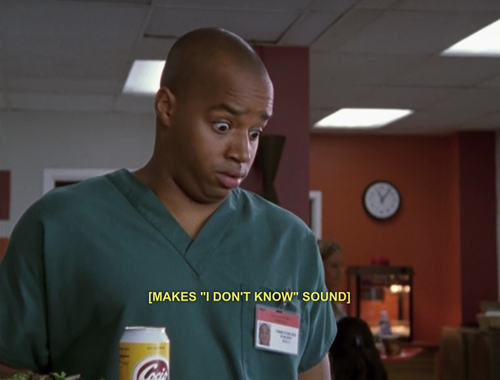
You know what I think is really cool about language (English in this case)? It’s the way you can express “I don’t know” without opening your mouth. All you have to do is hum a low note, a high note, then another lower note. The same goes for yes and no. Does anyone know what this is called?
These are called vocables, a form of non-lexical utterance – that is, wordlike sounds that aren’t strictly words, have flexible meaning depending on context, and reflect the speakers emotional reaction to the context rather than stating something specific. They also include uh-oh! (that’s not good!), uh-huh and mm-hmm (yes), uhn-uhn (no), huh? (what?), huh… (oh, I see…), hmmn… (I wonder… / maybe…), awww! (that’s cute!), aww… (darn it…), um? (excuse me; that doesn’t seem right?), ugh and guh (expressions of alarm, disgust, or sympathy toward somebody else’s displeasure or distress), etc.
Every natural human language has at least a few vocables in it, and filler words like “um” and “erm” are also part of this overall class of utterances. Technically “vocable” itself refers to a wider category of utterances, but these types of sounds are the ones most frequently being referred to, when the word is used.
Reblog if u just hummed all of these out loud as you read them


 just moving along like everyone else