My current job has me working with children, which is kind of a weird shock after years in environments where a “young” patient is 40 years old. Here’s my impressions so far:
Birth – 1 year: Essentially a small cute animal. Handle accordingly; gently and affectionately, but relying heavily on the caregivers and with no real expectation of cooperation.
Age 1 – 2: Hates you. Hates you so much. You can smile, you can coo, you can attempt to soothe; they hate you anyway, because you’re a stranger and you’re scary and you’re touching them. There’s no winning this so just get it over with as quickly and non-traumatically as possible.
Age 3 – 5: Nervous around medical things, but possible to soothe. Easily upset, but also easily distracted from the thing that upset them. Smartphone cartoons and “who wants a sticker?!!?!?” are key management techniques.
Age 6 – 10: Really cool, actually. I did not realize kids were this cool. Around this age they tend to be fairly outgoing, and super curious and eager to learn. Absolutely do not babytalk; instead, flatter them with how grown-up they are, teach them some Fun Gross Medical Facts, and introduce potentially frightening experiences with “hey, you want to see something really cool?”
Age 11 – 14: Extremely variable. Can be very childish or very mature, or rapidly switch from one mode to the other. At this point you can almost treat them as an adult, just… a really sensitive and unpredictable adult. Do not, under any circumstances, offer stickers. (But they might grab one out of the bin anyway.)
Age 15 – 18: Basically an adult with severely limited life experience. Treat as an adult who needs a little extra education with their care. Keep parents out of the room as much as possible, unless the kid wants them there. At this point you can go ahead and offer stickers again, because they’ll probably think it’s funny. And they’ll want one. Deep down, everyone wants a sticker.
This is adorable and true. Also for age 1-2: get the correct flavour of medication or suffer the consequences.
This maps quite closely onto my pediatrics experience. Especially the part about getting medication falvors right. GOD but have I been spraypainted too many times with “strawberry”-flabored ampicillin. (And is it ever a pain in the butt to get out of a white uniform.)
Am I the only person on the planet who instantly gets along with 97% of toddlers? See, here’s the thing about kids age about, oh, 9 months to 2 ½ with a LOT of “squish” into other groups at the ends of that time gap. Mostly kids who are okay at walking but still not super functional with expressive speech.
Kids that age are SMART. They understand a TON of their native language. They don’t have really good ways of expressing things, but they’re super aware of body language and detect fear and nervousness almost instantly.
So being confident of yourself is GOOD. It is reassuring.
Talking to them as you would to any person who you know understands you is GOOD. It’s okay to emphasize the important words. Pick up some baby signs if you’re working with this group, LOTS of babies are being taught rudimentary ASL signs (not grammar, just one word nouns and verbs and the occasional two word phrase). They won’t use them with you if they think you won’t understand, but the sign for “hurt” is important in a medical setting anyway. Hurt goes wherever the hurt is (you sign it over the tummy or at the ear or whatever for tummy aches and earaches.) You don’t have to go squeaky or fake with this age group, but repeating important words if they don’t seem to understand right away helps kids learn language and they like people who help them learn language.
Being honest and not emotionally loading things is good. “We’re going to do a shot and it might hurt for a second, but it’s going to be really fast and then we’ll be all done.”
Kids this age respond well to silly surprise. Peek-a-boo and funny faces are good. You’re looking for surprise and unexpected, not fright.
They also respond to people getting on their level. I find myself repeating what they say a lot, for clarity, and this is not patronizing, it’s letting them know that you understand. Never underestimate the value of showing kids you understand. I’ve seen kids throwing frustrated tantrums absolutely stop when I said, “Are you really upset because you can’t say the words and you have something you want to tell us?”
And the response? The kid chilled out completely and said, “yes.”
When there are choices, use Choice Hands with not-very-verbal kids. If you have the physical things to choose from, you say, “Do you want x” (present thing) “or do you want Y” present thing in other hand.
But you don’t have to have the actual things. “Do you want a sticker”(hold out hand) or a toy (hold out other hand). If they get the concept, they’ll point at the hand that represents what they want.
Sample conversation with a crying child might be “Do you hurt” “Or something else” (something else) “Are you sad” “Or something else” (something else) “Are you afraid?” “Or something else” (afraid)
I’ve seen 18 month olds speaking in complete sentences, the main difference between those kids and other kids who aren’t isn’t necessarily smarts, it’s more often motor control. The brain is in rapid wiring mode and what gets installed/pruned in what order varies from kid to kid, but language comprehension usually leads language expression by a lot.
I’ve seen medical professionals walk into a room and frighten my children almost instantly, and I’ve seen medical professionals walk in, set my kid at ease and have them laughing through an exam. I would say the biggest difference is that the ones who get the kids laughing genuinely like and respect children and show them that.
Awesome stuff from @jenroses (as usual). One thing I want to point out is this bit:
Sample conversation with a crying child might be “Do you hurt” “Or something else” (something else) “Are you sad” “Or something else” (something else) “Are you afraid?” “Or something else” (afraid)
It also applies to autistics that have been trained to say “yes” (ABA therapy) so the “or something else” is really important. Give them (children or autistics that have been trained) ways to say “something else”. Yes/no questions are a starting point, but probing gently will give you more accurate answers.
tbh one last lil irascible radical healthcare-for-the-people rant before I go to bed: I think narratives about the Genius Diagnostician often wind up serving as false propaganda about medicine, and about the abilities of the people who practice it.
in reality the majority of doctors are under an enormous amount of cognitive strain, and the layers of mystique around the profession and its artificial scarcity (limited by residency slots, mostly) are the things that insulate them, that prevent everyone else from recognizing that
and the information that’s available to doctors about things like antibiotic prescription, etc: a lot of it is available to all of us, and while it’s complicated as fuck, and a layperson can’t automatically be assumed to have the reading comprehension ability to understand it, it’s also not impenetrable, it’s not mystical; recognizing what parts of a paper you do and don’t understand is often enough to help you piece together the rest of it; it’s just dry science papers and manuals written in shorthand
so many of us who do have the capacity to read and understand such things wind up assuming that we don’t truly, because Doctors Know Things
but I’ve been burned enough times by doctors not knowing things I knew, and helped enough times by laypeople knowing things doctors didn’t, that I’m starting to see that the wall of that walled garden is not what I thought it was, and the purpose it serves is less beneficent than I once believed.
I just saw a video title on YouTube that said something like “Why is glass transparent?” And that’s an interesting question and I’m sure it’s great that the video exists but my first thought was like “Because glass is terrible, obviously.” Because it’s unwieldy and let’s out warmth and needs to be heated to hundreds of degrees to be shaped and turns into hundreds of tiny daggers if you drop it. Why the hell would we bother with that if it didn’t have some magical quality like being totally transparent despite being solid? Glass is transparent because if it weren’t, we’d use something else.
looking through my “me” tag and this is apparently what I was thinking 3 years ago
If you’re still curious we did not start working glass for its transparency. It was most likely started as a sanitary concern. Glass is easy to clean with soap and water, once it’s cleaned out you can use it again for anything and no germs or flavor from the previous meal or drink will remain.
Other materials at the time, namely clay, would absorb flavors and germs meaning that if you ate beef off a clay plate your next meal with that plate could have beef flavor and microbes common on cow meat on it. That would leak out seemingly at random no less. Heck imagine a sick person coughing into their soup bowl and then months later their germs hiding in the clay would pop out to infect whole new people.
Also the earliest human use of glass we know of is for its sharpness. Pre-historic people would use volcanic glass as sharp knives for food preparation. Also beads. Pretty much any new substance humans get their hands on for most of our history we immediately try to make into beads.
The fact that it could become see through was a side benefit.
this is amazing and I’m really glad I reblogged that old bullshit post because I got to learn this
I’m re-watching the Prince of Egypt, and the whole God saying “totally, just kill a lamb and paint your door with it’s blood so I know not to kill your first born children” really strikes me as a ruthless Pagan God move…
So my question is… What the fuck?
Some secondary and follow up questions? are:
God sent plagues, but that feels like a lot more work than just saying “Hebrews grab your shit, revolt, and leave, you easily out number the Egyptians.”
God appeared to Moses as a burning bush… Why not something idk, more obviously god-like? He has ultimate power and chose to look like flaming shrubbery.
This story is so weird, because you could change the names of the people and places, then tell me it’s a fantasy story about some Pagan God that wants to deliver his worshippers out of bondage.
But also fuck everyone else who’s having a rough time? He doesn’t care about delivering anyone else, including future enslaved races? Just the Hebrews… That one time… Dude sounds like some choosy guy who has to use a surrogate… Must not have ultimate power if he can’t come down from his high throne and do it himself??
If someone can give me a real solid answer as to why God sounds just exactly like some Pagan Gods (with the lambs blood, water into blood, plagues and shit) then I will shut the fuck up. Until then, imma be questioning this
So these kinds of questions are always amusing from the Jewish perspective, because well…we talk about this all the time. Why bother killing the first borns? Dayenu. (It would have been enough to just let us go free.)
But basically, you’re approaching this from a heavily christian-normative atheist perspective. I don’t think asking Xtians about this story will help, because this is the most fundamentally Jewish story to be tackling.
Here goes:
“totally, just kill a lamb and paint your door with it’s blood so I know not to kill your first born children” really strikes me as a ruthless Pagan God move…
Animal sacrifice absolutely exists in the Torah and during the first and second temple periods. The fact that Judaism explicitly bans all human sacrifice is seen as (in historical context) a huge step away from pagan ritual sacrifice. Many scholars believe the shift to animal sacrifice in general is reflective of understanding man’s more primal urges, and redirecting it away from murder or human sacrifice.
At any rate, the sacrifice of the lamb and painting of the lintel with lamb’s blood could have any number of possible parallels or reasonings.
It’s worth noting that sacrificing a lamb would be considered to be inappropriate by the Egyptians, which is mentioned right there in the text of Exodus. (I assume you didn’t read it):
(Chapter 8) 21 Thereupon, Pharaoh summoned Moses and Aaron, and he said, “Go, sacrifice to your God in the land.” 22 But Moses said, “It is improper to do that, for we will sacrifice the abomination of the Egyptians to God our Lord. Will we sacrifice the deity of the Egyptians before their eyes, and they will not stone us? 23 Let us go [for] a three day journey in the desert and sacrifice to the Lord, our God, as He will say to us.” 24 Pharaoh said, “I will let you go out, and you will sacrifice to the Lord, your God, in the desert, but do not go far away; entreat [Him] on my behalf.”
The Egyptians had Sheep/Ram headed Gods, so it’s not surprising that sacrificing a lamb for God would indicate that the Jewish people are truly not Egyptians, especially if an Egyptian might be inclined to stone someone for doing this.
The choice of sacrificing a sheep might very well be completely intentional as an affront against Egyptian oppressors. We have corroboration historically about the importance of rams and sheep in Egypt:
Herodotus, in his survey of Egyptian customs, writes (Histories, 2:42):
Now all who have a temple set up to the Theban Zeus (=Amun) or who are of the district of Thebes, these, I say, all sacrifice goats and abstain from sheep… the Egyptians make the image of Zeus (=Amun) into the face of a ram… the Thebans then do not sacrifice rams but hold them sacred for this reason.
So this isn’t just a random “pagan” act, this is a group of people intentionally sacrificing an animal held sacred as representative of a pagan god, because that is what God requires and asks for. The Egyptians would never sacrifice a sheep, if the sheep represents some of their deities – but the Hebrews, who do not worship pagan gods, most certainly would.
If you read chapter 9, you will also see Pharaoh try and command that the Hebrews should leave behind their sheep and cattle (in part to prevent their sacrifice) – which they refuse to do.
The “sacrifice” of the lamb fulfills a few different purposes:
it is considered sacrilegious by the Egyptians, thus setting them apart from the pagans (and symbolically showing a willingness to destroy pagan gods)
the lamb is meant to be cooked and prepared so that the families can eat it. It’s a meal to be prepared in light of the fact that they’re preparing to flee.
Torah also tells us the blood is a sign for the Hebrews, and not the Egyptians. The blood is actually marked on the inside of the door (as per Rashi’s commentary on the Hebrew), and therefore the only people who can see the blood would be God (who is able to see all) and the Hebrews from inside their homes. It looks more impressive to do it the other way when you animate it, though.
The verse shows us this:
And the blood will be for you for a sign upon the houses where you will be, and I will see the blood and skip over you, and there will be no plague to destroy [you] when I smite the [people of the] land of Egypt.
Rashi explains: And the blood will be for you for a sign: [The blood will be] for you a sign but not a sign for others. From here, it is derived that they put the blood only on the inside. — [from Mechilta 11]
and I will see the blood: [In fact,] everything is revealed to Him. [Why then does the Torah mention that God will see the blood?] Rather, the Holy One, blessed be He, said, “I will focus My attention to see that you are engaged in My commandments, and I will skip over you.” -[from Mechilta]
Your other questions are also interesting:
God sent plagues, but that feels like a lot more work than just saying “Hebrews grab your shit, revolt, and leave, you easily out number the Egyptians.”
Well, again, have you read a haggadah? We uh, talk about this once a year. If God had let us flee Egypt and not bothered with punishing our oppressors – that would have been enough!
So like, in general, you can’t attend a passover seder without questioning…why God bothered with the plagues.
God appeared to Moses as a burning bush… Why not something idk, more obviously god-like? He has ultimate power and chose to look like flaming shrubbery.
A bush that is on fire but does not get burnt is pretty impressive. But again, I guess you haven’t actually read exodus, because it’s not just a burning bush:
An angel of the Lord appeared to him in a flame of fire from within the thorn bush, and behold, the thorn bush was burning with fire, but the thorn bush was not being consumed.
So Moses said, “Let me turn now and see this great spectacle why does the thorn bush not burn up?”
An angel appears in the fire, the thorn bush is on fire, but does not burn. Then God appears. But eh, maybe that isn’t as wild as you want it to be, so the following exchange between Moses and God is a bit more…miraculous. First God turns Moses’ staff and turns it into a serpent, and back into a staff. This is the first sign Moses can use to prove that God is here. And then…
And the Lord said further to him, “Now put your hand into your bosom,” and he put his hand into his bosom, and he took it out, and behold, his hand was leprous like snow.
And He said, “Put your hand back into your bosom,” and he put his hand back into his bosom, and [when] he took it out of his bosom, it had become again like [the rest of] his flesh.
…you might want to picture it a little bit like this:
– You best start believing in holy stories, Moshe. – you’re in one.
But again, you don’t need to believe in this literally or accept it as literal. But I think it’s a bit silly to say it’s not “miraculous” enough or something.
This story is so weird, because you could change the names of the people and places, then tell me it’s a fantasy story about some Pagan God that wants to deliver his worshippers out of bondage.
Except you couldn’t, which is why it’s a story about the Jewish monotheistic God. If you swapped out the name of God and the people, it would still be a monotheistic story.
You could take “In order that they believe that the Lord, the God of their forefathers, has appeared to you, the God of Abraham, the God of Isaac, and the God of Jacob.“
and instead say “the King, the Ancient One of their forefathers, has appeared to you, the God of Maharba, the God of Caasi, and the God of Bocaj,” but you’re still fundamentally naming a monotheistic deity.
But also fuck everyone else who’s having a rough time? He doesn’t care about delivering anyone else,
Again, this isn’t true, and even PoE illustrates this! Watch it again, and you’ll notice Egyptians dropping their weapons and walking alongside the Hebrews, even crossing the sea! and why else would God give commandments before the Hebrews cross the sea about what to do with the converts and strangers living among them?
Exodus 12:37-38:
The children of Israel journeyed from Rameses to Succoth, about six hundred thousand on foot, the men, besides the young children. And also, a great mixed multitude went up with them, and flocks and cattle, very much livestock.
These are the others, fleeing with the Hebrews. Anyone who wanted to flee was able to do so, and join the Israelites.
including future enslaved races? Just the Hebrews… That one time…
Well there’s a few ways to look at this. But I don’t believe this is an issue of “just this one time.”
1.) the issue of the Jewish people being enslaved and kept from Israel is an issue because if the Jewish people fulfill their end of the covenant (contract) then God should also fulfill their promises. An exodus from slavery in Egypt had to occur for the return to Israel to happen. The covenant is a contract. God is making good on their end of that contract with the exodus.
So here, God intervenes lest they fail to uphold a contract.
2.) But also, ultimately, Judaism promotes the idea that in times of distress mankind should act as if there is no God, and do the right thing. We take action because it is up to us to take that action. It was ultimately up to the Israelites to leave Egypt, even if God made it seem more possible to do so. It was up to the Israelites to pack their things and prepare their rations and even up to them to bravely step forwards into the sea and keep going, even though it took time for the waters to part. (Some say the waters did not part until the Israelites were so far into the water that it would have drowned them.)
So have other people been liberated from slavery? Absolutely. You have two choices – you can say it was because of “God” or you can say it was because of the hard work of abolitionists and slave uprisings. It’s not a mystery why the African American community references Exodus so heavily in gospel music – Jewish freedom is a template for all freedom (and anyways, there are also black Jews!). So did God free black slaves, or did black men and women and abolitionist allies work tirelessly for that freedom? Couldn’t it be both? Shouldn’t we say, be capable of going “If God freed us then, then now our lives should be also dedicated to freeing everyone else?” Why would you assume mankind is free from the work of liberation? It is our job to work for freedom on behalf of others, not to just sit on our ass and expect God to do the work.
Again, no surprise that Jewish Americans were involved in abolitionism throughout the world and heavily involved in the US civil rights movements.
Dude sounds like some choosy guy who has to use a surrogate… Must not have ultimate power if he can’t come down from his high throne and do it himself??
…Choosy, absolutely. Not having ultimate power is endlessly debatable. One way or another, it happened, and certainly God sent down the forces to do so in Exodus. But also, uh, you realize a lot of this was a learning and teaching process, right?
If someone can give me a real solid answer as to why God sounds just exactly like some Pagan Gods (with the lambs blood, water into blood, plagues and shit) then I will shut the fuck up. Until then, imma be questioning this
Like I said, lamb’s blood is in direct contrast/opposition to local Pagan worship.
The Nile running red with blood is actually deeply symbolic – recall that in the beginning of the Exodus story, the first born Hebrew sons are being thrown into the Nile River. So what God is doing is illustrating the fact that the Nile was filled with the blood of the Hebrew people – specifically their firstborn sons – and this is the blood which Pharaoh was responsible for shedding. It’s similar to Macbeth, when Lady Macbeth hallucinates blood on her hands after her murderous act. Except here, the entire Nile turns to blood, haunting Pharaoh with the blood of the slaves his father had murdered. Talk about facing the reality of your actions. This is where the blood comes from.
Either way, none of these things make God more or less pagan? The issue of paganism is not how a God acts or behaves, but whether or not there are other Gods. Like that’s literally it. Hope that helped? Lmao. These questions aren’t that weird.
Shoot son, you sure rose to that challenge!
Ngl, you schooled me. Historical context was missing in the movie, so you’ll have to give me that one. The rest of that I never fucking learned in years of Sunday school, (and these kind of questions weren’t encouraged.) Thank you, @keshetchai I’ve learned a lot today!
Forgive me that I remain skeptical, it still boils down to having faith or not having faith; this isn’t a reflection of you though and thank you again for such a thorough answer 🙂
no problem! This is a big example of the massive differences between Judaism and xtianity as a whole. A lot of the questions you touched upon are built in to the passover seder, and are encouraged. We ask exactly a lot of these things!
There’s also a part of the seder where we discuss the four questions (why is this night different from all other nights?) and then we discuss the Four Children, each child covering a different attitude towards the story. To paraphrase:
The Wise Child asks: What does this all mean? What are the laws we are commanded, the customs and traditions we uphold?
The Wicked Child*** asks: What does this mean to you? [Why do you even bother with all this?] ***wicked isn’t like, “evil” it’s more like “challenging.” or “isolated” from the community by distancing themselves.
The Simple Child asks: What is it that we’re doing? What’s the seder about?
The Child Who Does Not Know How to Ask doesn’t ask a question at all, and instead can be prompted into thinking of questions to ask, being helped to understand things, or may just be too young to formulate the question– and yet we still must include them.
Each “type” of question is meant to be met with an answer. So asking these questions might be discouraged in xtianity, but is part of the Jewish tradition.
It’s okay if you don’t believe everything, or don’t take it literally. Honestly, that isn’t why I answered your questions – I’m not concerned about convincing you of the truth or literalism of the story. I just think it’s fair to want honest answers to interesting questions. Personally, whether or not it happened literally isn’t really a big deal for me, or even where i derive meaning when hearing the story. Faith means something different in Judaism than it does in xtianity, so I don’t have any kind of investment in trying to convince you to “just believe” because someone said so.
if you don’t want to believe in parts or all of it, it’s no skin off my nose. Frankly, I’m way more concerned with impressing the idea that “slavery is bad and we as people are obligated to help in the liberation of others.” 🙂 the times when these questions become an issue are when gentiles present the questions as if Jewish people are stupid/backwards/barbaric/etc. That would be an issue, but asking “what the hell was going on there??” earnestly isn’t.
Reblogging because:
(a) this is an excellent and thoughtful discussion of various theological issues;
(b) I really appreciate people doing what @keshetchai does here, giving questions serious, thorough, and kind answers;
(d) this is just a super sweet exchange all round; and
(e) I learned things from it! (I did not realize about the blood being on the inside of the doors, or about other Egyptians joining the Israelites in their flight.)
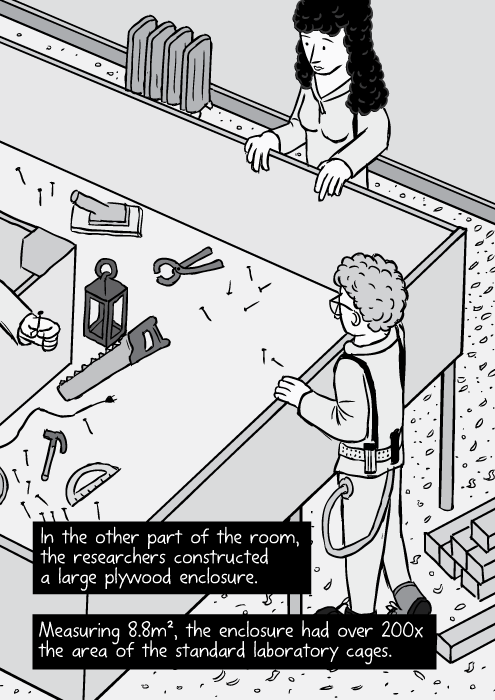
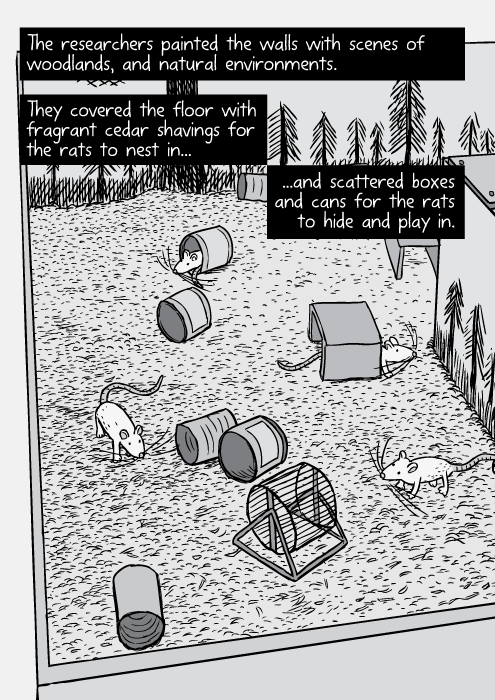
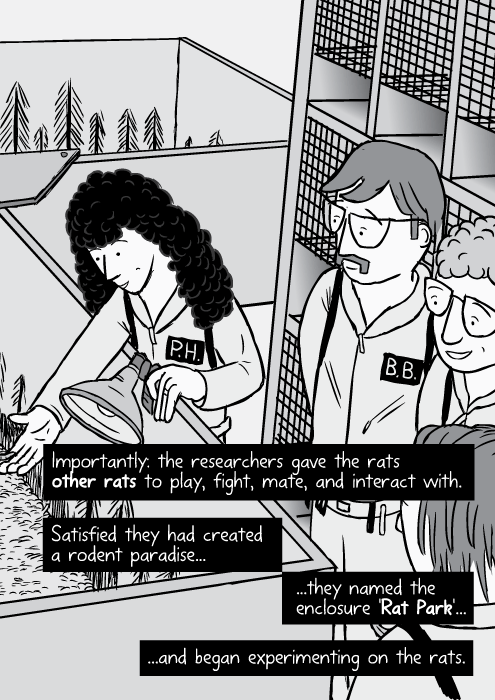
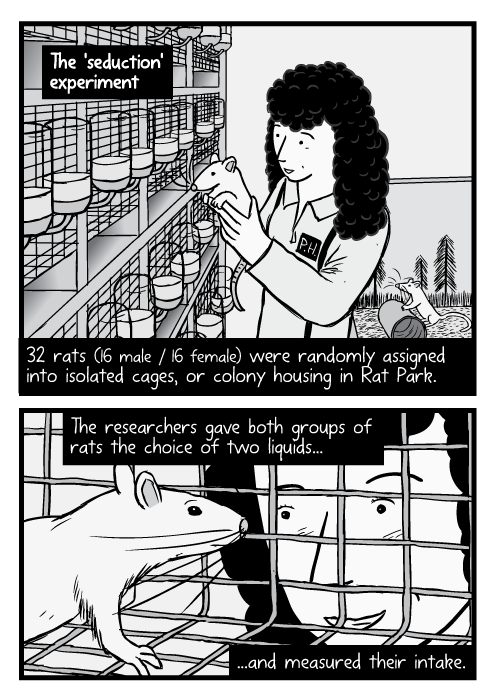
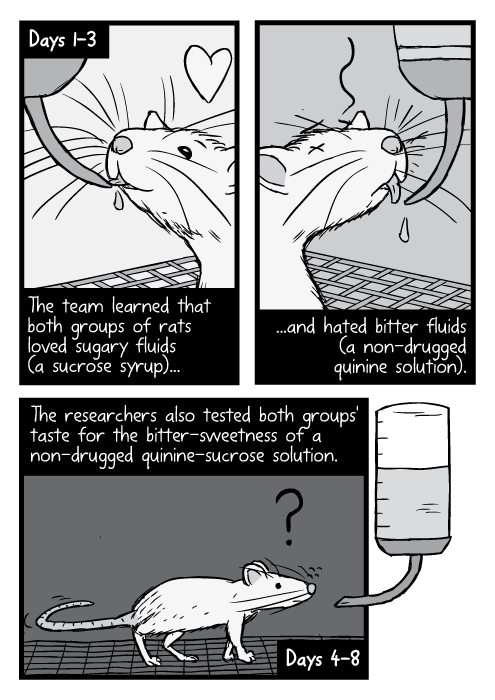
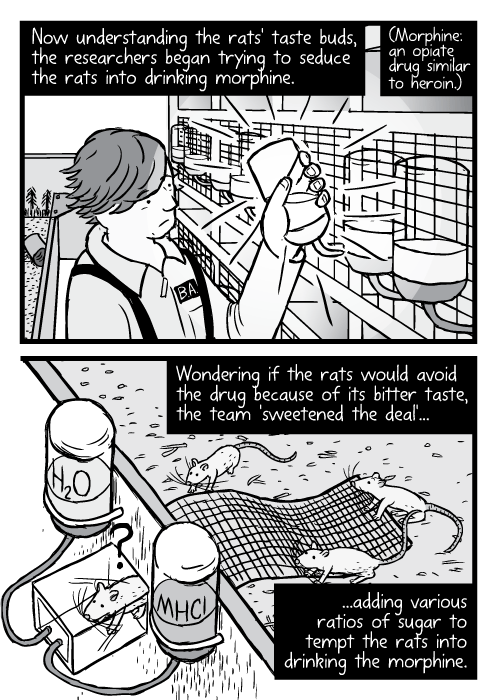
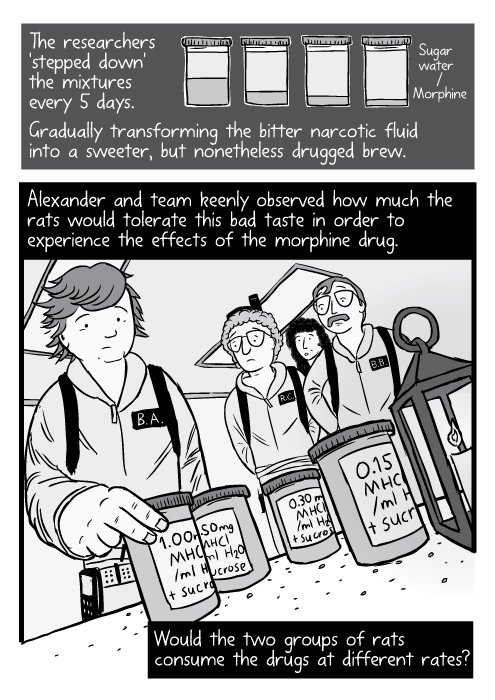
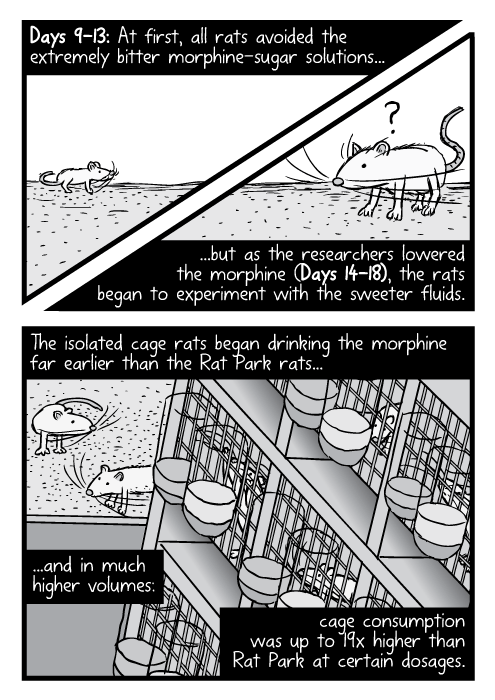
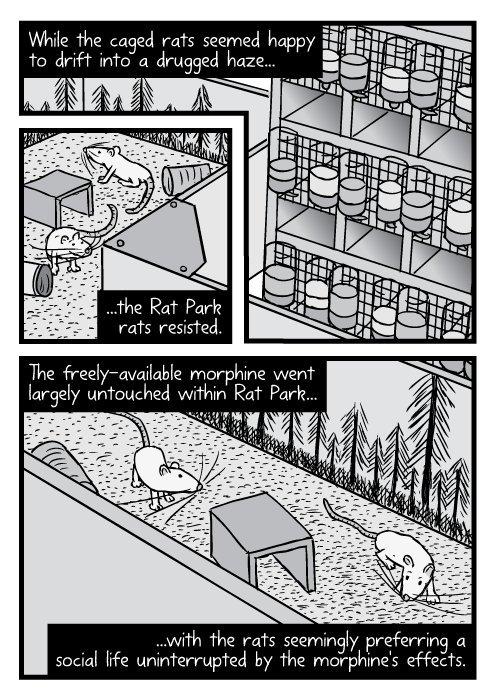
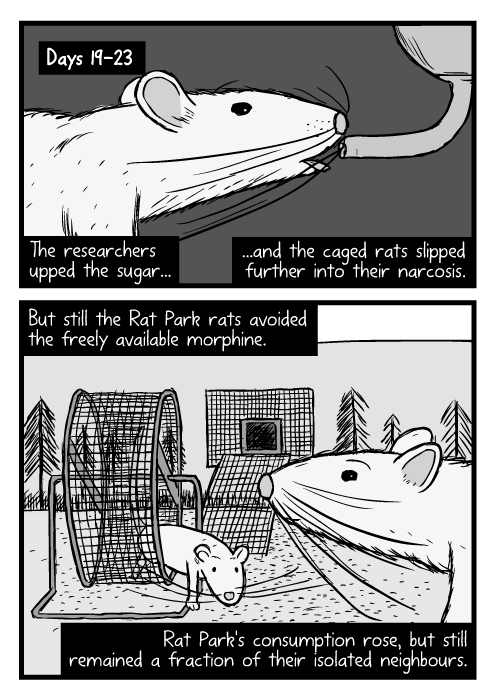
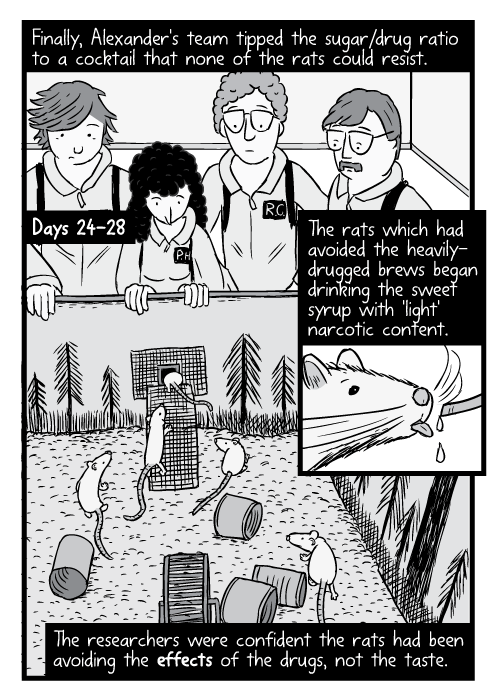
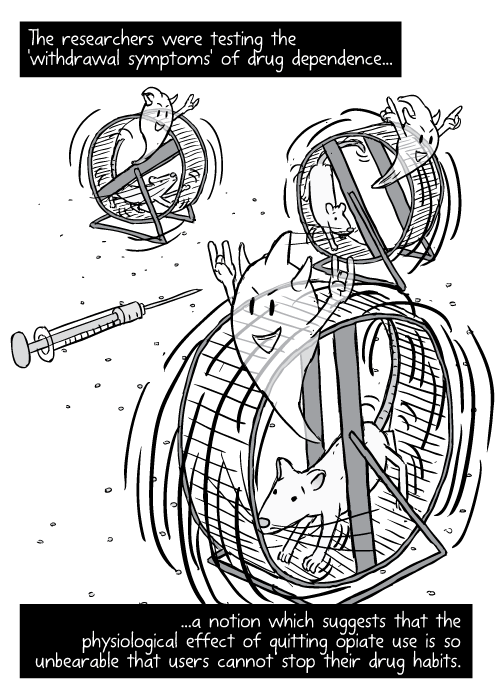
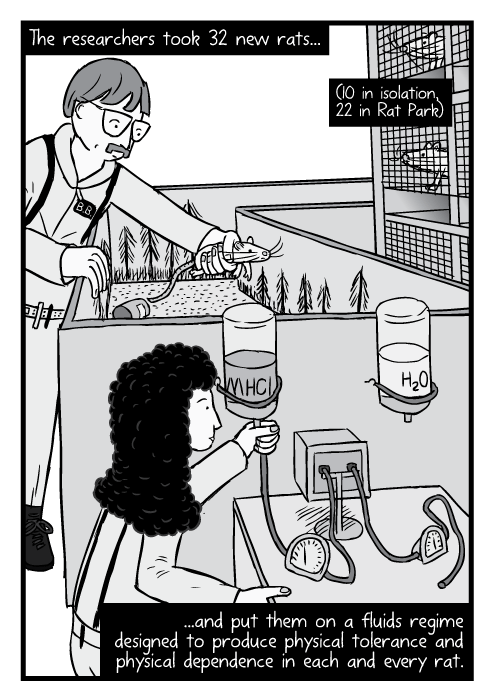
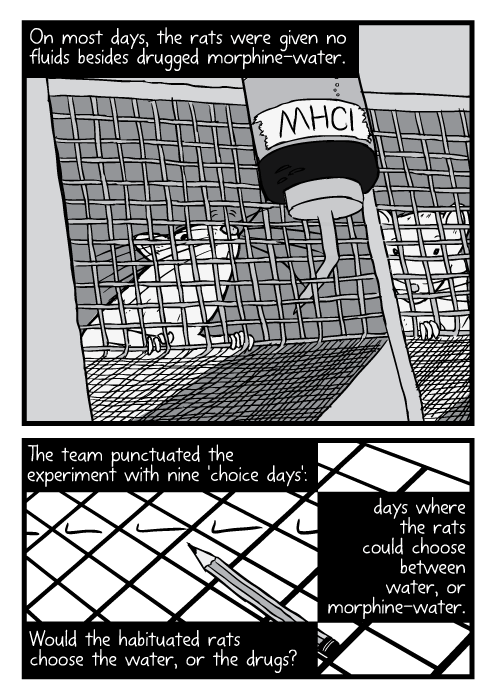
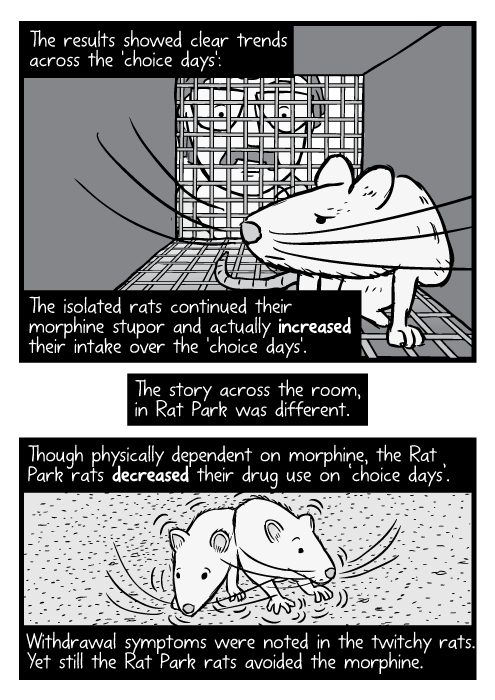
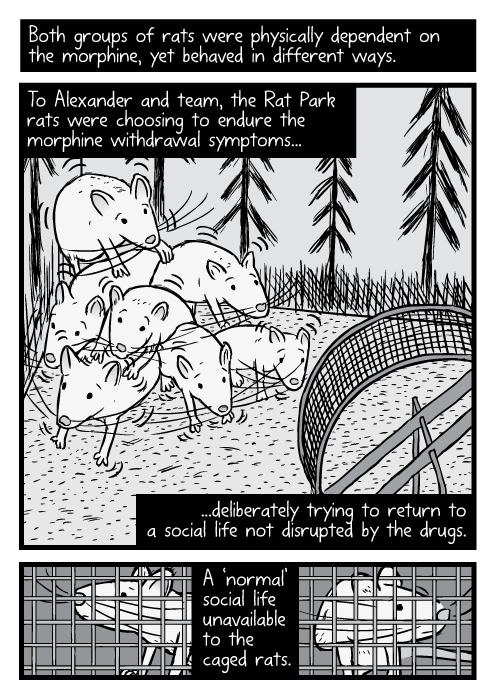
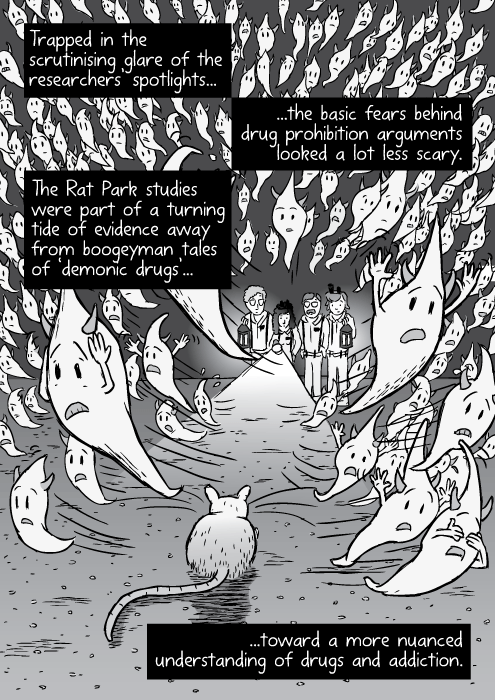
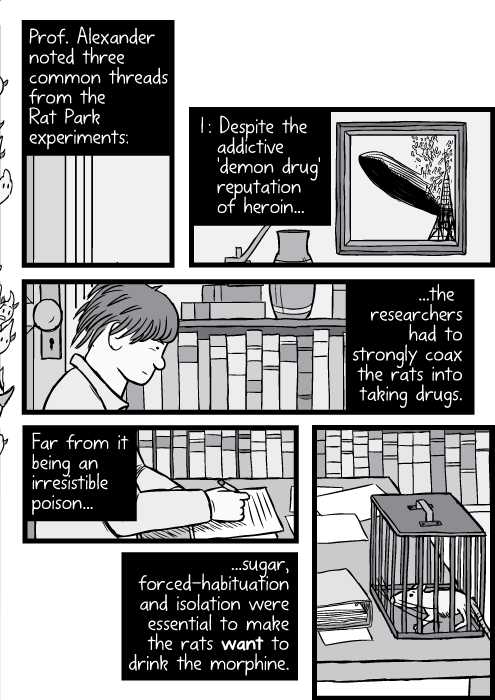
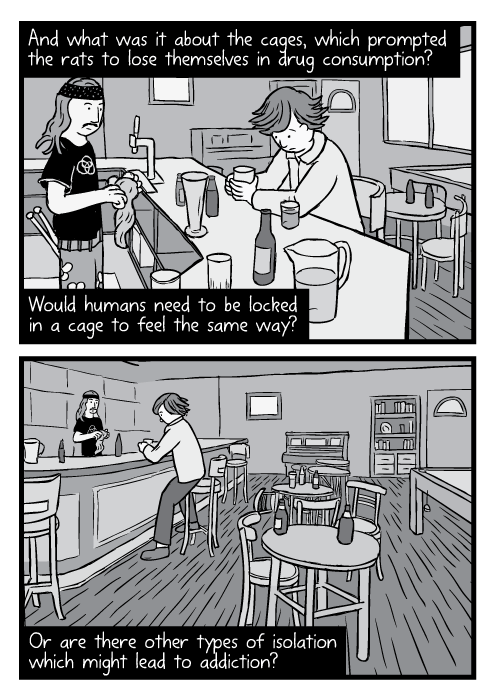
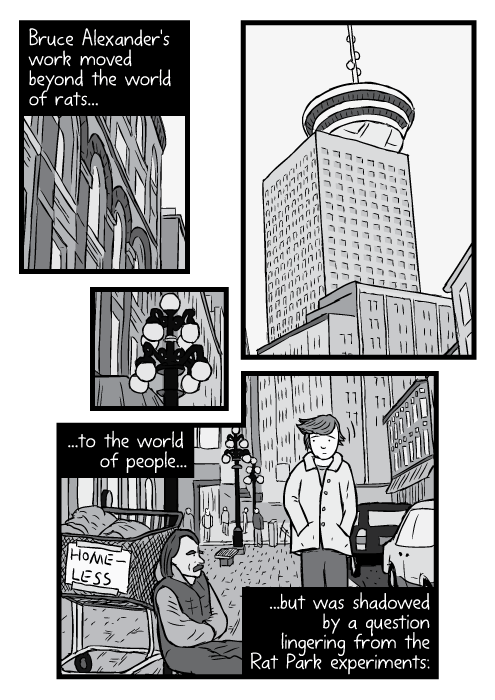
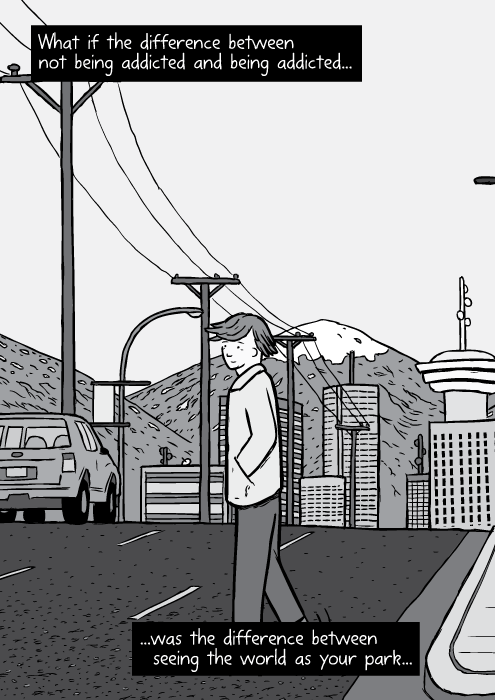
What I found absolutely impressive and stunning about this comic is the way the artist explained the identification and elimination of the confounding factors in the Rat Park study. This is one of the hardest parts of experiments to explain to the public, and I think it was just brilliantly done.
I had a Shower Moment ™ the other day where i realized that most if not all forms of bigotry follow the 5 stages of grief. here i’ve even provided some examples:
1. Denial
“Transgender doesn’t exist (in nature)”
“Gay doesn’t exist (in nature)”
“Female sexuality doesn’t exist”
“Black intelligence doesn’t exist”
“Pagan souls (and thus inherent value in their lives) don’t exist”
“Disabled people’s value to society doesn’t exist (ie. if its not monetary it doesn’t count)”
2. Anger
[Insert every slur and hate crime ever. I’m not gonna list them individually. Its too varied and too depressing.]
3. Bargaining
“I don’t have a problem with them calling themselves whatever gender they want, but I don’t want them in my bathroom”
“I don’t have a problem with gay people, I just don’t approve of that lifestyle”
“I’m okay with my woman wanting sex, but only if its with me and whenever I want it”
“I don’t have a problem with them living in my neighborhood, but I ain’t letting them marry into my family”
“They don’t have to go to the same church as me, but I can’t stand them wearing their pagan symbols in public”
“Yeah sick people need help, but only if they’re really truly sick (as I define it) and not faking like most of them are”
4. Depression
“You just can’t say anything now without offending someone”
“Back in the Good Ol’ Days you could [insert bigoted action without social consequences here]”
“These [slur]s just ruin everything! Now they’re in my [media of choice] too!”
“Well [person or media of choice] bought into that politically correct crap, so I guess I’ll have to stop watching/reading/listening to their stuff”
5. Acceptance
[That long awaited day few seem to reach where they stop being as much of an egregious asshole about whatever bigoted views they once held]
why the fuck does this happen?
my bet is because bigots are grieving a worldview that was once comforting in its familiarity and assuredness that they have since discovered is outdated
is it still shitty what they do?
hell yes
then why the fuck did you make this post?
because understanding why someone does a thing can help you figure out how to convince them to not do the thing
but there is other shit bigots pull that’s not on this post!
yeah. sometimes (additional) abusive behavior gets thrown in. usually in the anger stage but can happen in any stage. all i can say to that is sometimes people have bad coping skills. or are incapable of things that help minimize the damage they do to others before it happens. or they just don’t care how much damage they do.
sometimes the additional abuse is an attempt to force things to go back to how it was before. those tactics don’t work. or at least don’t work in the long run, but that doesn’t mean it doesn’t leave a pile of hurt, broken, or dead people behind in its wake.
Huh. That’s pretty accurate. Explains why my usual strategies work, I think.
I’ve been saying for some years now that we’re teaching science terribly wrong in schools, and quite possibly the wrongest thing we’re doing is making no distinction between “facts about the universe that we have observed” and “categories and models that we have constructed in order to organize the facts we have observed”.
Essentially, kids are being taught that “cats are mammals” is the same kind of scientific fact as “cats give birth to live young,” and it isn’t. At all.
Which is why we get discussions like the one linked above. Or like the ones about Pluto being declared a dwarf planet instead of a planet, where people assert that the change in nomenclature is because “we understand better now what a planet is” and not because we’ve chosen to narrow the definition to (disputably) better organize our constructed categories of Things In Space. Or, for that matter, like the ones that call out “scientific error” in the Bible by citing references to calling a bat a “bird,” or calling a whale a “fish,” as though the classification system we use today is objective scientific fact instead of constructed model.
Because nobody is teaching kids how to tell the difference, or even that there is a difference.
@fredweasleyfreak said: i am very confused. giving birth to live young is a criteria for being a mammal? so what is wrong with teaching them both as scientific fact?
What’s wrong with it is that the definition of mammal isn’t scientific fact, it’s nomenclature. Which is to say, a thing we made up as a way of organizing scientific facts.
“Does/does not give birth to live young” is observed data. “Mammal” is a name we attached to a particular collection of observed data.
They’re both facts, but they’re not the same kind of fact at all. And in most grade-school science classes, they’re taught as though they are. To the point where it can be really difficult for most of us who were taught that way to get our heads around the difference.
Also, giving birth to live young is NOT a criteria for being a mammal. There are egg-laying mammals. We thought, at one point, that all mammals must give birth to live young; then we found mammals that didn’t. Our understanding of the natural world is constantly changing, because of discoveries just like this one.
think of the universe as your kitchen. in order to understand and make use of it, you keep it organized, and you name things. you say, this is a fork, this is a whisk. the fork goes in the silverware drawer. the whisk goes in the spatula drawer.
and then you go and scramble eggs with a fork.
does that mean you have to reclassify it as a whisk and keep it in the spatula drawer? if so, is it just that one fork, or all forks? any fork you’ve scrambled eggs with ever? what a mess. mistake classification for reality and suddenly everything is a terrifying whirl of impossible decisions that have to be made yesterday.
but if you understand that classifying forks and whisks differently and storing them in different drawers is just how you make sure you can talk about things and find them when you need them, that it’s a reaction to the form and function of the object rather than a part of it, everything runs smooth like butter.
There’s something extremely perverse about “luxury coffins”. Thousands and thousands of dollars for an impenetrable box to dump in a hole that you can’t even rot in because your corpse is so saturated with preservatives. It’s like a sick joke.
Or a future archeologist’s goldmine.
But a modern ecologist’s nightmare.
I mean I get it but also. The sheer amount of information we’ve been able to glean from these kinds of Extra burials (i.e., Pascal’s tomb, the pyramids, even the Valley of the Kinds) is staggering and SO valuable. Even just old cemeteries and mass graves. It isn’t a cut-n-dry issue.
I think we should also leave people alone to deal with something as personal as their own death. Especially as it’s so wrapped up in cultural, religious, and moral context that you can’t just tell people “hey we’re gonna burn you/turn you to liquid/whatever newfangled methods.”
Me @ modern ecologists and future archaeologists: FIGHT FIGHT FIGHT FIGHT FIGHT FIGHT FIGHT
The future archeologists would win because they’re from the future and have advanced technology
Future archaeologists might not exist if modern ecologists fail to push sustainable reform.
I fall solidly on the side of the archaeologists here. And the historians who will be gloating over all the material. And the anthropologists who would have so much more information to work with when trying to understand our world and our cultural practices. Generally, I don’t think our burial practices are too disruptive to ecosystems, seeing as they’re contained within specific spaces set aside to house the dead, but obviously, I could be wrong.
You know that all people die, and that there are more being born every day, and that each one will die eventually, right? We are continuously getting new corpses in need of disposal, but we are not getting more land in which to bury them. We regularly unearth old graveyards to build new things, but only recently (post Civil War) have we been creating problem corpses pumped full of gallons of extremely toxic preservatives. These preservatives do not prevent decay – they merely slow it down for entirely aesthetic purposes, so that people can have prettier and more leisurely open-casket funerals. Formaldehyde and other chemicals may be washed out into the surrounding ecosystem during floods and pose health risks to embalmers and anyone hoping to repurpose modern cemeteries. Pesticides and lawnkeeping for expansive graveyards is wasteful, expensive, and toxic, creating dangerous chemical runoff that wrecks havoc on aquatic ecosystems in particular – golf courses pose a similar problem. Conventional burials involve large hardwood coffins treated with even more toxic chemicals, and most also require concrete vaults to be placed underneath for extra stability.
For the entirety of human history, nearly everyone has received a “green” burial. Even the mummification process in Ancient Egypt can be considered “green”, and huge tombs were reserved for a select few. Up until very recently, even in the west, grave sites were routinely reused, and corpses largely allowed to decompose and like other organic material without releasing strong poisons into the ground. Catacombs and charnel houses provided efficient storage space for large numbers of bodies at once.
Not only are modern embalmed burials not traditional, they are virtually barren of useful information to archaeologists. Again: your body will still rot, it’ll just do so will a side of pollution. We do not bury our dead with any signifiers of individuality or culture, beyond a nice suit and maybe some jewelry. If you’ve ever studied archaeology, you’ll know that ancient burial sites are valued because they contain thousands of cultural artifacts, not just corpses – artifacts such as jewelry, weapons, tools, offerings, and other indications of status, role, relationships, etc. We… don’t. Putting someone in a silk-lined wood casket wearing a nice dress and sensible earrings is not remotely comparable to burying them with the tools of their trade, the bones of their cat, protective talismans, chieftain’s jewelry, and/or a mural describing their cultural beliefs about the afterlife. Tombstones exposed to the elements are often worn down in barely a century and contain little information about the deceased. Lastly, there are millions and millions of corpses already in the ground. Our massive population means that we will have more bodies to dispose of than our ancestors. These hypothetical future archaeologists whose careers you prioritize over the planet’s health will likely find that our current burial standards, if not altered, will be a great nuisance by preventing productive land use.
Whatever terrifying scenario you’re imagining in which current civilization has collapsed and cultural information stored in books and technology is lost, and historians are forced to gloat over anonymous bones, I don’t want to know. I just want to avoid it by ensuring that, culturally, we recognize the importance of adopting sustainable practices in all corners of life as much as possible. Conservation of natural resources and reduction of ecological harm is the best way to ensure those archaeologists will actually be born in the first place. Burials are a relatively small example of the changes that need to be made for the sake of a desirable future, but an important one. Embalming is not necessary or healthful, and sustainable alternatives to hardwood luxury caskets exist – it’s all about moving away from the norms of excess.
@spiralingintocontrol reblogged the post I made about brain freeze at my last job with a link to a blog post they’d written about the same thing that struck eerily true. And if it’s anywhere near as widespread as it seems to them, I – this is worrying??? (bolded mine)
You’re isolated. You’re not talking to anyone about your work. You don’t really want to talk to anyone about your work, and as days pass, you want to less and less. Why? If you talk to someone about your work, they’ll realize you’ve been banging your head against the wall for weeks. They’ll know.
For now, though, it’s enough to make you miserable that you know: You’re not getting anything done. Your goals don’t make sense to you, you’re not sure what direction to go in, and you don’t really have the power to move the project in any particular direction. You get a few things done each day, but feel demoralized by their sparsity and their insignificance. And the longer this goes on, the less you want to ask for help or input of any kind.
Some people call this a symptom of impostor syndrome. I don’t think so. To call it “impostor syndrome” implies that it arises out of a mistaken belief, when, in truth, it’s not mistaken. You’re not wrong to think that you’re not getting things done, and that you’re not very good at your job. Of course you’re not—yet! You’re very new to it, and being good at your job involves plenty of soft skills you didn’t pick up before your first (or perhaps second, or even third) professional programming job.
For another thing, this isn’t all because of you, either: Your supervisor isn’t prompting you to ask questions, and isn’t bothering to get more detail from you on what’s going well and what isn’t. They’re not making sure you’re not blocked, or spinning your wheels.
The trouble arises when you get into a cycle: you feel bad about not knowing what to do next, so you don’t ask for help, so you try to do everything yourself; you don’t have a lot of success, so you still feel bad and don’t want to ask for help; next thing you know, it’s been a month and you haven’t spoken to another human being, except to tell your boss “Things are going okay,” with a glossed-over description of your progress so far.
This is not healthy.
anyway this is a good post and the subsequent advice is also good.
My boss talks a lot about “psychological safety” (he’s such a nerd… I love him) which is basically feeling like you can ask questions, even really “stupid” questions, and be vulnerable in front of the group in that sense without feeling judged, or preferably you should actually feel REWARDED for doing this. Because asking questions not only helps you, it also helps other people on the team to understand what you’re working on, which helps them as well. Or maybe they don’t even know the answer, but you can find out together and BOTH learn something. And this is the most important and key thing you can do for the productivity of the team, is to cultivate that environment. I agree with that blog post like, if people habitually shut you down and act put upon when you ask questions, or even if no one else seems to ask for help ever so you don’t feel like you can… you should get out of that situation asap. Not only is that bad for both your professional growth and your mental health, it also means your team is probably shitty and unproductive because everyone’s wasting time feeling individually miserable trying to figure everything out by themselves. It just doesn’t work.
You spend 20 years in school being conditioned to do everything on your own or you’re Cheating, and the people in authority actually refuse to tell you things that they know because you’re supposed to “figure it out”. This is all bullshit that needs to be unlearned as quickly as possible. Real grownup people who are actually trying to Get Shit Done WANT to tell you the things that they know so that together you can Get Shit Done twice as fast. Anyone who feels like you’re wasting their time by asking questions is honestly not very good at their job, cause… that means they think they don’t need your help, and it just ain’t so.
to my surprise, i was actually praised the other day at my studio for just this. “i love roach,” the instructor said, “because they say everything the rest of you guys are thinking. i always know when you’re lost because roach raises their hand and says so.”
my studio skews towards the young and the male: kids just out of highschool, and men who don’t want to look dumb, and the minority population of girls that really really REALLY don’t want to look dumb. but i’ve been out of college for six years and am comfortable being seen as a clueless amateur, so i ask the instructor to clarify points and repeat demonstrations all the time. and pretty much no one’s exasperated or contemptuous of me: everyone, even the instructor, appreciates it.
it’s really tough, initially, to risk looking dumb in front of other people, but it’s worth it. after awhile you learn that asking questions is pretty much a public service, not a personal humiliation.
disclaimer: i’m not a historian or a sociologist only a person who has read things and observed and interpreted by my own understanding. i expect it’s all been said before. i’m writing it down because if i don’t i’ll go on overthinking it and arguing with myself until i am a semiconscious blob. ANYWAY
in 1894, Lord Alfred Douglas published an undistinguished poem called “Two Loves” that would have faded into (deserved) obscurity but for the phrase “the love that dare not speak its name.” even that would have passed with a yawn except that it was quoted at Oscar Wilde’s trial as a secret code for homosexuality. Wilde denied this, but it’s now generally accepted that that was its intended meaning.
so time passes, the world changes, there’s struggle, and a group of people can now speak its name, not always safely, not always freely, but there is the sound of voices. when we are acquiring language, we call the names of things–milk, truck, mama– and especially we say our own names over and over. we tell the stories of ourselves to ourselves and later to others with increasing refinement as our vocabulary grows. in adolescence and youth the imperative seems to be to fight for one’s own identity, to distinguish ourselves in the world so we can survive as individual personalities and paradoxically as part of a culture. we call our names and if no one listens, we call more loudly; we learn and invent new words so that we are known to and for ourselves, and listen for others using the same words so we know that although individual, we are not isolated.
i feel like right now things are changing massively, importantly, and that we’re in the adolescent stage of a new social identity; we’re inventing language daily to define ourselves and acquiring the power and volition to express it because now we can when we couldn’t before. i don’t think this power is always used effectively or with discrimination and consideration, but that, in my experience, is pretty typical of adolescents. there are metaphorical and actual cliques and in-fighting and kids who sit at the cool table in the cafeteria and a lot of labeling and angry flailing as a growing generation becomes more articulate and invents itself as it has to in order to survive and effect change.
in the struggle to define ourselves, we’re going to come up against people taking different ways through the same process, and people who feel they’ve substantially passed through it and are in a different stage of development. attacking “others” is a harsh part of self-definition, declaring who you are by pointing out what you are NOT. every generation does it because every generation goes through a social-change adolescence, which is a pretty good thing for people to remember when they start condemning other generations.
in a way this is my defense of “millennials” as well as my consideration of dissension within the LGBTQ+ community. it’s too early in our current struggle for change to start criticising people for using language when they haven’t acquired a lot of skill with a massive new vocabulary that is in flux itself; you have to live with it and practice it and say it until it becomes a part of the world. you can’t blame people who have felt silenced for yelling when they can. It’s part of a process that i believe will result in better things as a cultural body moves into its maturity. i believe that REALLY HARD.
Dude sounds like some choosy guy who has to use a surrogate… Must not have ultimate power if he can’t come down from his high throne and do it himself??








 just moving along like everyone else