okay, brief thesis statement: as you like it is the play where you most directly see shakespeare trying to cope with marlowe’s death.
i’ll explain that in more depth, but first, a little bit about marlowe!
christopher (kit) marlowe was not only another playwright in the period—he began writing before shakespeare, and he basically created elizabethan theater as we know it. he was lower class (the son of a shoemaker), and had by some miracle managed to get scholarships to posh schools, starting with the king’s school in canterbury and continuing up through cambridge, where he studied classics. and by “studied classics” i mean “became the first person to translate ovid’s deeply filthy sex poems into english,” because that’s the sort of person marlowe was. he subsequently quit academia to go into theater, which was, as my prof put it, basically the equivalent of announcing today that you want to put aside your ivy league education for a career in porn.
let me give you a sense of the kind of person kit was
we know a lot about his life from his arrest record
he might have been a spy???
by which i mean he ~mysteriously came into money~ while at cambridge (we know because we have records of the moment when he started buying drinks for everyone. kit.)
he might have been an atheist???
whether or not he was, he definitely was fond of telling people (in 16th century england!!!) that jesus was gay
i’m not kidding
he’d walk up to people and be like: “so, jesus christ was totally fucking his apostles. thoughts?”
IN SIXTEENTH-CENTURY ENGLAND
so it is probably not surprising that he died violently at a young age (*quiet sobs*)
he got stabbed in the eye in a bar fight at age 29
but wait! even his death is mysterious!!!
twelve days before his murder, a warrant was issued for his arrest on vague charges of blasphemy. ten days before, he was called up in front of the privy council, but they didn’t meet for some reason. there were rumors that he was going to implicate some pretty high-up nobles in a SECRET RING OF ATHEISTS.
there’s more, but basically, there was SHADY SHIT going on, and in the coroner’s report, it says refers to the fight as being over “the reckoning,” which could either be SUPER OMINOUS or be about who would pay the check.
which brings me to as you like it! given the coroner’s report, the lines quoted in that post i reblogged read a little differently:
When a man’s verses cannot be understood, nor a man’s good wit seconded with the forward child Understanding, it strikes a man more dead than a great reckoning in a little room. (III.iii.9-12)
ha
hahaa
hahahajsdkh;aseljdlk;fgjehoirjasfd;lk
(and this comes in a scene where the characters discuss poets/poetry and whether to be “poetical” is to be honest, and how truth can be communicated through fiction aaaaAAAAAAAAAAHHH)
*muffled weeping*
see, shakespeare and marlowe were really, really close. they had a friendly rivalry and were having all the sex. their plays constantly reference/one-up each other. marlowe wrote the jew of malta, so shakespeare wrote the merchant of venice. marlowe wrote edward ii, so shakespeare wrote richard ii. and so on and so forth. in each other they each found an intellectual equal, someone who could not only keep up, but challenge them—something pretty rare for both of them.
and then, out of the blue, marlowe dies.
a lot happens out of the blue in as you like it. the plot moves forward with these lightning-strike revelations (suddenly, they’re in love! suddenly, a lion! suddenly, the duke goes to live in a monastery!). it’s comic, but also disorienting, and the characters struggle to keep their balance as their world shifts around them.
the through-line of love at first sight, which constitutes several of those sudden, shocking events, isn’t subtle, and is most clearly pointed out by phoebe when she says:
Dead Shepherd, now I find thy saw of might, ‘Who ever loved that loved not at first sight?’ (III.v.82-83)
want to know why that bolded line is in quotes? because it is a quote.
from marlowe.
specifically, from marlowe’s poem hero and leander.
so, shakespeare bases the main plot conceit of ayli on a quote taken directly from marlowe (ABOUT LOVE AT FIRST SIGHT I’M GOING TO DIE) and then proceeds in the same play to reference the “great reckoning” and to write, in a speech by jacques: “the scholar’s melancholy, which is / emulation” (IV.i.10-11).
THE SCHOLAR’S MELANCHOLY, WHICH IS EMULATION
THE SCHOLAR’S MELANCHOLY, WHICH IS EMULATION
*lies down on the ground*
*tries not to cry*
*cries a lot*
okay i’m losing the ability to talk about this coherently but basically shakespeare was devastated by marlowe’s death and as you like it is his tribute to kit and it destroys me
another weird thing about beer is that it has weird masculinity connections to it. “ya i’ll get a beer, i don’t want none of them girly drinks” Jimothy, you’re drinking wheat juice with a 5% alcohol content and my mixed, fruity, “girly” drink is 40% alcohol and tastes great
O.KAY *CRACKS KNUCKLES* I AM ABOUT TO GIVE YOU AN EDUCATION
BEER IS TRADITIONALLY A WOMAN’S DRINK, IT IS THE MOST FEMALE OF ALL OF THE DRINKS. FOR THOUSANDS AND THOUSANDS OF YEARS, BEER WAS MADE AT HOME BY WOMEN, TO BE CONSUMED BY WOMEN AND CHILDREN–IT WAS ACTUALLY A SOURCE OF NUTRIENTS FOR MANY HOUSEHOLDS. WOMEN CREATED THE CRAFT OF BEER, AND FOR MOST OF HUMAN HISTORY THAT IS WHO YOU’D BUY IT FROM: MANY WOMEN MADE ADDITIONAL INCOME BY BREWING AND SELLING BEER FROM HOME. IT WASN’T UNTIL THE ERA OF INDUSTRIALIZATION THAT BEER BEGAN TO BE BREWED IN FACTORIES. AND ONCE BEER WAS BEING BREWED ON A LARGE SCALE, IT MADE TO START MARKETING IT TO ALL THE MALE FACTORY WORKERS WHO SUDDENLY HAD EXTRA INCOME. HENCE AN AGGRESSIVE MARKETING CAMPAIGN TO RE-BRAND BEER, A DRINK INTRINSICALLY TIED WITH WOMEN’S HISTORY, AS A ‘MASCULINE’ BEVERAGE.
EVEN BETTER, FEMALE BREWSTERS WERE THE ORIGINAL WICKED OLD WITCH. THE TROPES WE COMMONLY ASSOCIATE WITH STEREOTYPICAL WITCHES ARE ACTUALLY BASED ON THE TRADITIONAL BREWSTER. CAULDRONS & HOT STEAMING POTIONS = BEER BREWING. THE WITCH’S HAT: BELIEVE IT OR NOT POINTY HATS WERE ACTUALLY WORN BY BREWSTERS WHEN SELLING THEIR PRODUCT AT MARKETS: THE ENORMOUS HEADGEAR HELPED THEM STAND OUT, AND CLEARLY TOLD EVERYONE ‘YO MOTHERFUCKA GET YOUR BEER HERE’.
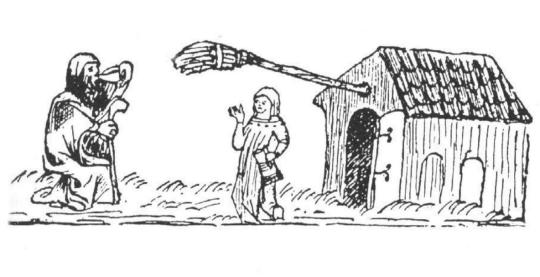
CATS AS FAMILIARS: CATS WERE COMMONLY USED TO PREVENT RODENTS FROM GETTING INTO THE WHEAT. EVEN THE BROOMSTICK IS RELATED TO BEER: A BUNDLE OF TWIGS RESEMBLING A BROOM WAS USED AS AD FOR ALEHOUSES
so basically, beer is the ultimate woman’s and witch’s drink
REBLOG ME
fuck u guys, i didn’t spend 20 min fact checking for 3 notes
I am impressed at this much knowledge
Also, anthropologists say there is much evidence that women invented agriculture, and that the first semi-permenant agricultural villages were established for the primary purpose of facilitating beer-brewing.
That’s right: Civilization was invented by women. For beer.
All this information and I’m simply laughing at “Jimothy”
evidence that ancient paleolithic venus statues were made by women who were examining their own bodies and sculpting them from their own point of view, not, as previously assumed, exaggerated features from an outside perspective
*writes I LIKE GIRLS on every other page of my journals so future historians don’t try to insist that I’m straight”
Future straight Historians: “we see several examples of her prioritizing a sisterly bond with the women around her, for example on page 12 she says ‘I like girls’ and throughout the text she references loving women and preferring their company. This is not to say she prioritized above her romantic relationships because on page 78 she mentions talking to a man one time in her life. It’s hard to know just how much she valued her sisterly bond with women due to this one reference of men and the ambiguity of early 21st century slang. For example on page 12 when she said she liked women, the passage continues ’…in a lesbian way. I want to kiss girls, they are so pretty, I’m so gay.’ Now it’s difficult to understand just what that sentence means. We know that in the early 21st century kissing on the cheek in greeting had gone out of vogue but the word gay, a word with an archaic meaning of happiness gives the contextual clues that perhaps she is references that old fashioned practice.
Going back to the nameless man that is mentioned once on page 78 for one sentance…”
“Now, given that she wrote on page 12, ‘Just to be clear: I’m sexually and romantically attracted to women exclusively,’ one may be tempted to read this literally, but we can’t rule out sarcasm.”
It may seem like @vilesbian is joking, but she really isn’t.
Charlie Kirk: alright guys we need a new idea on how to protest all this liberal nonsense like “caring” and “feelings”
guy with a diaper fetish: glad you asked!
What bothers me about all this nonsense, is that it is entirely part of the patriarchal attempts to erase or glorify certain aspects of history. Let me explain.
In the past, it was exceedingly common, indeed expected for men to have safe spaces. They were sometimes even called this. A man had a study at home, or an office. Even in the poorer houses, during the growth of the middle class, circa 1700′s, men had a library, or a study, or a dressing room. They had social clubs that did not allow women. They were allowed multiple locations that were entirely theirs to do with as they pleased, including abandoning their wives to whatever it was they were doing, ignoring the world, shooting billiards, drinking, smoking and so forth. Even before the creation of the middle class after the plague, there were male-only groups, meeting halls, schools, and pubs. Men had plenty of safe spaces reserved for themselves that were unrelated to work and entirely focused on leisure. At universities, which were male only for the longest time, there were also common rooms, study rooms, rooms for leisure activities, pubs, mess halls and so forth.
Men have always had their male-only spaces. They have kept women from them, they have used them to escape from “the strictures of family life” specifically. They used them to avoid the things that men found overtly objectionable. They have used them to write letters, or converse with other women who were not their wives, or experience companionship with other men. They have even made rules about what could and could not be discussed.
Great historical partnerships, arrangements, bargains, treaties and on and on were founded in these male-only safe spaces. Lloyd’s of London, one of the largest financial institutions of the world? Founded in Lloyd’s coffee shop – a typically male-oriented space full of cronies sitting around chatting about their insurances on ships and trade. Publishing? Founded in pubs and churchyards. Property? governed through public houses and in male clubs. Law? An entire group existed at Temple Bar and the Inns of court to allow male lawyers to have freedom from the regulations of the city, to the point that they often fought with the crown. These men had an entire culture entirely to themselves, with additional safe spaces within that were the foundations of many of the longer standing legal and trade organizations. The British East India trading company? You guessed it. Put together by blokes sitting at a pub on the North Bank.
Safe spaces for men have always existed, while women were either kept from them or eventually had safe female spaces delegated for them by men, usually a solarium or parlor, or drawing room specifically. They were allowed to take the air or promenade in the park, but that was all.
And that says nothing about racial organizations that provided safe spaces from the poor, the immigrant, the slave, from which, all of these groups were banned or forced to act as servants or slaves within these safe spaces, seeing the white males go about their safe leisure, with no regard that it is being facilitated by the oppressed.
To now see grown men in children’s clothes, acting as if the entire foundation of everything they hold dear and propagate as the heights of achievement wasn’t built in male safe spaces, by men escaping their families, or their jobs, or their obligations, or the people they didn’t see as “fit”, for a moment, is both appalling to me and uniquely ignorant. The history of male leisure and its critical impact on how the world works is being overwritten. This new history is a palimpsest that obliterates the intrinsic hierarchies at play in western culture.
These men are stupid bastards, and someone ought to give them a good walloping.
i just think it’s hilarious that they’re dressing up as babies in order to act like children
“waaaah it’s not fair that i get in trouble for being an asshole in public”
huh, usually you guys do this on the internet in your undies, but ok
yeah what these kinds of men are really freaking out about is other people trying to be safe from THEM. bullies will always scream about the injustice of their victims figuring out how to escape.
1600s: most witch-hunts ended in this century. no witches were burned in North America; they were hanged or in one case pressed to death
1700s: the American Revolution. Marie Antoinette. the French Revolution. the crazy King George. most pirate movies
1800-1830: Jane Austen! Pride and Prejudice! those dresses where the waist is right under one’s boobs and men have a crapton of facial hair inside high collars
1830-1900: Victorian. Les Miserables is at the beginning, the Civil War is in the middle, and Dracula is at the end
1900-1920: Edwardian. Titanic, World War I, the Samantha books from American Girl, Art Nouveau
1920s: Great Gatsby. Jazz Age. Flappers and all that. most people get this right but IT IS NOT VICTORIAN. STUFF FROM THIS ERA IS NOT VICTORIAN. DO NOT CALL IT VICTORIAN OR LIST IT ON EBAY AS VICTORIAN. THAT HAPPENS SURPRISINGLY OFTEN GIVEN HOW STAGGERING THE VISUAL DIFFERENCE BETWEEN ERAS IS. also not 100 years ago yet, glamour.com “100 years of X” videos. you’re lazy, glamour.com. you’re lazy and I demand my late Edwardian styles
I just saw people referencing witch burning and Marie Antoinette on a post about something happening in 1878. 1878. when there were like trains and flush toilets and early plastic and stuff. if you guys learn nothing else about history, you should at least have vague mental images for each era
“Les Miserables is at the beginning, the Civil War is in the middle, and Dracula is at the end” sounds like the longest weirdest worst movie I’d pay to see in theatres five times.
Les Miserables but Jean Valjean is an immortal who survives the end, fights in the Civil War, and then murders Dracula when Dracula starts going after Marius and Cosette’s grandkids.
i can’t stop fucking thinking about my english prof talking about the queer historical significance of the word “sweet” as a deliberate indicator of homosexual love and how that relates to both edward ii and gaveston, as well as hamlet and horatio. so, because shakespeare was likely totally knowledgeable about codes that queer men were using (cos like duh obvs), the inclusion of “sweet prince” at the end of hamlet is in all likelihood a completely deliberate indication that hamlet and horatio were in love
i’m???? so gay for literature and history lmao
my good sweet honey lord????
I WROTE A WHOLE PAPER ON THIS SHIT IN DOCTOR FAUSTUS HIT ME UP LITERALLY ANY TIME YO.
This is something I’ve been meaning to talk about, and I may do a full blog post at some point, but here’s a capsule version:
The Benign Violation Theory of humor, which is probably the best one out there, suggests that something is perceived as funny when it is simultaneously perceived as violating how the world “should” work and as benign. Something like the “gun” meme, for example, is funny because it violates our sense of how a joke should progress, and at the same time it’s harmless.
Racist/sexist/etc shock humor violates our sense of how the world work–in either a “that’s not true!” or “you’re not allowed to say that!” way–and therefore whether you find it funny is based on whether you find it benign, which is to say either you think it’s harmless or you don’t care about the people it harms. (This is the root of the punch up/kick down distinction–jokes that punch up are funnier than jokes that kick down because the people they target are less vulnerable and therefore less likely to experience harm.)
So yes, science agrees that if you think racist jokes are funny, the reason is that you don’t care about the feelings of the people the joke is about. There’s a word for that.
Today I found out we owe most of our punctuation to the medieval Irish. They’d had no experience with Latin before, so when these Latin manuscripts started showing up written in all caps with no spaces between the words looking like a brick wall of hot nonsense, the Irish sighed and said “give me that feckin quill” and they did such a good job of editing the texts and producing readable copies that their conventions kind of stuck with us through the ages
Irish pride woot
my isle of saints and scholars
… really pedantic saints
Scholars and monks in Early Medieval Ireland actually went so far as devising their own literary dialect of Latin, Hiberno-Latin. Which they loved to use for very very nerdy wordplay.

 just moving along like everyone else