“don’t support nestle!” shouts the liberal on the computer made from parts manufactured at foxconn
consumer activism is a lie, see you in hell or in communism
lmao try boycotting a brand in monopoly capitalism
This. This is a large part of what “there’s no ethical consumption under late capitalism” means. On top of everything else, when the same company owns both the product you’re boycotting *and* the “organic, free range, fair trade, no prison labor” version of that product, your choice is literally meaningless. Even before you factor in the strong possibility that those labels are lies, you’re still just choosing one prong of a two prong marketing strategy meant to capture 100% of the market. Your objections to their cheaper, less ethical brand are being used to wring more money out of you, money that all goes to the same place. Your morality is being used to exploit you, and they still win.
me watching monsters inc as a kid: how did it take so long for anyone to figure out that human child laughter not only produced energy like screams, but was more effective, and that children aren’t actually dangerous at all?
me watching monsters inc now: monsters incorporated, a multi-billion dollar corporate giant, stood to make extra profits off a scream shortage because low supply with high demand makes it possible to charge a fortune for a necessary commodity and everyone has no choice but to pay the high prices because they can’t go without electricity. Therefore Monsters Inc, as well as any other major powers that may have existed at the start of the era of using scream energy, fabricated the idea that only screams could generate sustainable energy sources in order to create artificial scarcity, because laugh energy was far easier to obtain and far more efficient, and therefore stood to lower the value of energy due to surplus. They also fabricated the idea that human children were toxic, in order to a) make other monsters too afraid to go near them to do research and possibly discover the secret of laugh energy, and b) to make monsters so afraid of going near them that there is a shortage of scarers, making it harder for rival companies to rise up and create competition. Even in the monster world, capitalism is based on lies, greed and cruelty, and even monster companies have no qualms about using and abusing children to maximize profits.
This is literally it, though. If anyone is wondering why ME Andromeda was a such a wreck, it’s because EA couldn’t care less about single player games, since they want to make top dollar simply by basically providing gambling in multiplayer games that isn’t illegal for minors (yet). The reality is that EA and Microsoft saying this has little to do with “the lack of success” of single player games and everything to do with them being money hungry. EA recently stated that it was shelving Mass Effect for a while because they felt reviewers and gamers were “mean” to it, basically trying to shift guilt of a shoddy, unfinished product onto the consumer so they can continue on their nonsense.
It reminds me of Hollywood and how often it would say films with female protagonists wouldn’t sell, and to anyone with half a sense of analysis, it was plainly obvious that they would sell well, but that studios didn’t want to bother, which was their problem. They kept trying to tell audiences what they wanted: white washed movies, sexist movies, etc. and, thankfully, the audiences responding by letting those shitty films flop and making the ones with female leads and black leads huge commercial and critical successes.
That’s one of the main problems with our current form of capitalism. It isn’t really about supply and demand, it’s about creating a false demand and telling consumers where to put their money instead of listening to their needs. This kind of stuff kills creativity and passion for creation.
The US game industry was also trying this in a big way with Japanese games back in the late 00s, early 10s. They bought all these articles in game mags saying the Japanese game industry was “dead” and that no one in the US liked Japanese games or even “Japanese-style” games. Meanwhile, the Wii’s sales were crushing theirs, game importation to the US from Japan was skyrocketing in the wake of the end of region-locking and rapid growth of import infrastructure and import-focused sites, and games like Sengoku Basara(the first US release of which was Historically butchered by its US publishers and regionalizing team), BlazBlue(a highly technical and super-polished fighting game), and the Disgaea series(A tactical/strategic RPG game that Western RPGs could learn A LOT from, but that’s another post) were, with zero US press, gaining impressive State-side followings.
The recent closure of Gothamist and DNAinfo are another excellent example of this from journalism. Ricketts and some in the Press are trying to pass it off as a matter of profitability, and thus as the result of insufficient demand, but the truth is Ricketts didn’t want to have to negotiate with his workers because he felt “paying for everything” included purchasing the autonomy of those he employs. The Gothamist family of sites(they did local reporting for, I think, 7 major cities, US and international) was profitable, but all of them were shutdown, and their archives of local journalism endangered, simply because their “owner” didn’t like unions and the New York office voted to unionize. Which, how is that even legal; you can’t(officially; but they get around it) fire an employee for being pro-union or for joining a union, so how can you close down a business for unionizing? Pro-Capitalists will often say Private Property is the foundation of capitalism, but here you have a sustainable, slowly growing business, successful and supported by a profitable audience of consumers, destroyed by it. Here you have the “Free Market” they profess to value so highly being ignored and over-ruled for the sake of holding one man’s right to do what he likes with “his property” sacrosanct. And those 7 communities pay the real price for it in lost memory, alongside the 115 employees and their families in lost employment, lost security, and suddenly precarious lives.

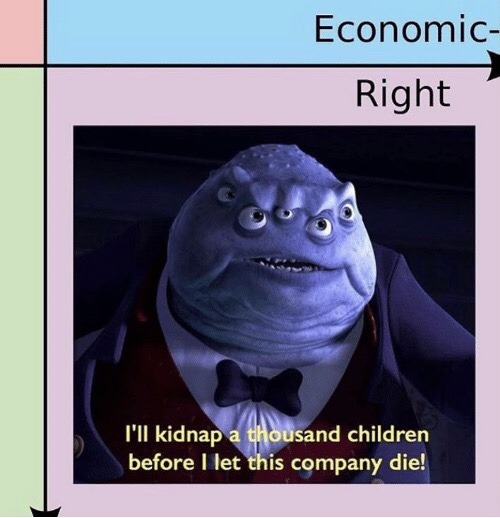
 just moving along like everyone else