thinking about the statement that all maladaptive coping mechanisms were helpful and, well, adaptive, at some point, and that they become maladaptive when the circumstance changes or when their detriments outweigh their benefits, and how the framework of “this is no longer helpful to you” is probably better than “this is a bad habit/this is bad for you.” How much better “you don’t have to live like that anymore” feels than “that’s a bad habit you picked up when you were in a bad place.” “It’s ok, you can look now,” vs “you’ve been tainted/infected/sullied by a previous bad circumstance.”
Another realization: “disgust as morality” leads directly to “mere exposure leads to moral decay”
As you are exposed to something frequently, you become acclimatized to it. It stops eliciting disgust. This happens with everything from gore to porn.
There has been research after research showing that fictional depictions don’t lower empathy for real victims or decrease the perceived severity of the crime, but it does lower disgust reactions at fictional depictions of it.
To antis, this lack of disgust is the normalization they are fighting against, because disgust is how you know something is wrong. If you no longer feel disgust, your morality is compromised.
That’s what I mean when I say antis resemble Puritan Christian morality. Christianity has so many conflicting instructions regarding morality, and many areas where it’s flat-out vague. And yet they know exactly what is good and natural, and what is horrifying and sinful.
How? It’s disgusting.
Antis are impossible to argue with, because the logical arguments are made post hoc to defend what they already know: this disgusts me because it is wrong. The disgust is the true basis of their argument, and no reasoned argument will touch it.
“There has been research after research showing that fictional depictions don’t lower empathy for real victims or decrease the perceived severity of the crime, but it does lower disgust reactions at fictional depictions of it.”
This. This is another reason we have to fight.
Because disgust is a messy and destructive emotion, it doesn’t target perpetrators of violence – it leads to victim blaming.
Disgust is not empathy. It is a source of harm to vulnerable people. Reducing it is good.
I guess I have some…quibbles with this? Disgust is, in fact, a healthy emotion. It’s foundational to the human emotional spectrum and is extremely useful to human survival instincts. Often, you can’t control whether or not you feel it. And it’s okay to feel it. It means that your lizard brain is trying to protect you from a hazardous, unsanitary, or unwanted situation.
What you do with it, however, is what can lead to trouble. And that’s true of any emotion, even positive emotions. And, like any emotion, disgust can be a tool through which you experience empathy, but it’s not the same as empathy itself. It’s a tool that you have in your emotional toolbox, and you need to learn how to use it. Even if your lizard brain is screaming in repulsion, you thankfully have your human cognitive functions with which you can decide how – or even if – you should manifest your disgust.
You need to ask yourself: is my disgust warranted, or is it my lizard brain having a kneejerk reaction? Will showing my disgust hurt anyone, or otherwise harm them? To whom can I show my disgust, and where is it appropriate to express?
One example that comes to mind is the medical field. A doctor might have to clean out a pus-filled wound, for example. Is it normal and healthy to feel disgust in that situation? Totally! Your lizard brain is telling you that it’s unsanitary and that you ought to stay away. However, because doctors have taken an oath to help people, they do not let themselves express their disgust in front of a patient – or, at least, the good ones don’t. For a doctor to treat a patient or their problems as disgusting is unethical and sometimes even abusive. Often, instead, they channel that pent up emotion into dark humour that they share privately with fellow doctors so as not to upset or hurt the patient. So there’s a big gap between the feeling, which is often involuntary, and the expression of that feeling, which is voluntary.
That’s where we get into emotional regulation. Learning emotional regulation doesn’t mean changing what you feel, it means changing how you process the feeling, both internally and externally. And it’s true: often people who’ve experienced trauma have a very hard time with emotional regulation, because the trauma has changed their neural pathways. Children and teenagers also have a very hard time with emotional regulation, because their neural pathways are still developing.* However, it can be learned. As with anything, practise makes perfect.
Disgust is not the same as morality, this is true, and if you let your disgust dictate what you believe to be moral or immoral, you’ll very often end up hurting others and making a hypocrite out of yourself. However, you are still allowed to feel disgust. You’re not a bad person for feeling disgusted. It does not, in and of itself, hurt anyone, because it’s just a neural response to stimuli. What you do with that neural response is what hurts people. Using disgust as a weapon in order to shame others is harmful. Using disgust as a foundation for ethics is harmful. That is what needs to be reduced, and it can be reduced by practising emotional regulation.
Don’t just react. Talk yourself through it. Kneejerk reactions do not make you a more ethical person, they just make you a more impulsive person.
* I’d wager that this is why so many antis are very reactionary. They’re usually young and often have experienced traumatic situations, which is a double whammy on their regulatory abilities.
Any emotion can be dangerous and harmful to yourself and others if taken to an unhealthy extreme; so I agree, disgust is a healthy emotion to have– it is vital to our survival even now, despite being “civilized.”
So calling a specific emotion dangerous or harmful just because some people take it too an extreme and cannot handle this specific emotion or their emotions in general isn’t a good thing to do.
Anger can be a harmful emotion– but it’s healthy to accept it and learn how to handle it to the point you do not harm yourself or others.
So, the emotion disgust isn’t at fault here– it’s the people who have not learned how to understand or handle their emotions, or someone who has such a huge fear regarding disgust they simply cannot control it, and thus need some type of professional help.
You know who isn’t disgusted by a serious problem? The people who actually fix it. A surgeon is not disgusted by putting their hands in a person’s guts, because they had to train away that emotion in order to do their job and save lives. A therapist is not disgusted by all the nasty shit that goes through your head, because they’re the person responsible for talking you through how to keep living and be a good and happy person in spite of that. Hell, a sanitation worker isn’t disgusted by your piles of garbage because it’s their job to get rid of that shit and keep the streets clean. Being disgusted by something is a sure sign that you’re not helping with that thing.
So for example, take pornography. There’s no question that there is some evil, despicable shit going on in that industry. But the people who are disgusted by porn, they don’t do jack shit to prevent abuse or stop sex trafficking or bring down criminal producers, because they’re too busy being nauseated by the idea that a woman might choose to be a sex worker and piling the entire industry, criminals and victims and honest folk alike, in the same category of ‘gross therefore evil’. The only way to actually help any of those victims or end any of those crimes is to look at the whole industry without being blinded by your disgust and sort out what’s actually happening.
Yeah, this.
I’m not saying “never find anything disgusting and you’re doing something wrong if you do”. Like, I am disgusted by things too! I can’t handle cleaning out slimy mold from things, for example – it makes me gag no matter how many gloves I wear.
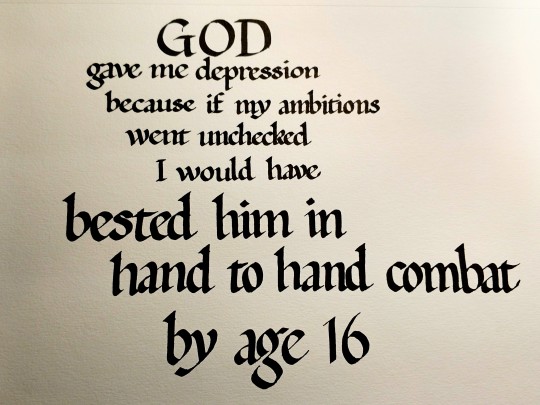
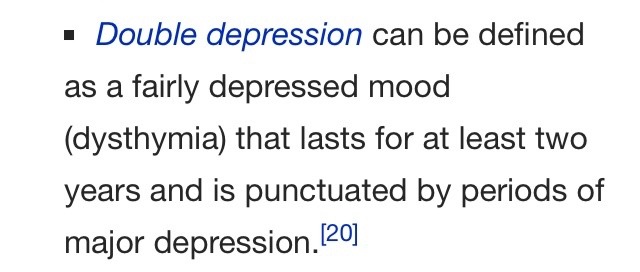
But disgust is a barrier against fixing the problem. It’s harmful the way depression is harmful – it can be a completely understandable and blameless response to your circumstances, but if it dominates your life, those circumstances won’t get better. And it’s one thing to accept that negative experience as a neutral condition of your life and another thing to try to trap others in it. (See also: pro-eating-disorder communities.)
So teaching andenforcing disgust, telling other people “you should be disgusted”, etc, is what I’m decrying here. Telling people that they’re a bad person if they’re not disgusted by something – i.e. if they develop the kind of emotional regulation skills that @bai-xue is talking about, to move through it – that’s an act of harm.
depressed kids in the media: I don’t wanna go to therapy! I don’t need help! I’m not some specimen for you to dissect!
me, rollin up to my therapist’s office and collapsing in relief: what is UP my homeboy I fuckin missed you,, hope ur ready to hear some Bull Shit that fuckin happened to me this week
families of depressed kids in media: okay sweetie we’ve researched depression for ten hours straight and signed you up for therapy and re-arranged your school schedule to be less stressful
actual parents of depressed kids: look i get you’re sad but someones gotta do the goddamn dishes stop being lazy get up. why didn’t you go to school today, what’s wrong with you, you’re such a burden on this family.
Therapists in the media: *understanding head tilt*
My real live therapist whom I adore: Natalie, that is the DUMBEST thing I’ve ever heard.
Therapists in Media: Lets do some art therapy and be really quiet while we talk about your feelings :)))))) also I’m prescribing you 500 different medicines
My therapist Brian who I love to death: Jack, I think your first problem is you stay up too late looking at memes, so let’s try taking a nap
My real life therapist: Okay, before we start, I found this hilarious video I know you’d love.
Therapist in media: serious face the whole time
My therapist: *laughs awkwardly*
therapists in media: refined, cultured, poised, “I’m afraid I haven’t [heard of the nerdy thing their patient just referenced]”
my old therapist derek, from across the reception area, seeing me for the first time after the summer of 2015: HEY DID YOU SEE AGE OF ULTRON?? IT SUCKED, RIGHT???
my current therapist ian, in our very first appointment: do you like star wars? anxiety is like the force, it can consume you, or you can learn to keep it in balance… you’re my padawan now
Actual things my therapist has told me:
“You’re bassicly a glorified sad lizard.” (It makes sense with context)
“Damn girl you need to get your shit together.”
“Go home and cry. Stop drinking in bathtubs. Eat something that isn’t bleach or memes.”
I’ll add more tomorrow after I see her again.
my late lamented 74-year-old-therapist with margaret thatcher hair and eyeglasses on a chain: “so in this dream were you the fuckER or the fuckEE?”
depressed adult men in media: depression is for girls, i’m just brooding and drinking because it’s cool
me in real life: *to the tune of rubber duckie* lexapro pill, you’re the one! you make it possible to have fun!
—
depressed adult men in media, when forced at gunpoint to see a therapist: nothing is wrong, everything is peachy, three seasons of trauma have not given me PTSD because i’m a protagonist, can i go now
me in real life seeing stacy the brain mechanic: … help?
—
therapist of adult man in media: good, you expressed a feeling, well done! same time next week ok?
stacy the brain mechanic: dude, you do realize that if anyone else talked about you the way you talk about yourself, you’d kick their ass
Secondhand embarrassment stems from self-hatred – you’ve been punished or have punished yourself for behaviors the other person is exhibiting, and you have to a greater or lesser extent accepted that that punishment was correct and deserved. This means that other people deserve the same kind of corrective action and it bothers you when it’s not enforced.
Fighting secondhand embarrassment therefore involves interrogating your own past. What did you do that this person is reminding you of? What happened to you as a result? Did you actually deserve it? What motivations did the other people involved have for correcting your behavior, and were they justified in doing so?
If you are able to develop empathy for your past self – an understanding that either you couldn’t have known better or that the correction you got from others was disproportionate or entirely unnecessary – you will be better able to direct that empathy at others. The root of all shame is your own shame and the root of all sympathy is the ability to forgive yourself.
Hi brain, you obstinate fucker. I drank the clear splashy stuff. I ate the green things. I went under that bright fucker up there. I did the thing with the moving and sweating and whatnot. Now make the happy chemical, you lump of fuck.

 just moving along like everyone else