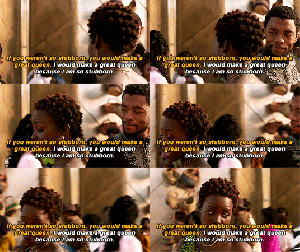
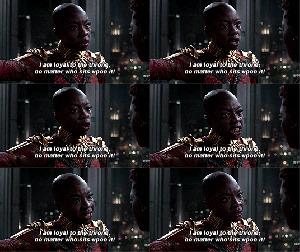
“Nakia and Okoye are allowed to be the full expressions of themselves, as women pursuing their passions while determining how their lives will unfold.
“Black Panther” offers a refreshing reprieve from the misogynistic media with which we are regularly bombarded by showcasing empowered women that are inspiring because of their contributions to their country and the way they show up in their own lives. Women who know that love does not keep you from your life purpose, romance does not come before your personal values and you are a better partner when you are in purposeful pursuit of your calling.”
The women of ‘Black Panther’ are empowered not just in politics and war, but also in love.
……..also while I firmly believe that T’Challa, Nakia, and W’Kabi went to the same schools that all children in the capital city attend (because Wakanda isn’t about to socially stratify its educational system—rich or poor, royalty or no, all children from all tribes attend the Wakandan schools) they also had a whole bunch of additional lessons. As royalty and de facto nobility, they were being raised with the expectation that they would one day rule, so they were stuck in lots of boring English/French/Mandarin lessons; lessons on the laws of Wakanda and the intricacies of the Council’s etiquette, etc.
And then, when they’re a little older they have combat and warcraft; statecraft lessons with the Dora-in-training, and this is when they meet Okoye. She’s a gawky teenager—taller than all of them, she had her growth spurt first—who scowls whenever they whisper or giggle in class. (She is not from the capital city, her Wakandan still accented; later they learn she traveled hundred of miles with nothing but her pack, just to come before the head of the Dora and throw herself on her knees, begging to be considered. She has sweat and bled for it, and she thinks they are not taking their duty to Wakanda seriously enough.)
Still, despite being stiff and disapproving, she’s smart, and fierce; the other Dora-in-training seem to look up to her and like her. (They also have gone disapproving and haughty when it comes to the Trio.) However, maybe a year into their lessons, the Dora-hopefuls play a hilarious prank on their Modern Politics instructor. It involved a jackfruit, a pun on the Wakandan word for colonialism, and their teacher’s inability to remember anyone’s names; it was extremely funny.
And T’Challa, Nakia and W’Kabi are floored when they discover it was Okoye who planned it—they didn’t think she had a sense of humor, or was capable of something like a prank, even if it was a hilarious and generally harmless.
They decide they like Okoye immensely, and she should be their friend. They put their heads together, and carefully plan charm offensive—behaving in class so she doesn’t glare at them, asking to sit with them and eat with them; inviting her to the market with them and encouraging her to tell stories. The Dora-hopefuls live in the barracks, so they cannot invite her to sleep in T’Challa’s rooms, the way W’Kabi and Nakia often do, but they would have her study with them there.
This, they think, is a good plan.
She looks spooked, the first time Nakia asks her to sit and eat with them in the gardens beyond the Dora training building. Okoye sits cross-legged and stiff, barely touches her food, her eyes darting around as though she is a trapped animal. When Nakia reaches out—just to indicate the tattoo on her shoulder, ask about its meaning, she was not going to touch her—Okoye flinches.
In December of 1940, America still hadn’t entered the war.
There were a lot of Americans – such as the 800,000 paying members of the America First Committee – who looked at fascists massacring their way through Europe and declared “that’s not our problem.”
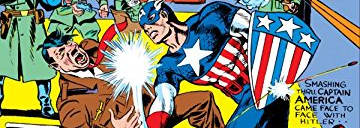
Captain America was created by two poor Jewish Americans, Joe Simon and Jack Kirby, with the specific intent of trying to convince Americans that entering the war was the right thing to do. It wasn’t easy – Kirby went far beyond what was expected of artists at the time, penciling the entire issue with a deadline that would have been difficult for a two-man crew to pull off.
Captain America punched Hitler right on the cover, at a time when a majority of Americans just didn’t feel like doing anything decisive against the Nazis.
Kirby and Simon faced considerable resistance for their creation, including steady hate mail and outright death threats.
Once, while Jack was in the Timely office, a call came from someone in the lobby. When Kirby answered, the caller threatened Jack with bodily harm if he showed his face. Kirby told the caller he would be right down, but by the time Jack reached street level, there was no one to be found.
Both creators enlisted after America entered the war. Kirby, as an artist, was called upon to do the extremely dangerous work of scouting ahead to draw maps. He also went on to co-create Black Panther in 1966.
They didn’t create Captain America to be an accurate depiction of America-As-It-Is. The character was meant to inspire and embolden, to show America-As-It-Should-Be.
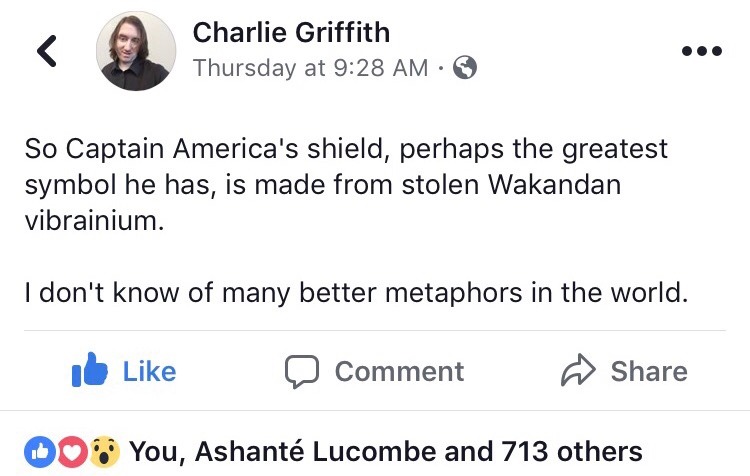
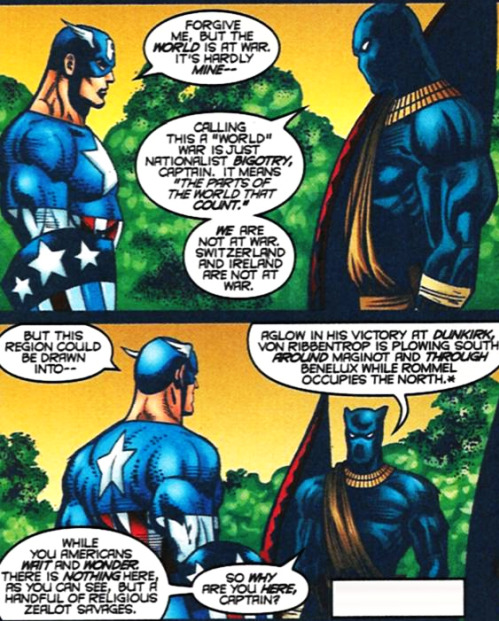
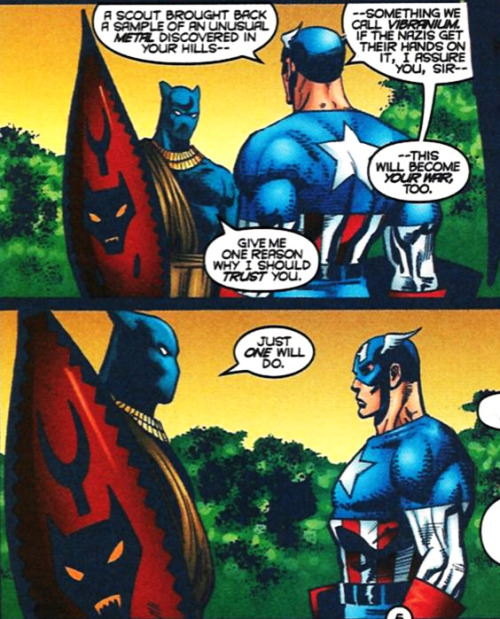
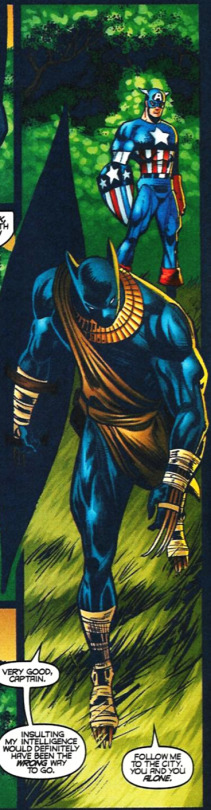
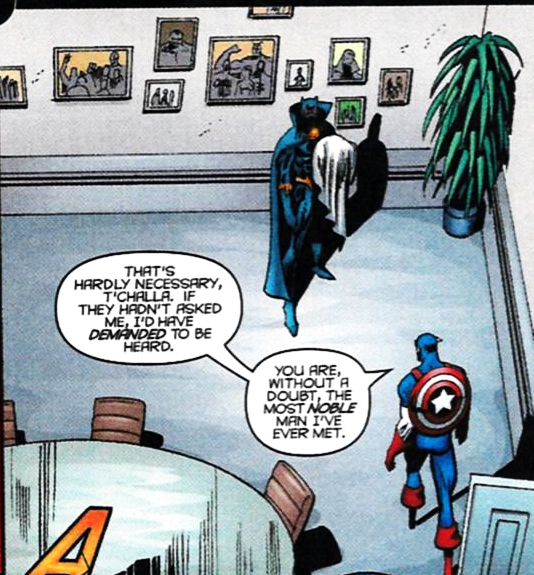
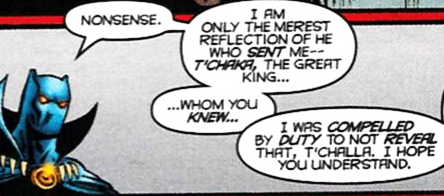
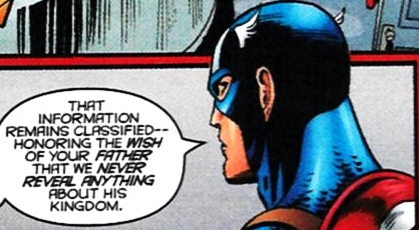
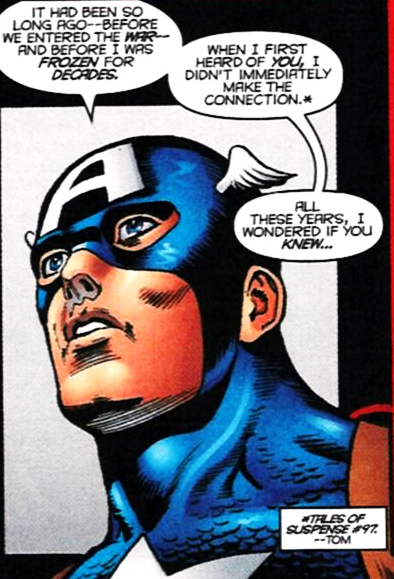
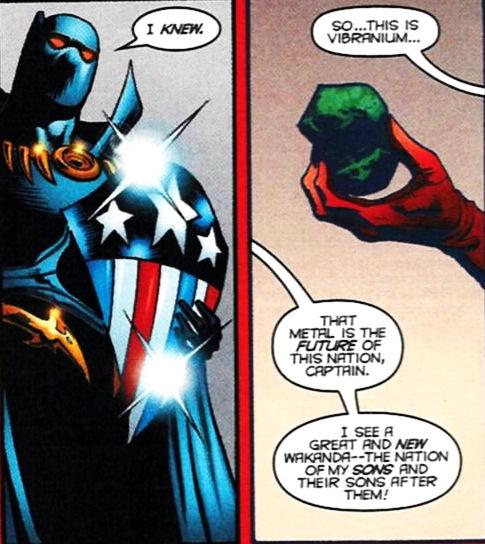
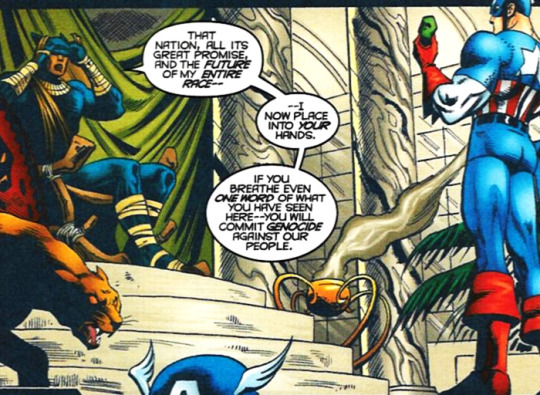
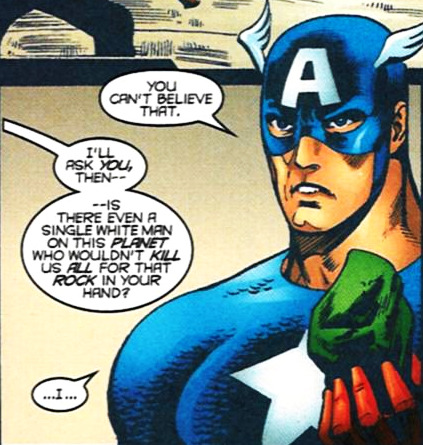
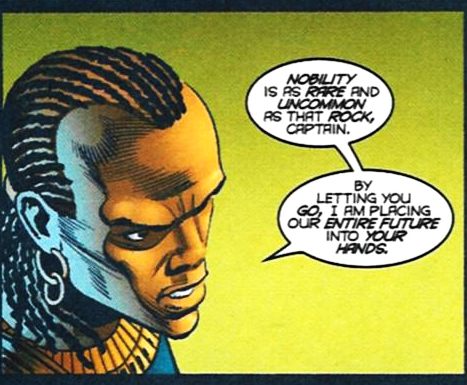
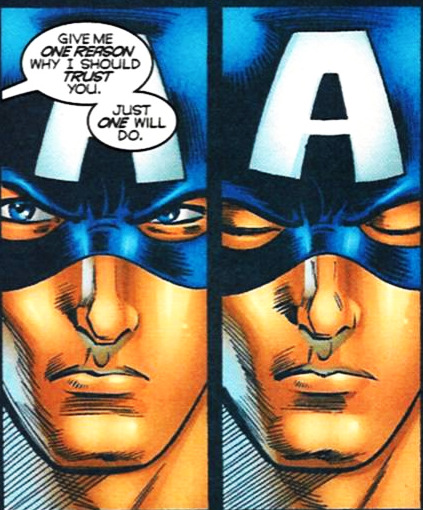
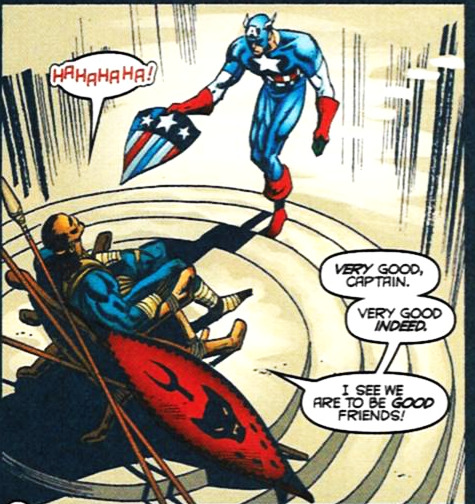
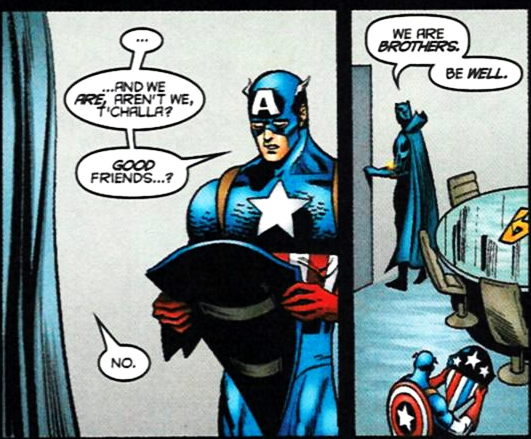
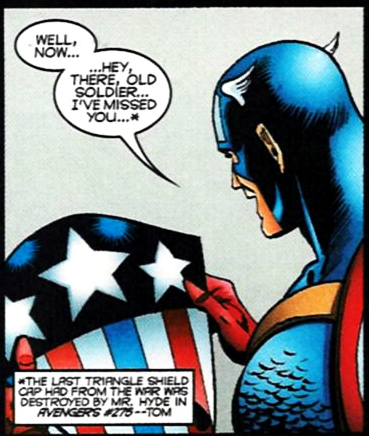
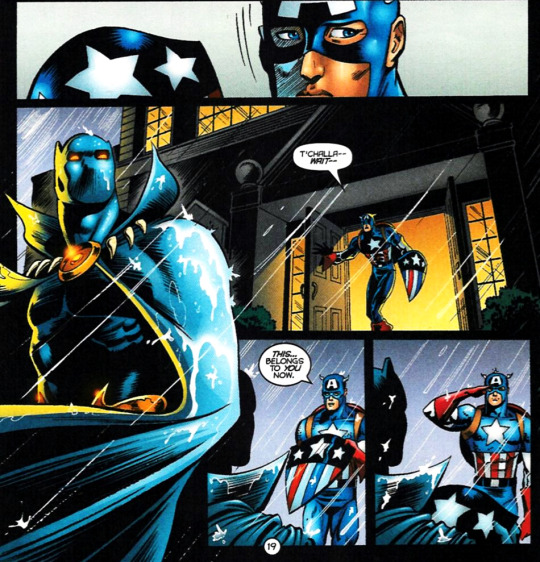
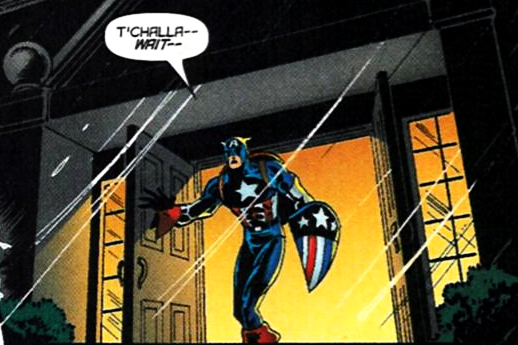
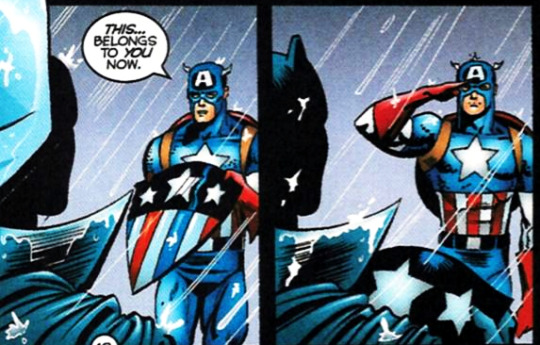
The subject of where the Vibranium for the shield came from actually never came up for decades of comics, until it was finally addressed by Black Panther’s writer, Christopher Priest, in 2001. Priest never shied away from acknowledging America’s racism, but he also understood that Captain America represented an ideal, intended to inspire Americans to be better.
The story mixed together a “present day” discussion between Cap and T’Challa with flashbacks to when Cap met the Black Panther ruling Wakanda during World War II.
FLASHBACK:
PRESENT:
PRESENT -> FLASHBACK
PRESENT:
The Vibranium was given, freely, by one good man to another good man.
It is right to rage against the injustices done by our governments. We must call them out, and we must fight for what’s right.
But if you can’t even stand to see the symbols created to inspire people to be better, and rail against those,then you’re just confusing cynicism for realism.
This was a masterful callout that deserves a place in the callout hall of fame, which I just realized needs to exist. It strikes the perfect tone of, “I’m not criticizing where you’re at on this, I’m holding my hand out and inviting you to step up to the next level in your thinking about it.”
That’s the kind of callout that people can sometimes actually hear, not just for entertaining the bystanders. Truly, we need more of this.
y’all notice how black panther quietly but fervently rejects western assumptions about women in non-western countries by not only displaying Wakandan women in a variety of influential positions but by making clear that only outsiders question them
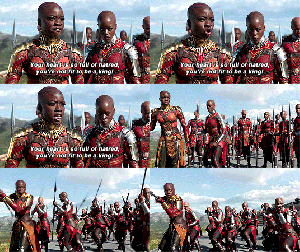
women are shown in all levels of Wakandan society – Ramonda as a trusted advisor for her son, Shuri as the country’s leading innovator, Okoye and the Dora as respected warriors, Nakia as a spy and philosophical compass, unnamed women who serve as tribal representatives and spiritual leaders. it is not at any point suggested that their gender is a barrier to achieving anything in Wakanda.
there’s a moment during T’Challa’s crowning that’s small but very good, when M’baku questions letting a child handle the country’s technological advancement. he specifically calls her a child, not a girl, questioning her youth and perceived lack of respect for tradition but not her gender, which flies in direct defiance of many western assumptions about how masculine non-western men like M’baku treat women and girls.
that moment, as far as I recall, the most any Wakandan man ever directly disrespects a woman. a lot has been made of how much faith T’challa places in his female relatives and warriors, so I won’t rehash that, but it’s Good.
Ross briefly insults Okoye with his assumption that she doesn’t speak English, but 1.) the narrative and the audience both understand this to be an ignorant statement on Ross’ part for which he is promptly put in his place by Okoye herself and 2.) Ross immediately learns and does better. when he wakes up in Wakanda his disbelief is only for the level of the technology, not that a teenage girl is the mastermind behind it, and during the final fight he defers to Shuri’s guidance despite his piloting expertise.
a lot of words have already been written about Killmonger’s treatment of black women: the casual murder of his partner, his disregard and abuse of a spiritual leader, the slaughter of a Dora. it’s just one of many parts of his ideology that mark him as fundamentally misunderstanding Wakanda and being an Other in the kingdom.
Wakanda is a futuristic fantasyland that makes absolutely no narrative room for men who don’t respect the authority of women.
In addition to the Killmonger point –
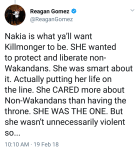
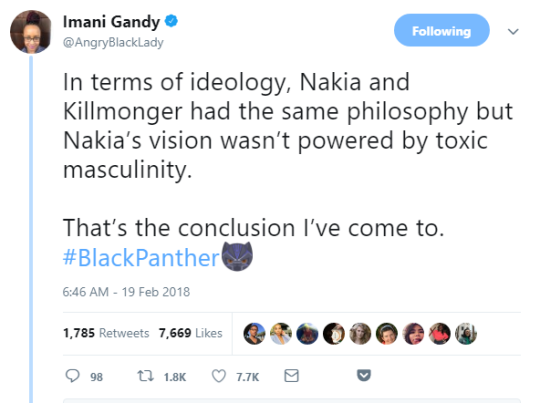
I love how it circles back to the cultural disparity between Wakanda and the Western world. It demonstrates how similar ideologies – the drive for resource sharing and international responsibly – can appear so vastly different (ie Killmonger and Nakia). It speaks to the cultural environment in which they existed. I believe Killmonger to be a reflection of the internalised toxic values Western society presents poor Black boys – essentially following the well trodden path from vulnerability to violence.
it’s not 😦 that kendrick album is amazing though, I literally haven’t listened to anything else since it dropped tbh
Mozzy – Sleep Walkin (Official Video)
I FOUND THE SONGS!!
the one playing in Shuri’s lab is by South African artist Babes Wodumo – Wololo (feat. Mampintsha)
and the one playing when Nakia and T’challa are in wakanda walking about is by Malian artist Idrissa Soumaoro – Bèrèbèrè (feat. Ali Farka Touré)
also here are other songs that appeared in the movie that are not featured in the Kendrick Lamar Black Panther soundtrack or the Ludwig Göransson Black Panther movie score:
(African American) Mozzy – Sleep Walkin
(African American)Too $hort – In The Trunk (in the opening oakland scene)
(South African) Bhizer ft Busiswa, SC Gorna, Bhepepe- Gobisiqola
Reblogging, favoriting and saving as draft for later
So Civil War takes place over like one weekend and then Black Panther takes place over the following 5 days or so which means all in all it was a hell of a fucking week for T’Challa
Prince T’Challa and the Terrible, Horrible, No Good Very Bad Week
I don’t understand how you can see Killmonger disrespect culture, attack women, basically was trained by military to tear down civilizations, his own father says he is disappointed in what he’s done, move to arm black people outside of Wakanda with high tech weapons (yes cuz giving Leroy and em cannon blasters is gonna help the cause) and y’all still fix ya lips to say he was right lol when Nakia exists. Wild.
I was waiting for someone to say this.
There’s a reason he was the villain. He killed his girlfriend in cold blood. His anger was understandable, true, but his methods abhorrent and destructive. The end result would have been huge amounts of death and chaos. No positive outcome.
[Killmonger was an amazingly written villain and a great, if not perfect, example of how to execute a “tragic backstory villain arc”. Due to his characters anger and Michael’s incredible acting it made Killmonger a character a large amount of people could empathize with. An amazing villain. Truly.]
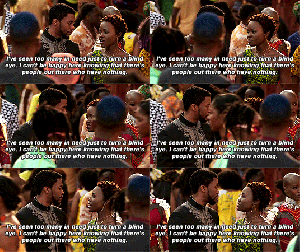
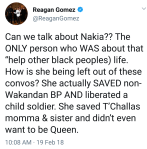
Nakia LITERALLY was team “let’s stop having Wakanda be an isolationist nation and help the worlds oppressed” from the jump and she doesn’t get enough credit.









 just moving along like everyone else