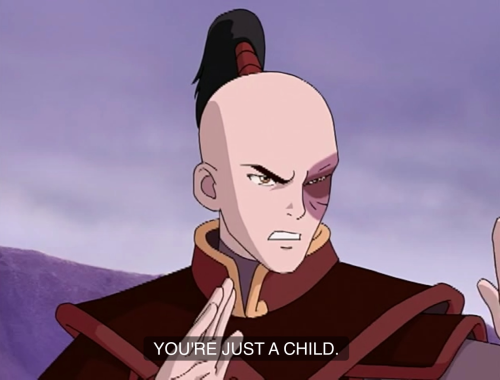
Sometimes I think about the fact that there is exactly one time that we hear someone express surprise at the fact that Aang–the Avatar– and his companions are children. And it’s in the second episode, from Zuko:
From an out-of-universe perspective, this makes sense. And it wasn’t something that surprised me when I was a ten-year-old in 2005 when A:tLA first aired. One of the tenants, I think, of adventure children’s television is that there is a degree of wish fulfillment. Children want to be taken seriously as agents, and so it makes sense from that vantage point, that everyone takes the Gaang seriously as agents except the person portrayed as an antagonist.
But, I think this also makes sense, heart-breakingly and unlike other children’s adventure television, from an in-universe perspective. This is a world ravaged by bloody, bloody war for a hundred years. A world in which child soldiers are commonplace. We see countless examples of this throughout the series:
When we meet Sokka–fifteen-years-old and in-charge of security for his village–he is training small children to be soldiers. This is played off as something of a laugh, but if Aang hadn’t returned in the second episode, I think we’re supposed to think that Sokka very much would have tried to lead these little boys into battle.
Jet and the Freedom Fighters, who practice guerrilla warfare (fairly successfully) and regularly raid Fire Nation outposts, are children. Jet, who I think we are supposed to assume is one of the eldest of the group, is sixteen when he dies (according to the Avatar wiki).
The Kyoshi Warriors are one of the elite-most fighting force in Avatar World, eventually taken seriously by the Earth Kingdom military and given military jobs. And the general of the Kyoshi Warriors, Suki, and the eldest member of the group (again according to the Avatar wiki) is fifteen. She can’t have always been the eldest member. I’m willing to bet the older women are sent off to war, and Suki becomes the eldest member and the leader by default. (Much like Sokka–probably why they connect so well).
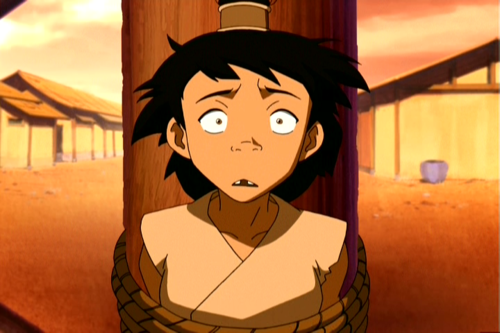
In Zuko, Alone, the soldiers in the village threaten to send Lee off to join the army at the front, and based on the mother’s reaction, and what we see of him when he’s tied up, this doesn’t seem like an empty threat, and it’s probably not the first time this has happened to children in the Earth Kingdom in villages like these.
I could go on.
So of course, after living in a world of child soldiers like these, no one is going to bat an eyelash to learn that the Avatar–perhaps the ultimate non-Fire Nation soldier–is twelve-years old, and his companions aren’t much older. When Aang starts to bring this up himself to Yue, for instance, Yue doesn’t seem to understand. He’s the Avatar, he has to save them, she insists. Who cares if he’s a child?
But the Fire Nation Army isn’t filled with child soldiers. It doesn’t need them. Fire Nation children are in school. It is adults that make up the Fire Nation Army.
And, (with the exception of Azula and her gang), when we do see a Fire Nation child attempting to take on the role of an adult member of the military, he isn’t taken seriously. (E.g. Zuko, and the way Zhao brushes him off.)
So of course it is only Zuko, who grew up in the absolute center of the Fire Nation, and, though he is banished, hasn’t really seen much of the reality of the war until he meets Aang, that looks at the Avatar and remarks in surprise that he is a child.
(If anyone is interested, I wrote a fic that deals with a lot of these themes. It can be found here.)
This is not only an excellent analysis but I think it also ties in to one of the greater themes of the show as a whole, namely these kids are entitled to a childhood even in a broken world:
“Normally we would have told you of your identity when you turned sixteen, but there are troubling signs. Storm clouds are gathering.”
“I fear that war may be upon us, young Avatar.”
In their fear the Air Nomads were going to make Aang the first child soldier against the Fire Nation. In their rush to skip four years they lost a hundred. Aang rejects that role early on and constantly rejects it even as he accepts his responsibility as the Avatar.
He reminds Katara that she’s still a kid. When he connects to Zuko the first time it’s through the language of all the fun he used to have with his friends in the Fire Nation. Team Avatar takes the time they need for vacations and to make new friends. In doing this they start to heal the world person by person.
Aang most succeeds as Avatar when he finds balance between childish things and adult responsibilities. This rubs off on everyone. Sokka goes from desperate to be taken seriously to someone who sets himself up for a laugh, because he knows his own strength. Zuko spends season 1 as an imitation of Ozai, ends the show as someone who can lead a country and smile openly at a goofy drawing.
They are all still very young with too many responsibilities on their shoulders. But they’ve also carved out an important space where they can be children with each other. All things in balance.
Whenever I look back on the early episodes of Avatar: the Last Airbender, I realize that Iroh was probably acting a little ridiculous on purpose. He knows that Zuko still has fresh emotional wounds from his cruel, uncompromising father and sadistic sister, and the one source of softness and warmth in his life, his mother, is long gone. Iroh always tried to be a friend to Zuko, but now that his nephew has been scarred and banished, he tries to be goofy and funny and carefree so desperately hard because all he wants is for Zuko to smile and relax again. If making a fool out of himself is what he has to do, he’d do it a hundred times over.
how dare you give me iroh feels all these years later
that, and it gives him cover to slow things down.
he doesn’t want to capture the Avatar, but he can’t tell Zuko that; he needs time to help his nephew get out of the mindset Ozai’s abuse taught him.
nobody’s going to listen to him if he just tells them to stop – it’s too blatant a betrayal of the Fire Lord’s wishes – but he can play the buffoon; when they get too close, he can lose a piece of his pai sho set and delay the entire operation to replace it.
because he’s a loving uncle, and this is what Zuko needs on that level; but he’s also a genius strategist and an experienced conspirator, and this serves his purposes on a few levels
there’s even a pretty damn direct implication that he’s doing this deliberately. it’s easy to miss at the time, because you don’t have the context, but that first time we see Iroh delay Zuko and the soldiers chasing Aang? it is, as I mentioned, when he loses a piece of his pai sho set, only to realise he’d been carrying it all along
specifically, it’s the White Lotus tile – the one that gave its name to the order of benevolent meddlers he’s secretly been a member of this whole time. there’s no way that’s a coincidence.
Pretty sure I’ve said this before, but Uncle Iroh is possibly the most brilliantly sophomoric character ever written.
area blogger arrives in local fandom ten years late, with shitposts
Steve Rogers: So I fell to what I thought was my death, only to get frozen in an iceberg for the better part of a century–and when I thawed back out, just about everyone I’d ever known was dead, I’d managed to sleep through a bunch of wars, and the jerks I’d been up against in the first place were about six inches away from world domination.
Kya, canonically a lesbian, tells Korra and Asami about same-sex relationships and coming out in the four nations. We also find out that Kyoshi was bi!
Sometimes I think about the fact that there is exactly one time that we hear someone express surprise at the fact that Aang–the Avatar– and his companions are children. And it’s in the second episode, from Zuko:
From an out-of-universe perspective, this makes sense. And it wasn’t something that surprised me when I was a ten-year-old in 2005 when A:tLA first aired. One of the tenants, I think, of adventure children’s television is that there is a degree of wish fulfillment. Children want to be taken seriously as agents, and so it makes sense from that vantage point, that everyone takes the Gaang seriously as agents except the person portrayed as an antagonist.
But, I think this also makes sense, heart-breakingly and unlike other children’s adventure television, from an in-universe perspective. This is a world ravaged by bloody, bloody war for a hundred years. A world in which child soldiers are commonplace. We see countless examples of this throughout the series:
When we meet Sokka–fifteen-years-old and in-charge of security for his village–he is training small children to be soldiers. This is played off as something of a laugh, but if Aang hadn’t returned in the second episode, I think we’re supposed to think that Sokka very much would have tried to lead these little boys into battle.
Jet and the Freedom Fighters, who practice guerrilla warfare (fairly successfully) and regularly raid Fire Nation outposts, are children. Jet, who I think we are supposed to assume is one of the eldest of the group, is sixteen when he dies (according to the Avatar wiki).
The Kyoshi Warriors are one of the elite-most fighting force in Avatar World, eventually taken seriously by the Earth Kingdom military and given military jobs. And the general of the Kyoshi Warriors, Suki, and the eldest member of the group (again according to the Avatar wiki) is fifteen. She can’t have always been the eldest member. I’m willing to bet the older women are sent off to war, and Suki becomes the eldest member and the leader by default. (Much like Sokka–probably why they connect so well).
In Zuko, Alone, the soldiers in the village threaten to send Lee off to join the army at the front, and based on the mother’s reaction, and what we see of him when he’s tied up, this doesn’t seem like an empty threat, and it’s probably not the first time this has happened to children in the Earth Kingdom in villages like these.
I could go on.
So of course, after living in a world of child soldiers like these, no one is going to bat an eyelash to learn that the Avatar–perhaps the ultimate non-Fire Nation soldier–is twelve-years old, and his companions aren’t much older. When Aang starts to bring this up himself to Yue, for instance, Yue doesn’t seem to understand. He’s the Avatar, he has to save them, she insists. Who cares if he’s a child?
But the Fire Nation Army isn’t filled with child soldiers. It doesn’t need them. Fire Nation children are in school. It is adults that make up the Fire Nation Army.
And, (with the exception of Azula and her gang), when we do see a Fire Nation child attempting to take on the role of an adult member of the military, he isn’t taken seriously. (E.g. Zuko, and the way Zhao brushes him off.)
So of course it is only Zuko, who grew up in the absolute center of the Fire Nation, and, though he is banished, hasn’t really seen much of the reality of the war until he meets Aang, that looks at the Avatar and remarks in surprise that he is a child.
(If anyone is interested, I wrote a fic that deals with a lot of these themes. It can be found here.)
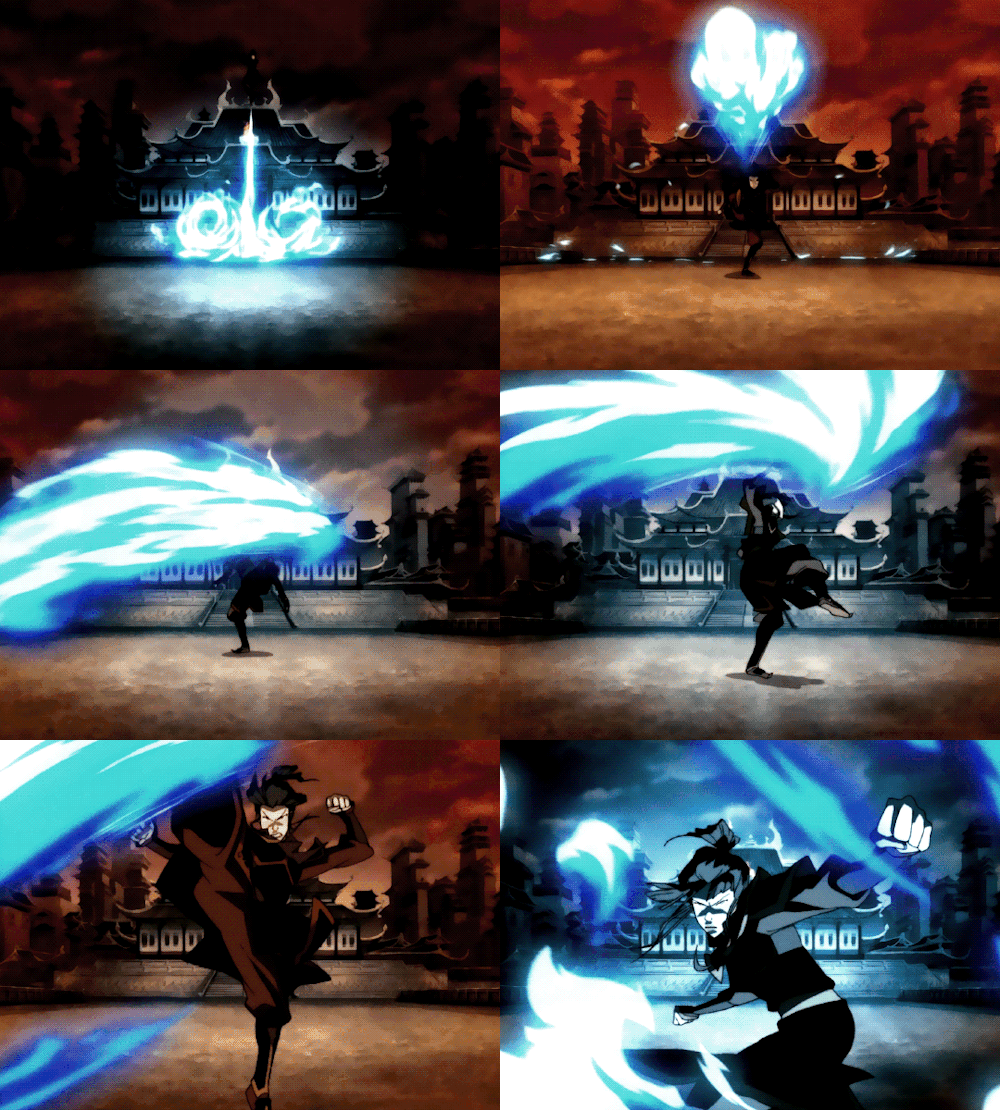
Azula was one of the best written static characters on ATLA
And they wanted me to believe Zuko weak ass could beat my queen ? TUH
they had to make her have a mental breakdown to give Zuzu the edge smh
*prepares thinkpiece on ATLA*
I just think it’s funny how the only representation of mental instability and neurodivergence on the show led to the downfall of the most powerful female character
Ummmmm? The most powerful female character was blind though and didn’t have a mental breakdown?
Azula can fly with fire and therefore can avoid detection by Toph’s seismic sense
CLEARY yall forgot about this lady
she can fucking bend blood… like don’t tell me she isnt the most powerful character
Not powerful enough to stop her top lip from looking like the crust of a beef patty but ok. Why you so loud for ?
O m g
Things are heating up in the Avatar fandom
Anyway…even Zuzu knew he couldn’t take her on by himself that’s WHY he brought Katara along. But then his dumbass thought “Oh she’s ‘slippin’ so I can take her” but my queen was like YEET!
So we gonna act like Katara didn’t bring Aang back from the dead and stop the rain in a whole ass area? And mastered Blood Bending in like 3.5 seconds, y’all tripping
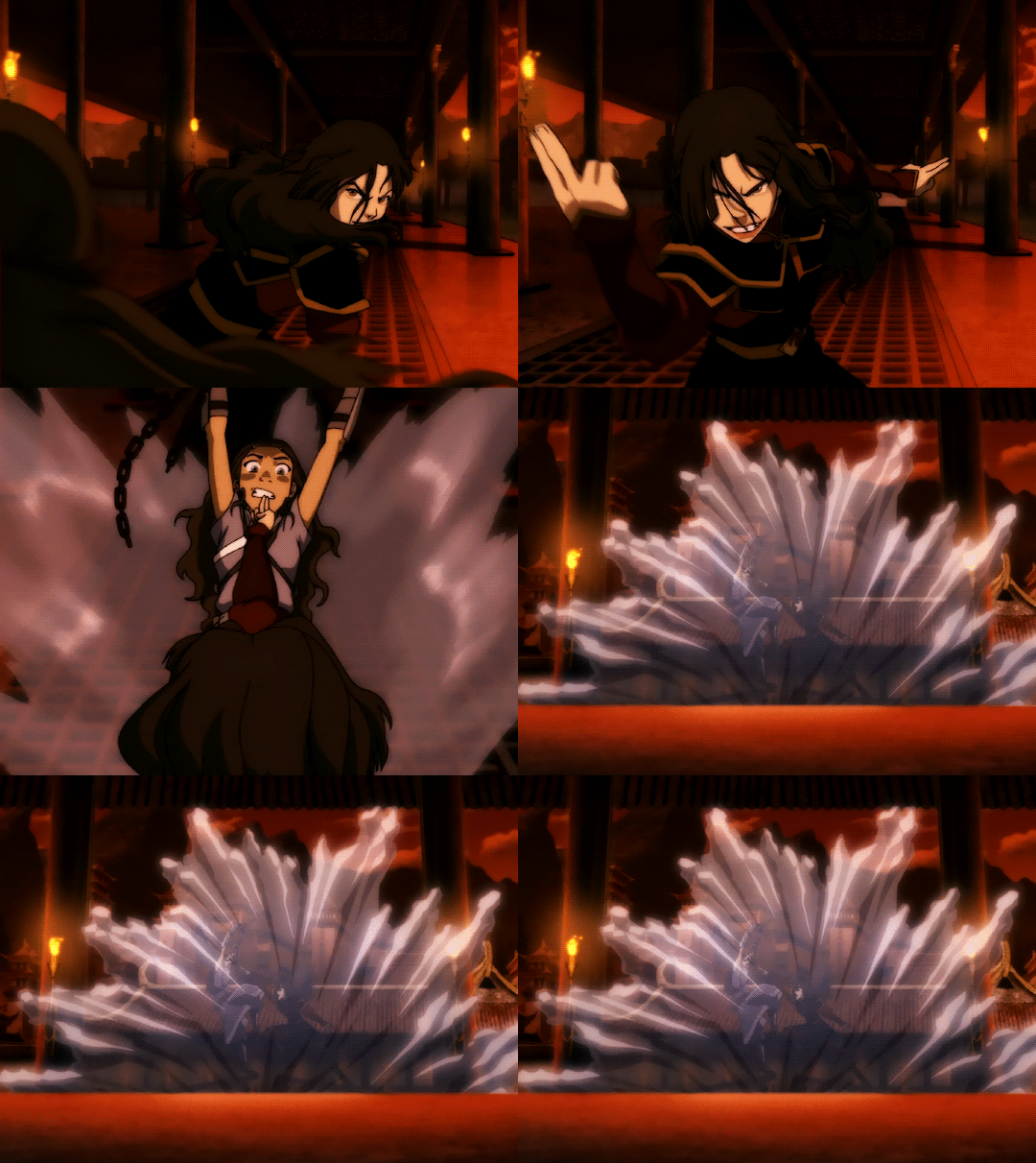
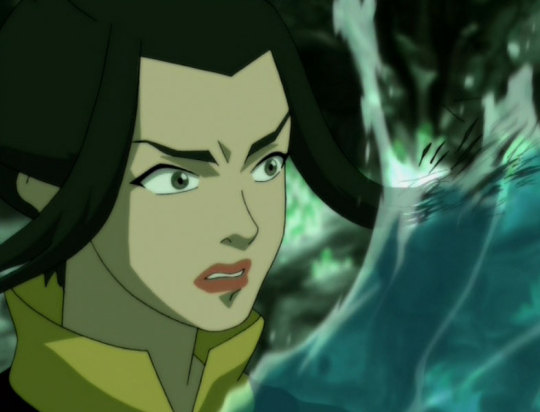
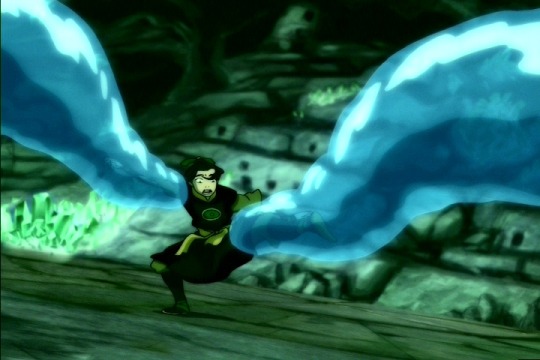
Remember Katara went toe to toe with Azula in the crystal caves and had her ass yanked up in the air like she was about to pull a Mortal Kombat finisher. Zuko had to bring her cause he knew he’d get that ass whooped and needed Katara to win. Respect her gangsta.
Also Hama lip looking like Beef Patty crust 😂😂😂
Katara fucking WRECKED Azula and snatched her entire soul in like five minutes flat.
Not only that, Katara fucking wrecked Azula back in THE SEASON 2 FINALE
She was fighting Azula, Aang was fighting Zuko
She had Azula on the ropes and panicking the entire time. If Zuko hadn’t knocked Aang temporarily away and jumped in to help, Katara would have beaten Azula then too, even when Azula was fully mentally stable.
Even with the power of Sozin’s Comet kicking Azula’s bending up by a thousand, Katara was able to beat Azula in five minutes. Most powerful female character my ass.
I just love that there were enough ridiculously powerful female characters in the show that we can have arguments like this.
Sibling rivalry is often a trite story of one sibling hating the other out of jealousy. On the surface, the Zuko and Azula may look that way. They have no problem blasting fire and lightning at each other and both of their parents had a favorite. But there’s so much more to it.
First of all, I would argue that in spite of many near-fatal encounters, they don’t necessarily hate each other. It’s far more complicated than that. How they view each other is closely tied to how they view themselves.
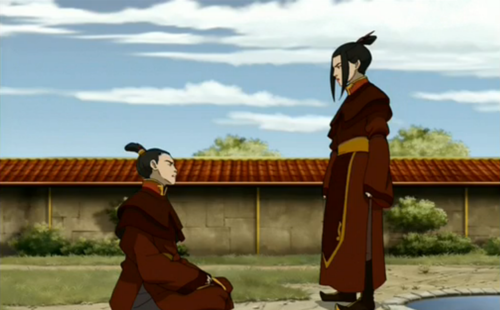
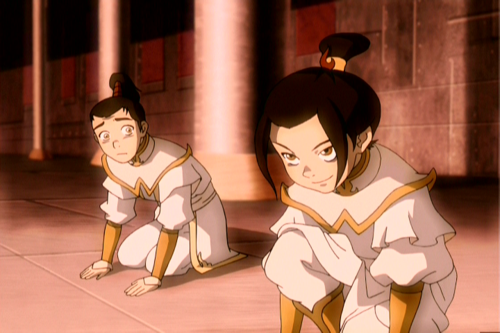
For most of Zuko’s life, Azula is the standard he’s held to. She’s ambitious, ruthless, and a prodigy. No matter what he does, he can’t earn their father’s approval like she can. And she rubs it in his face constantly. When Azula is cruel to Zuko, Ozai affirms that she’s not wrong to do so. Zuko rarely argues with her because he’s been conditioned to believe she’s right. Zuko has internalized the blame for how his father treats him rather than project it onto Azula, and accepts how she treats him as normal. He has plenty of bitter feeling toward her, but none quite as clear as hate.
Azula’s view of Zuko is even more convoluted. The first time we see Azula, she’s smiling because their father is about to burn him. The next time they meet, she berates him for being a failure of a son. It looks like she enjoys watching him suffer.
But when Zuko helps “kill” the Avatar in Ba Sing Se, we get to see them in a new context. In the rare moments that they aren’t pitted against each other by the ever looming presence of their father… they actually get along fine.
Every time Azula appeared happy to see Zuko suffering, it was at the hands of their father. It wasn’t just that Ozai hurt Zuko, it what that Ozai hurt Zuko and not her. Every time Ozai insulted or injured her brother, it cemented Azula’s position as the favorite child. And she had to stay the favorite child because she’s seen what would happen to her if she wasn’t. Deep down, she knows just how conditional her father’s positive regard is. When Ozai leaves her in the Fire Nation while invading the Earth Kingdom, the first words out of her mouth are “You can’t treat me like Zuko”. Being better than Zuko is part of her identity.
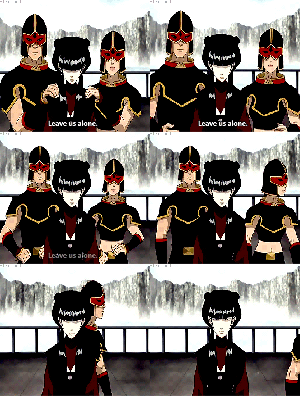
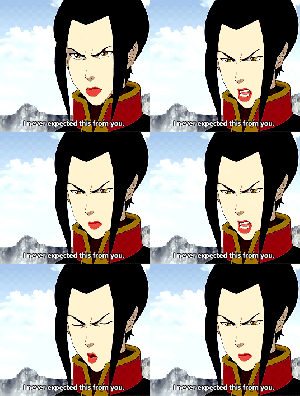
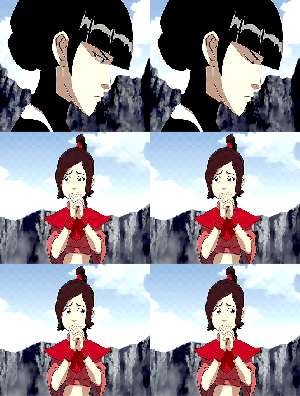
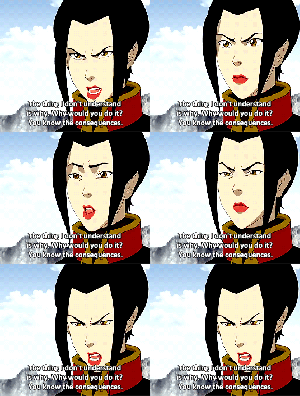
When Zuko defects from the Fire Nation and begins to succeed without meeting, or even trying to meet, the standards set by their father, it throws her priorities into doubt. In her mind, Zuko is supposed to fail. But she isn’t truly unnerved until she’s betrayed by Mai and Ty Li.
She is incapable of understanding why Mai would chose Zuko, and this drags to the surface her inability to understand why her mother preferred Zuko. She believed her mother loved Zuko and not her. Now Mai, her closest friend, loves Zuko and not her.
This conflicts with her entire view of the world. She sees the worth of a person as equal to their quantifiable skills and accomplishments. She has been admired, respected, and feared, but as far as Azula believes, no one has ever loved her. She was a prodigy who did everything right, while Zuko was the family screw up. Yet people loved him and not her.
For years, being better than Zuko was how Azula measured herself. Ozai said Zuko was lucky to be born. That he was worthless, weak, disrespectful, and both his children believed him. When Zuko left, he finally saw that Ozai was wrong about him. When Zuko returns during Sozin’s comet, Azula too is forced to see that her perception is wrong.
Zuko has become the embodiment of everything she lacks. She thought he was weak, but he’s not afraid enough to fight her fairly as an equal. She thought he was dishonorable, but really he was independent enough to break away from their father’s control. She thought he was worthless, but he’s found people who care about him in spite of his flaws.
Azula isn’t just trying to kill him, but everything he represents. And when she can’t, she breaks. Zuko is still standing. She has nothing left.
Word of God (Bryke) confirmed that at the end of the Agni Kai, Zuko felt pity rather than hate for his sister. This continues into the comics as he genuinely tries to help her. He knows that while she may not have been overtly abused like he was, she was raised in the same web of lies, agendas, and violence.
Their past left them both unable to trust people. Azula controlled everyone around her with fear. Zuko shut other people out and tried to do everything on his own. It isn’t until Zuko has left his old life behind that he slowly begins to let people in.
While Azula hangs onto the beliefs of Ozai and the Fire Nation, Zuko can see their situation from the outside. He sees two screwed up teenagers who spent their lives fighting their father’s war, manipulated into a conflict that isn’t their fault, forced to kill each other over choices made a century before they were born. It took Zuko years to figure out the hell that was his home life wasn’t his fault, but only a few minutes to see that it wasn’t Azula’s either.





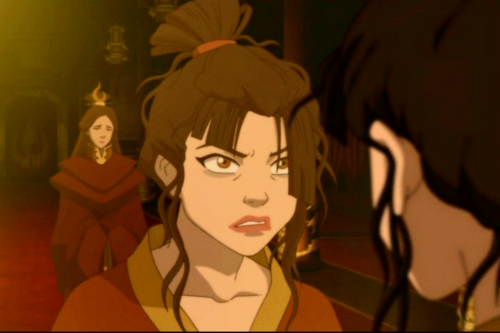
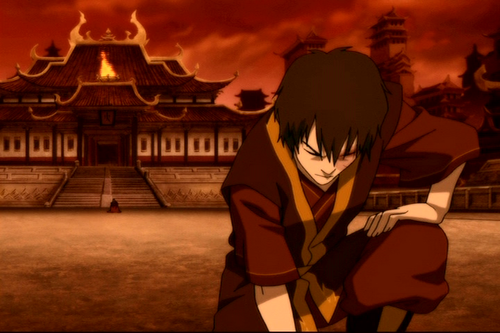
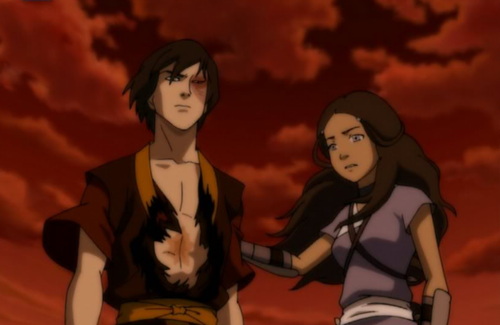
 just moving along like everyone else