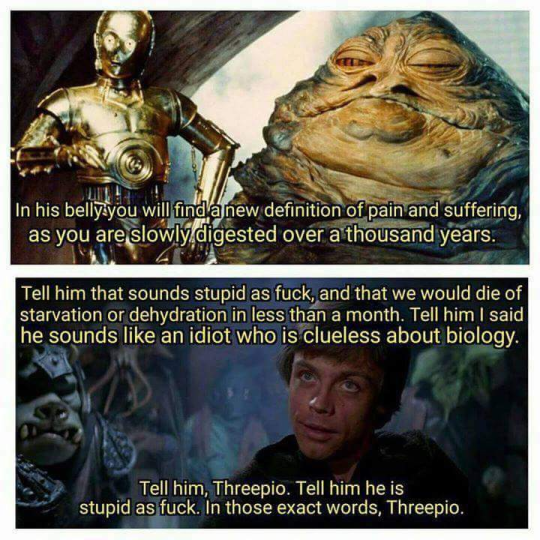
The “Dread Gazebo” is one of those inside jokes that everybody in the D&D/RPG community is supposed to know, but that makes it really hard to actually learn. Everyone references it, but nobody actually tells the original story. I played D&D for years before I got up the nerve to ask why everyone made jokes about gazebos.
The delegates were appalled by the lack of gender equality in America. They found the U.S. to be lagging far behind international human rights standards in a number of areas, including its 23 percent gender pay gap, maternity leave, affordable child care and the treatment of female migrants in detention centers.
The most telling moment of the trip, the women told reporters on Friday, was when they visited an abortion clinic in Alabama and experienced the hostile political climate around women’s reproductive rights.
“We were harassed. There were two vigilante men waiting to insult us,” said Frances Raday, the delegate from the U.K. The men repeatedly shouted, “You’re murdering children!” at them as soon as they neared the clinic, even though Raday said they are clearly past childbearing age.
“It’s a kind of terrorism,” added Eleonora Zielinska, the delegate from Poland. “To us, it was shocking.”
In most European countries, she explained, abortions are performed at general doctors’ offices and hospitals that offer all kinds of other health services, so there aren’t protesters waiting to heckle the women who enter.
The women discovered during their visit that women in the United States have “missing rights” compared to the rest of the world. For instance, the U.S. is one of three countries in the world that does not guarantee women paid maternity leave. The U.N. suggests that countries guarantee at least 14 weeks of paid parental leave. Some countries go further – Iceland requires five months paid leave for each parent, and an additional two months to be shared between them.
“The lack of accommodation in the workplace to women’s pregnancy, birth and post-natal needs is shocking,” Raday said. “Unthinkable in any society, and certainly one of the richest societies in the world.”
Another main area of concern for the delegation is violence against women – particularly gun violence. Women are 11 times more likely to be killed by a gun in the United States than in other high-income countries, and most of those murdersare perpetrated by an intimate partner. While the Obama administration has talked a lot about combatting violence against women, its efforts have been frustrated by Congress’ inability to pass new federal gun restrictions.
While the delegates were shocked by many things they saw in the U.S., perhaps the biggest surprise of their trip, they said, was learning that women in the country don’t seem to know what they’re missing. “So many people really believe that U.S. women are way better off with respect to rights than any woman in the world,” Raday said. “They would say, ‘Prove it! What do you mean other people have paid maternity leave?’”
The US is so far behind in women’s rights, people don’t even believe that other countries allow Paid. Maternity. Leave. Good lord.
why are there so many posts about asexuals being immune to sirens. people. sirens don’t lure you in with sex (necessarily). they sing about whatever it is that you want most. they could sing about mothman or cinnamon toast crunch and guess what then your asexual pirate is fucking dead
this is the only kind of ace discourse i ever want to see on my dash. the only kind. ever again. good job
Do you think the sirens would be grateful that they finally get some variety?
“Oh my god we can finally just sing about pasta thank the fucking gods.”
I’m not asexual but I’m fairly certain sirens would do a far better job luring me into the depths with a song about pasta rather than sex…
I mean.
“WHAT THE FUCK STAY AWAY FROM THE ROCKS.”
“FUCKER THEY SAID THEY HAVE FETTUCCINE CARBONARA AND HOT GARLIC BREAD OVER THERE HANG ON BITCH.”
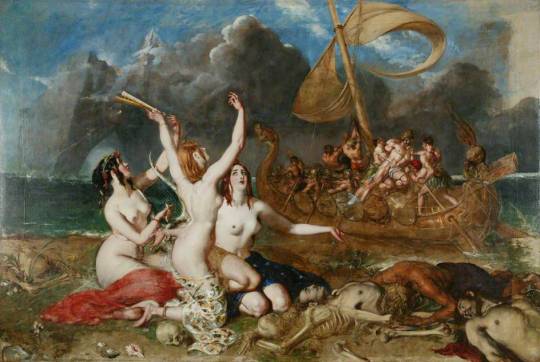
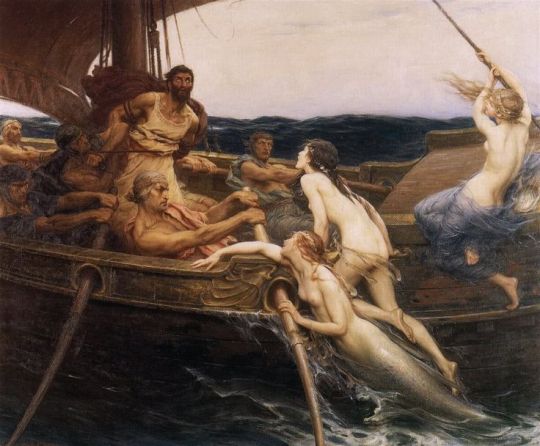
This is true; Odysseus heard them promising him knowledge of the future. So the next time you see artwork like this:
Remember those sultry naked chicks are saying “We’ll tell you the winning lotto numbers.”
Them: “We have unlimited wifi at incredible speeds~” Me: *diving headfirst into the water*
I love this post
Them: hey man if you jump into the water you’ll fucking drown Me: i’m all in baby
After a year working in a women’s shelter I think my biggest issue with the anti-domestic violence movement as it stands is: All these models and programs are kind of built around the assumption that everyone involved knows how to have happy, healthy, respectful relationships, and resolve conflicts peacefully, and they just… choose not to, for some weird reason.
Whereas my lived experience was that healthy relationships, problem-solving, and conflict management are skills that a lot of people never learn during critical developmental periods in childhood, and if we want to solve the problem, we have to get involved in the intensive work to teaching them to adults.
And in my opinion, this view doesn’t let abusers off the hook. It’s the opposite.
We used to assume that abusers could behave decently if they wanted, but just chose not to, so if we yelled at them enough, or if they just wanted to hard enough, they would. (Or at least, that’s what abuser intervention looked like under the Duluth model)
Whereas… at the shelter, I more than once found myself saying, “I don’t think he’s actually capable of being the man you want him to be. And if he decided tomorrow that he was going to change, it would take years. You can’t make your decisions for your immediate future based on what might happen when your baby is in grade school. You have to go off what he’s like now.”
When someone tells me that the person hurting to doesn’t mean to hurt them, they just can’t help it, that… is even more of a reason for them to cut the connection, in my opinion. Because if they’re doing it involuntarily, they don’t know what it is or how to stop.
“Everyone thinks he’s mentally ill but he actually just has superpowers.”
Okay, but like, what if both? Can we get a superhero with a mental illness depicted in a nominally positive way? That’s not just a cheap plot twist? Is that really too much to ask?
And not the whole “I’m psychotic and I could lose control of my powers at any moment” shit. I’m sick of that.
How about “I’m psychotic, but my telepathy helps a lot. If I think I’m hallucinating, my friends can let me see what they see and hear what they hear to keep me grounded in reality.”
Or you know, maybe someone whose mental illness and superpowers are unrelated. A speedster with depression who knows they /could/ clean their apartment in under four seconds, but would rather just watch Netflix and eat chocolate. A super strong hero who also has ocd and keeps rearranging their furniture, and sure it’s physically easy, but it’s still a pain.
Like, literally just in the few minutes it took me to write this post, I probably already came up with a good 30 character concepts. It’s not that hard, as long as you like, you know, think of mentally ill people as people and not plot devices.
“think of mentally ill people as people and not plot devices” Yes please!
Exactly this.
…I would actually really love to see the speedster with executive dysfunction problems, that sounds fantastic
i’ve got a vampire with severe depression. and a vampire who claims to be a sociopath but is mostly just dissociating hard and super traumatized due to being raised as a child solder and made to do murders before puberty.
they are taking a road trip.
i won’t say their mental illness isn’t part of the plot, but it’s not a plot device so much as their boss wants some anthills kicked and when you want that done you send jack, because jack has no impulse control and thinks getting stabbed is hilarious, and jacob has no fear because death sounds like a nice vacation.
So one of the Gr8 Frivolous Mysteries of Homestuck, in my experience, has been “How are Dragons Connected to Mind?”, and I think I might have an answer. I’m actually kind of surprised I’ve never seen it suggested before as I’m hardly the first, or even the hundred and first, HS fan to read the DIscworld books.
Anyway, I just finished reading Guards! Guards!(I don’t have much to do out here so I brought a load of books, and I figured I’d get the Vimes stories out of the way), and here is what Terry Pratchett, through the dramatis personae of Tubal de Malachite, had to say about Dragons:
Yette draggons are notte liken unicornes, I willen. They dwelleth in some Realm defined bye thee Fancie of the Wille and, thus, it myte bee thate whomsoever calleth upon them, and giveth them theyre patheway upon thys worlde, calleth theyre Owne dragon of the Mind…
and then there’s a bit about how they may yet be a force for good, given a Summoner of decency, though given that Noble Dragons in that book are an allegory for tyrants and unbound passions, one can draw their own conclusions on the possibility of this.
Like Vimes does :] His response to reading this:
A realm of fancy, Vimes thought. That’s where they went, then. Into our imaginations. And when we call them back we shape them, like squeezing dough into pastry shapes. Only you don’t get gingerbread men, you get what you are. Your own darkness given shape…
And of course, in the book, they lie sleeping in a pocket of L-Space, Library-Space, the distorted and fantastical reality brought into being by the mere existence and agglomeration of Books; quite Literally, a Space of Imagination :] :]
So this isn’t Homestuck itself saying this, obviously, it’s Discworld. But, Homestuck’s a pretty referential work and Jack Noir and his band of miscreant civil servants(one fat, one small, one supernaturally competent) bear certain similarities to the original crew of the Night’s Watch as we meet them(and, being the Guardians of Derse, are themselves a sort of Night’s Watch, in a sense). But but, I don’t know if Hussie ever read the Discworld books and I’ve never seen any obvious evidence from his work that he did so I don’t think you can say, definitively, that he took this idea of Dragons and the Mind from Pratchett and ran with it as an incredibly subtle, plot-insignificant nod to a series of fantasy-satire-but-no-seriously-sincere-fantasy books.
But but but I do think that’s an interesting idea to run with, and one that might occur to anybody, naturally, thinking about Dragons. To make an exceedingly broad and over-confident claim,
Dragons are the Quintessential Unknown-Populating Monster of the “Western Canon” and have been for centuries. Whenever Europe’s looked at someplace it didn’t know and wracked its imagination to fill it with something, giant fire-breathing(or toxin-spewing, or petrifying, or death-gazing) serpents(or birds) have been near the top of the list. In a very real sense it can be said that the natural habitat of Dragons, is the Mind.
My dietician says that the body image things are the last part of anorexia to go. You decide that you prefer to maintain a weight at which you can be healthy (and gosh, deciding that is complicated all by itself). Then you gain weight until your brain functions normally and you’re not fatigued all the time. Then in theory I am told you get back to having normal hunger signals and being able to mostly eat when you’re hungry and still get enough calories. And then maybe if you’re lucky some of the body image stuff fades.
I really wish someone had told me that several years ago. Lots and lots of the generic advice for eating disorders gives the impression that, like, you have to combat your unhealthy body image that is presumably driving your eating disorder, that you have to become all right with maintaining a healthy weight, that you have to grapple with the things that made you want to be thin in the first place.
As far as I can tell this doesn’t seem to be true. You have to eat a lot. You have to eat when you’re not hungry and don’t feel like it. You have to learn to manage nausea and manage stress and manage restaurants. You have to keep eating when you feel like you’ve been doing this eating thing for a while and it’s not at all rewarding and your weight is close enough can you call it a day.
There is probably some value to be gained from figuring out why you want to be thin, and why you have the emotions you have around food, and what you actually want, and so on. But all the introspection in the world will actually just get you… a really clear mental picture of having an eating disorder.
The thing to do to get healthy is to consistently eat a lot of food.
This is both better and worse than advertised. It is better because it means I don’t have to change my mind, suspect my own wants, interrogate my self image, rewrite my preferences, in order to recover. I thought I’d have to do that and I did not want to and I think I was very justified in not wanting to. It is worse because it means doing something which varies from ‘vaguely unpleasant’ to ‘awful and directly contrary to everything I want and everything my body is telling me’ six times a day (three meals, three snacks) with no breaks and no exceptions.
But I am doing it. It has been harder than anticipated and I do take breaks and make exceptions (and I notice that this is negatively affecting me, and I plan ways to not do it again), it’s much more of a full-time job than I could possibly have guessed, but I am doing it.
Sometimes it even feels like it’s getting easier.
“I don’t have to change my mind … in order to recover.”
This times a million. Construing my disorder as explicitly medical helped more with my recovery than calls to introspection ever did. I am not concerned with the emotional roots of bingeing and purging. I’m concerned with whether or not I’m chafing my throat and ruining my digestive system, and taking Vyvanse is what enables me to not do that. I have a life; I’m tired of spending energy ruminating on the noxious seed. I’m just happy I can keep it from growing.
this is important for a lot of reasons, and one of the reasons is that eating disorders are not always psychologically based.
i have disordered eating because of sensory processing disorder. i don’t experience hunger properly and never will. i will always have to eat when i don’t feel hungry, and stop eating when i still feel hungry, and eat things that don’t feel like food, at times that don’t feel like food times.
i’ve accepted i need assistance with this. i have a helper who comes in 5 mornings a week to make sure i eat breakfast, and while i can’t always eat the whole thing, i at least get enough that my meds don’t burn a hole in my stomach. she leaves me tidy little portioned-out snacks in the fridge. for the rest, i rely on my spouse and friends to keep me on track. but even with all this, there are times when i don’t eat, or barely eat, for days.
accepting that this isn’t a moral issue, and it’s not an issue of mental health, or willpower, it’s just one of those things that happens, has really helped me keep fighting for my health.
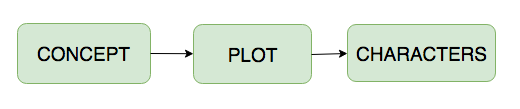
There’s no one way to start writing a book. For some people, it’s enough to just jump in and start writing to see where the story takes them. If you’re not too keen on that idea, then here is oneprocess (as in, not theonlyprocess) that might help you move beyond your concept.
Concept ≠ Plot
Many writers mistake concept for plot, but they’re actually two very different things. A world where everyone grows up with superpowers is a concept; the plot is what you decide to write about within that concept – the specific characters and what happens to those characters; who your antagonist is and what conflict arises when that antagonist goes after what they want. All of these things contribute to your plot.
So first, define what it is you actually have at this particular point. Do you just have a concept? If so, you’ll need to take the necessary steps to develop that concept into a plot.
Concept >>> Plot
If you’ve decided that all you really have is a concept, then how do you take it and turn it into a plot? You brainstorm. All brainstorming really amounts to is expanding your ideas. All you’re doing is asking questions about the concept and delving deep into the answers.
The most simplistic way to start this process, especially if you’re struggling, is to ask one of two questions (or both, if applicable). These two questions: What could go wrong? What could go right?
Going back to my example about a world where everyone grows up with superpowers. If I were to ask the question “what could go wrong,” I’d end up with a whole list of possibilities.
The powers suddenly disappear
People start abusing their powers
Someone figures out how to steal powers
A hierarchy of strong vs. weak powers develops, creating superiority/inferiority dynamics
Someone is born without a superpower
There are many more possibilities I didn’t even think of here, but any one (or more) of these could become a plot. Choose one that sounds interesting, and then ask yourself “and then what?”
Say I choose: Someone figures out how to steal powers. Then what does that person do? Do they recruit people to do the dirty work for them? Do they work alone? Do they hoard these powers and barter them for other goods? Do they attempt to enslave people? Do they attempt to take control of institutions? What do they do?
Your goal is to take your ideas and turn them into actions taken by characters. People doing things. And each piece you add will usually lead into another. If you went with the idea that this character is stealing powers and essentially selling them for other goods, you’d have to ask yourself follow-up questions. First, who are they selling to? Why would anyone buy a new superpower if they already have one? What uses would they have for additional ones? What is the key demographic that this person is trying to reach? Secondly, what are they selling them in exchange for? Money? Favors? Souls? What is this character getting in return?
Now that you’ve examined potential actions that the character takes, you’ve also exposed potential new characters.
People they’re stealing from
People they’re bargaining with
People that try to police these crimes
People that try to copy this character’s process
At the beginning of this section, I talked about using “what could go right” as another optional jumping off point. This is a good path to follow if your concept is already really negative. For a concept where someone is killing people for some pointed reason, you might ask “what could go right” and explore ideas where the killer is caught and brought to justice.
The point of all this is to think about change as a means of taking your idea from concept to plot. A concept is static – it doesn’t move, evolve, or change. By developing a plot, you’re forcing the concept to be challenged in some way. If you think about it that way, you’ll be able to formulate conflicts, and the people that orchestrate and fight against those conflicts.
On that note, I think we’re ready to move onto the third piece of my graphic above.
Plot = Character Actions and Consequences
At this point, you have sketches for characters. You’ve got this nameless, faceless person that is stealing the powers, and all these other nameless, faceless people that I listed above. In essence, we have character concepts. And just like we turned our initial concept into a plot, we have to turn these character concepts into actual characters.
The basics are the easiest way to start. You figure out their name, their gender identity, their age, their appearance, some brief backstory and personality traits. I personally prefer the simplest questionnaire that I put together back in the early days because it hits on the poignant pieces of a character without overwhelming you with 100s of questions.
Now that you’ve given your character concepts names and faces and potential behaviors, you start to consider how one character’s view of the world inspires them to take certain actions, and you then think about how those actions affect your entire story.
We already kind of talked about the motives of the power thief in our example, but definitely delve deep here. On the surface, this character seems bad – stealing from people and then selling what they steal. But depending on what it is they’re getting in return, could we not argue that this character is a supernatural Robin Hood? Maybe instead of selling, they’re giving, and maybe the characters they’re stealing powers from are people that abuse and misuse their powers. Character motives can take a plot and turn it on its head, forcing you to reconceptualize everything. And that’s okay! That’s part of the process.
But separate from that idea, if we have a character concept of someone whose powers were stolen, and after developing their basic backstory, we discover that person’s name is Rose, and she has an especially close relationship with her brother. So when her powers are stolen, how does this affect her life? Was she using her powers to keep her brother alive and protected? What she using them to keep a roof over their heads? Was she using them as part of her job, as a means of providing? What happens to her life when her powers are stolen? And what will Rose do about it? Whatever Rose does will impact the story. If she does nothing to get her powers back, how does she solve her problems and does that make for a good story? If she does decide to act, then you’ve moved onto a new plot point to dive deeper into.
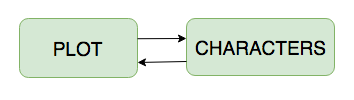
My point is, character concepts come from plots, but characters themselves often create plot, as their decisions and mistakes and successes create new outcomes. So if I could modify my original flow chart:
Before you develop something, you conceptualize it. You have a concept, then you make it a plot. You have concepts for characters, then you make them characters. And those characters end up driving your plot, to the point that this happens:
Plot inspires character. Character inspires plot. And it just keeps going around and around and around. Breaking it down into these pieces helps organize the process, but developing a story is rarely this neat and tidy. You’ll get ideas that don’t make sense, ideas that aren’t cohesive, characters you don’t need, characters that piss you off, problems you can’t solve, or plot points you’ve committed to that you no longer like…it will be messy. But it’s your mess, and the more you work on developing your own process, the more it’ll make sense to you. And it’ll become easier to know how to go about fixing it when something’s not right.
Have fun with this process! It’s supposed to be fun. When the pieces start to become clearer, you’re able to put them together in a rough outline. And once you have a rough outline, you can start writing, and really see it take shape.
Oh my god, someone has footage of it! I remember one time my dad, lil brother, and I were leaving a Ryan’s. We were waiting for a chance to hop onto the road and in the distance we just saw everything turn grey. We saw it come closer and closer and come to find out it was rain!
It was just a wall of rain – the end of the rain, really. I’ve never seen it again, but it’s so cool to see footage of the edge of rain!
I saw this while I was in Jamaica I was so confused
I wanna witness this one day
i was at the beach during a mild hurricane and the rain kept coming in waves over the ocean, so there’d be a dry break and you could watch the next sheet of rain come towards you