Calypso’s island is magical. It supplies every possible demand Odysseus might have for food, drink, clothing, sex, companionship or conversation. He has only to pay over the coin of his self. His entire self. Calypso wants Odysseus body and soul. She wants everything about him. Physical, moral, and verbal. She wants the work of art that he has made of his own human being. And she wants it for all time. She promises to immortalize him.
When he rejects the transaction she’s baffled. Why would anyone choose to abandon a consumer paradise where he could live forever with a ravishing divinity? Odysseus’s answer is: “I know you’re a goddess and bigger and better looking than my wife, for you are deathless and ageless while she is a mere mortal, and yet, I prefer Penelope and what I really long for is the day of my return.” Odysseus’s answer sets up a calculus. He measures the infinite days and infinite pleasures of Calypso against the single day of his homecoming and the mortal attractions of his wife. The infinite comes up lacking.
Neither Odysseus nor Homer ever tells us exactly what the infinite lacks. That is, we never get an objective description of Penelope. We do not know if she is dark or fair. Odysseus no where itemizes the qualities that make her more desirable than a goddess. What becomes clear in the final stages of the poem however as husband and wife engage in a so called recognition scene that extends from Book XVII where Odysseus shows up in disguise at Penelope’s house to Book XXIII where she falls weeping in his arms and calls his name is that these two people are a match for each other in wits and ambiguity.
We watch Her throughout the six books seduce him by the simple tactic of never letting him know what she’s thinking. She dangles herself. She dangles the prospect of homecoming before him in a series of tantalizing interactions. She gives him clothing, a meal, a bath, a bed in the courtyard and several deep conversations without ever letting on whether she’s recognized him or not. Scholars still disagree on where exactly in the poem she decides Odysseus is Odysseus and she should welcome him home. Penelope’s power is the power of a meaning withheld.
—Anne Carson on the distinction between selling and selling out
You’re comparing highly polished mainstream examples of iconic Japanese media to low budget, indie, and amateur american works. If you wanted to be fair the second image should look more like this:
The cultural exchange between American and Japanese art, particularly in animation, is hardly a one way streak.
Here we have Panty and Stocking, which boasts an artistic style that draws heavily upon modern western animation with it’s hard outlines and comical proportions. Shows like Dexter’s Laboratory barrow dynamic posses, dramatic framing, and highly expressive faces form anime and manga. Early anime and manga developed it’s distinct big eyes and childlike features by taking cues from western animation of the 20′s and 30′s
Betty Boop, in particular, was immensely popular in Japan. Her creators even made this short in appreciation of her Japanese fan-base.
WAIT I CAN ADD TO THIS ALREADY OBSCENELY LONG POST.
The entire Magical Girl genre is a big example of Western (primarily U.S.) and Japanese cultural exchange!
BeWitched (which was inspired by the 1940′s American movie “I Married a Witch”) was incredibly popular with young girls! This prompted the creation of the first popular Magical Girl Sally the Witch.
When the “Little Witch” Subgenre was big in the 70s the U.S. countered with animated Sabrina (from the Archie comics) which followed the same formula albeit with an older girl.
The 80s we start seeing more “flash of light” henshins/transformations being utilized along with the rise of the “Magical Idol” sub-genre in Japan it gave birth to shows like Creamy Mami and Magical Emi, in the U.S. it made way for Jem and the Holograms and She-Re Princess of Power (not a magical idol but still uses “flash of light” transformations). Jem was even a collab with U.S. doing the writing and Japan doing the animation!
The “Magical Warrior” sub-genre emerges in the 90s (even tho it has roots in the 70s with shows like Cutie Honey). This doesn’t catch on in America until the early 00′s with Atomic Betty (Canadian creation) and The Life and Times of Juniper Lee but we did see the start of it with the Canadian/Argentinian collab called Cyber Six. We also get W.I.T.C.H. and WINXClub in the early 00s from Italy which are both probably the most heavily influenced from Japan’s then current MG show structure.
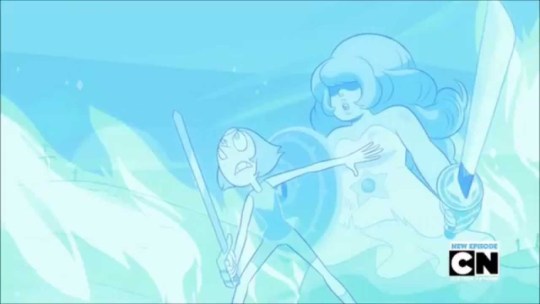
Today we have Steven Universe, Bee and Puppycat, Star vs. the Forces of Evil, Lolirock, The Miraculous Ladybug, and if it gets picked up Twelve Forever which are all great Western MG shows that are influenced by Japan!
I could go on, I haven’t even scraped the ice berg on this! I have a whole hour panel I run on this subject called “Magical Girls from Around The World”
The point is the Magical Girl genre- and tbh animation in general- has been Japan and America (with some other Western countries thrown in) talking back and forth since the 60s. I leave you with probably the most direct influence:
can I add to this that Osamu Tezuka aka “the God of modern Manga”
was inspired by Bambi
into deciding to give big eyes to his drawings so that they would look more expresive. He also remained a big fan of a certain Jewish American animator until his death, oh yeah this guy
Walt Disney himself was also intrested in Tezuka’s work, with Astroboy being one of his favorites. A similar case exists now between John Lasseter (Pixar and Disney fame) and Hayao Miyasaki (Studio Ghibli) who are big fans of each other’s work.
Japan and America are less of a competition to those who work on it and more of an inspiration, it is very often the fans and not the creators who create rivalries between people that would be friends in real life.
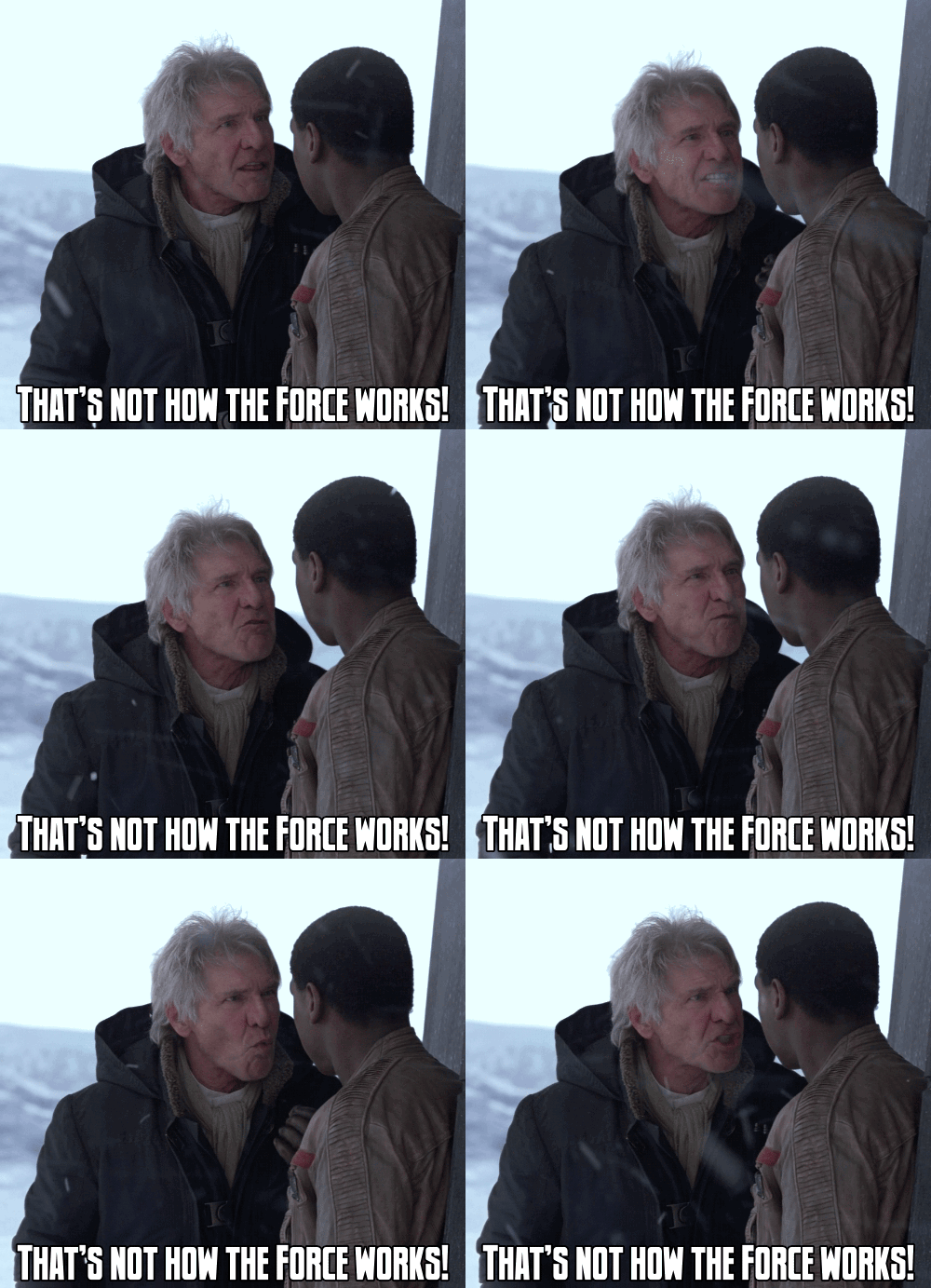
I need Han to accidentally be force strong, mostly because HE WOULD HATE THAT SO MUCH
“Wow so you’re basically a self-taught Jedi”
“WHAT–ARE YOU–I’M THE BEST PILOT IN–”
“That’s force shit”
“I’M AN EXCELLENT SHOT”
“Yeah, because of the force”
“I’M INCREDIBLY PERSUASIVE”
“That’s the force making people believe your terrible lies against all reason ”
“I’LL SEE YOU IN HELL”
I can picture his reaction now…
No, but this is:
Oh heck
George Lucas can pry Force Sensitive Han from my cold dead hands.
I love everything about this theory, but my favourite part of it by far is now utterly offended he’d be by the suggestion.
Garrus: Yeah so after you died I messed up my old job, my mom got a terminal illness and I went into a murderous depression spiral where I tried to emulate you but I’m a huge failure so I got all my friends killed and half my face blown off. But enough about me let’s go fight the collectors!!
Shepard: Oh my god are you okay
Garrus: *finger guns*
Shepard: ….Seriously are you oka-
Garrus: *finger guns more aggressively*
Garrus: Shepard’s dead so i’m going to disappear and go on a righteous rampage as a masked vigilante
Wrex: why
Garrus: they were 90% of my impulse control
good: garrus trusts shepard so much that he didn’t even question it when she showed up in the middle of a firefight despite being dead and just handed her his rifle because as long as she was there he knew everything would be okay better: when garrus saw shepard, he thought he had died, but he was okay with that because if the afterlife had shepard in it how bad could it possibly be?












 just moving along like everyone else