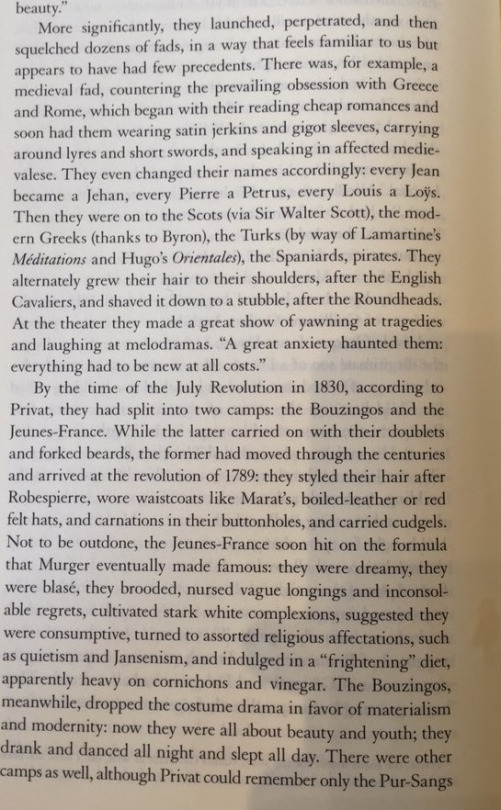
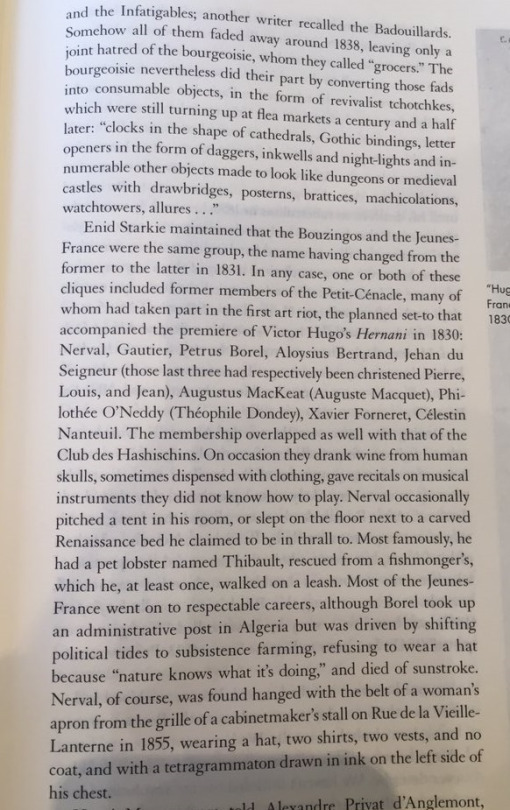
God just imagine walking the streets in 1830s France, rounding a corner and coming across a slick gang of gentlemen and ladies, all with forked beards and satin and leather outfits. They eye you lazily, like crocodiles, as you step into the alley. One is ironically playing the ukelele, the jangling notes tapering off menacingly as their attention fixes on you.
“Oh no,” you say, grabbing your companion’s arm, “Bouzingos!”
“Oh look,” says the ukelele player. “Some grocers.”
“We don’t want any trouble,” your companion says, backing away.
Snickers and sneers ripple through the surrealist gang. One of the Bouzingos takes out a croissant and bites it right in half. Another smokes a cigarette with their ear. One of them is a lobster.
“Have you culturally appropriated any tchotchkes recently?” One of them jeers.
“We’re sorry,” you apologise, “we’ll be going now.”
You and your companion stumble back into the street, dragging each other.
“these gangs are really getting out of hand,” your companion says weakly. “Do you think we’re… infected?”
You shiver. For a moment, vague longings and inconsolable regrets assail you. You feel moved to contribute to the discourse. Anxieties flicker across your heart. But the moment passes.

 just moving along like everyone else